President William Ruto has unveiled fresh measures to ease the cost of living and create jobs in an apparent effort to win the support of ordinary Kenyans ahead of next year's general elections.
The measures include scrapping PAYE for low-income earners, reducing the cost of transferring low-value land and removing import duty on mobile phones.
The President also pledged to expand the national internship programme to accommodate 50,000 more graduates from January 1, 2027.
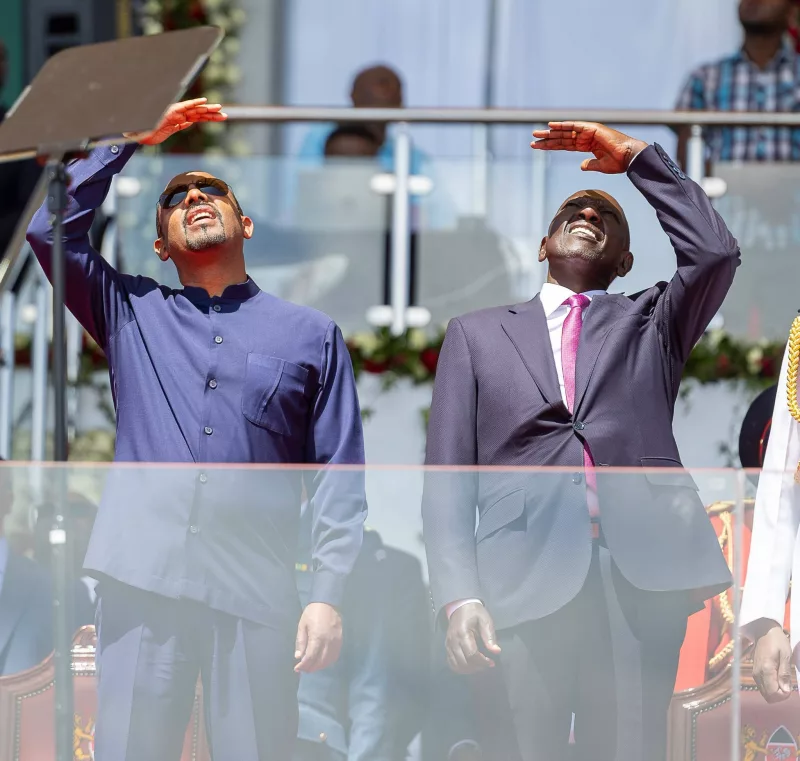
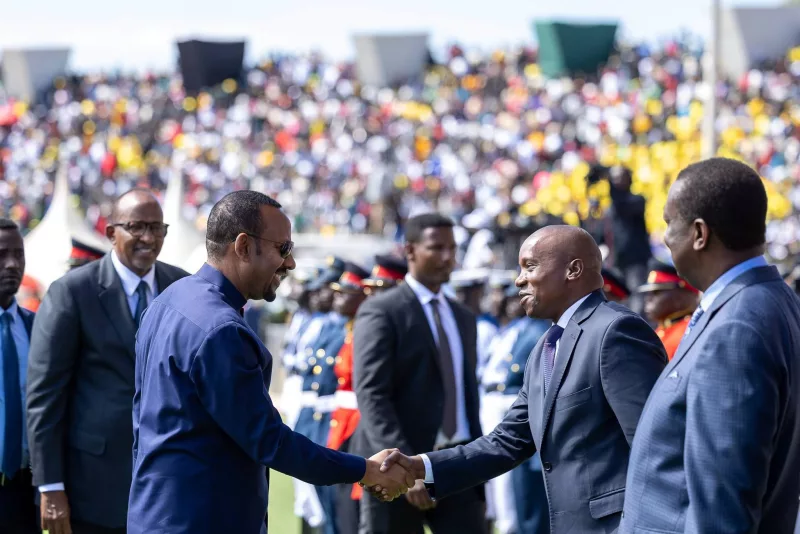
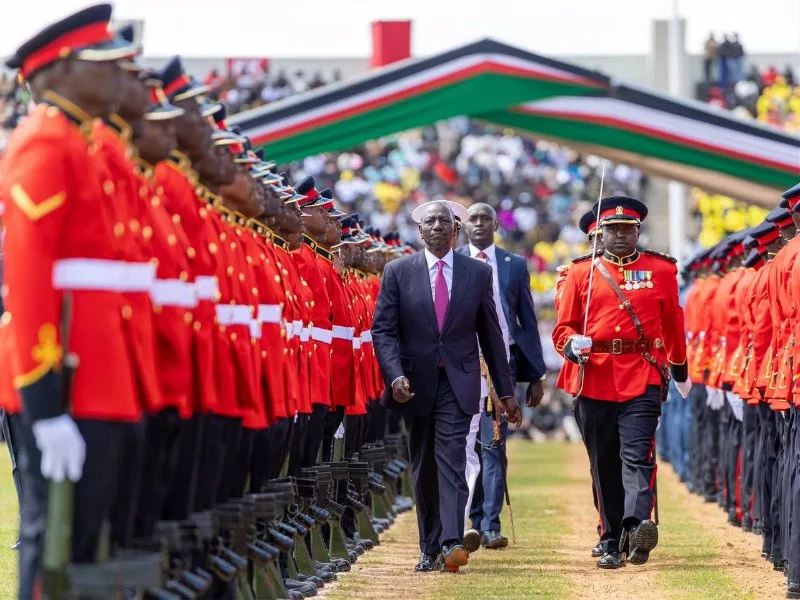
Ruto announced the measures during Mashujaa Day celebrations at Kipchoge Keino Stadium in Eldoret, Uasin Gishu county on Tuesday.
“These measures address four barriers that Kenyans confront every day: the burden of taxation on modest incomes, the cost of acquiring property, the expense of accessing digital opportunities and the difficulty of entering the labour market,” Ruto said.
The development comes even as the head of state, in a snippet of his next manifesto, announced ambitious plans to transform the economy in the next three years.
In the last Mashujaa Day speech before the elections, Ruto said that for Kenyans earning Sh32,333 or less per month, they will be exempted from the Pay As You Earn (PAYE) tax.
The move is meant to increase the take-home pay of low-income earners.
“For workers on modest incomes, every shilling saved means more money to meet their families’ needs, including food, transport, and other essentials,” Ruto said.
The announcement comes at a time when many households continue to grapple with the high cost of living amid heavy taxation.
The President’s move, therefore, is seen as an attempt to appeal to ordinary Kenyans, otherwise known as hustlers, whom he banked on to win the last election.
Ruto said the National Treasury has developed proposals to exempt land transactions valued at Sh1 million or less from stamp duty.
Progressive rates would apply to higher-value transactions. Ruto said the Treasury would present the proposals to Parliament next week for approval.
The changes are intended to make land ownership more affordable. They would also reduce the cost of transferring property and strengthen security of ownership.
In addition,the President directed the removal of the 25 per cent import duty on mobile phones in a bid to help more Kenyans access digital services and employment opportunities.
“A mobile phone is no longer a luxury. It is a classroom, a marketplace, a bank, an office and, for many young Kenyans, a gateway to employment,” he said.
“Making phones more affordable will bring the opportunities of the digital economy within reach of more citizens,” he added.
The government hopes the move will lower the cost of accessing digital technology. However, the extent of the savings will depend on how the tax change affects retail prices.
From January 1, 2027, Ruto said, the government will expand the national internship programme to accommodate 50,000 young Kenyans, each receiving a monthly stipend.
“Too many young people cannot secure employment without experience, yet cannot gain experience without employment. This programme is intended to break that cycle by providing a pathway from education to practical and productive workplace experience and, ultimately, meaningful employment.”
The interventions and projects, he said, are meant to rescue Kenyans trapped in the tough economy and ensure equity and fairness.
“Our purpose is clear: to put more money in the pockets of workers, make ownership easier for families, bring digital opportunity within reach, and open the doors of employment to our young people. That is what it means to translate Usawa from a principle into practical action,” he said.
Ruto, under the rallying call Usawa ni Sawa (Equity is Fair), leveraged the stage to enumerate his administration’s targeted achievements across various sectors to ensure equity and fairness across the country.
In infrastructure, the President cited the upgrading of the Rironi–Mau Summit Road, expansion of the standard gauge railway to Kisumu and Malaba, and construction of the Lake Victoria Ring Road.
The development of the Isiolo–Mandera corridor through Modogashe, Wajir, El Wak and Rhamu is on course, alongside the modernisation of Jomo Kenyatta International Airport.
“These investments will reduce transport costs, strengthen regional trade, and connect more Kenyans to economic opportunities,” he said.
Under the affordable housing programme, he said 303,910 homes, 450 modern markets and 180,000 student hotels are at various stages of development.
Together, the projects have generated over 1.1 million employment opportunities in building, construction, and related industries.
Beyond housing, the government has secured jobs for 680,000 Kenyans abroad, and 350,000 digital jobs have been created.
“Through NYOTA, we are equipping more than 700,000 young people with skills, while over 120,000 young entrepreneurs have received start-up capital and mentorship to establish businesses, create jobs, and build sustainable livelihoods,” he said.
In health, the Kenya Kwanza administration has shifted from NHIF to SHA, increasing beneficiaries from seven million in 2022 to 33.3 million today.
“NHIF was exclusive; SHA is universal. NHIF served a select few; SHA serves every Kenyan. NHIF financed selected hospitals; SHA finances all healthcare facilities across the country,” he said.
The President said this administration has reformed the CBC, introduced a student-centred university funding model, and advanced the New Funding Model Bill.
These are aimed at ensuring that no deserving student is denied higher education because of financial circumstances.
“Over the last four years, we have recruited more than 100,000 teachers, constructed 23,000 classrooms, and commenced construction of 1,600 laboratories,” he stated.
The President said his administration has grown the economy, stabilised the shilling, brought inflation under control, expanded access to credit, and reformed our capital markets.
“The value of our stock market has doubled, from Sh2 trillion to Sh4 trillion. Foreign direct investment has doubled in three years, from $1.5 billion in 2022 to $3.2 billion in 2025, and Kenya is now the seventh-largest economy in Africa,” he said.
In agriculture, the government has registered 8.9 million farmers and reduced the cost of fertiliser from Sh7000 to Sh2000, distributing 38 million bags of fertiliser in the process.
“Maize production has increased from 34.3 million bags in 2022 to 71 million bags last year, while maize imports have declined significantly,” he said.
In coffee, the average cherry price has increased from approximately Sh70 to between Sh110 and Sh150 per kilogramme.
In tea, the average green leaf price has risen from Sh35 to Sh56 per kilogramme.
Sugar farmers are now paid weekly for their cane deliveries and will receive an additional bonus next month.
“These reforms are improving incomes for farmers across our agricultural value chains,” he said.
The government has strengthened livestock production, increasing annual artificial inseminations from 900,000 to 1.28 million and reducing the cost of sexed semen from Sh8,000 to Sh1,400.
“We have vaccinated over 22 million livestock, restocked more than 52,000 animals for 10,000 households across 16 counties, and extended drought insurance through the DRIVE programme to 1.6 million pastoralists across 21 counties,” he said.