President William Ruto has dared his political opponents to face him in the 2027 general election on the strength of their development agenda, vision and track record.
Ruto said next year's presidential contest must be decided on what leaders have achieved and what they intend to do for Kenyans and not political rhetoric.
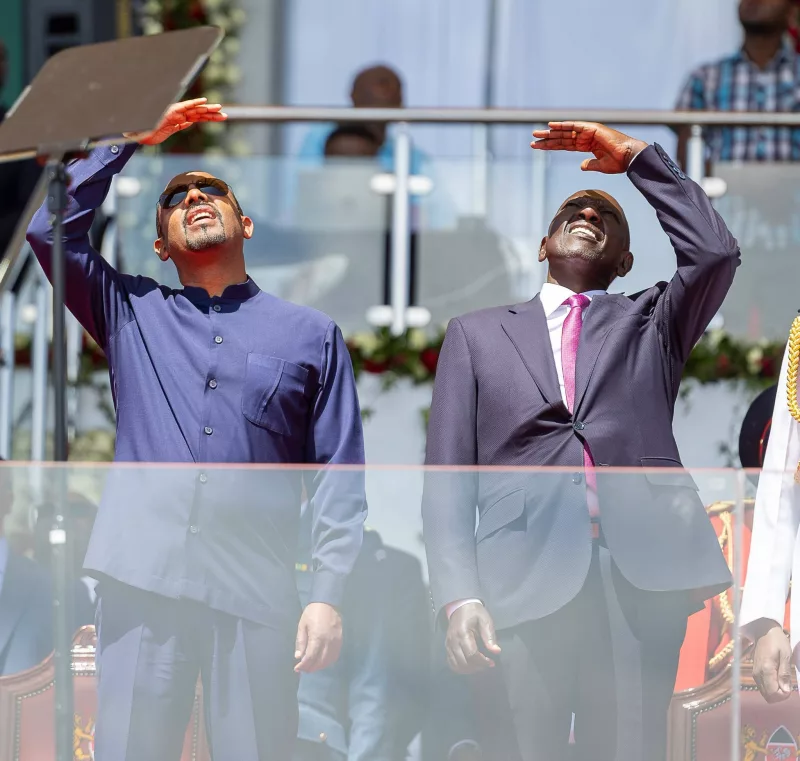
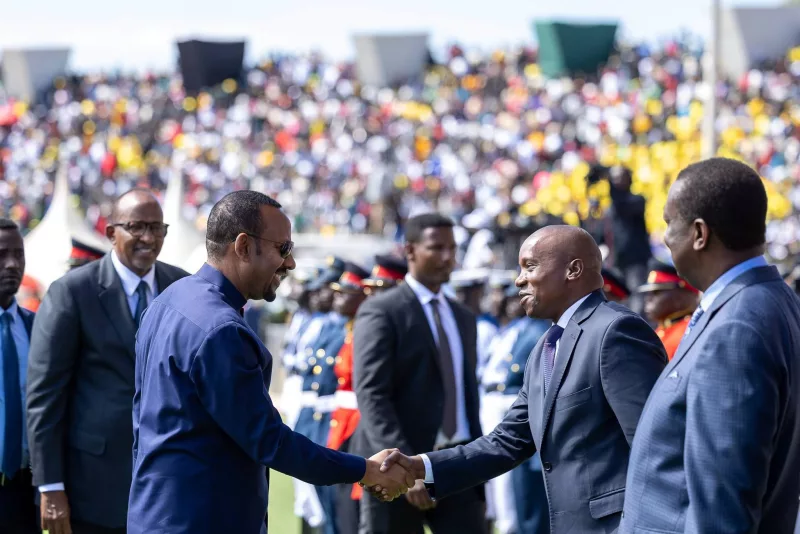
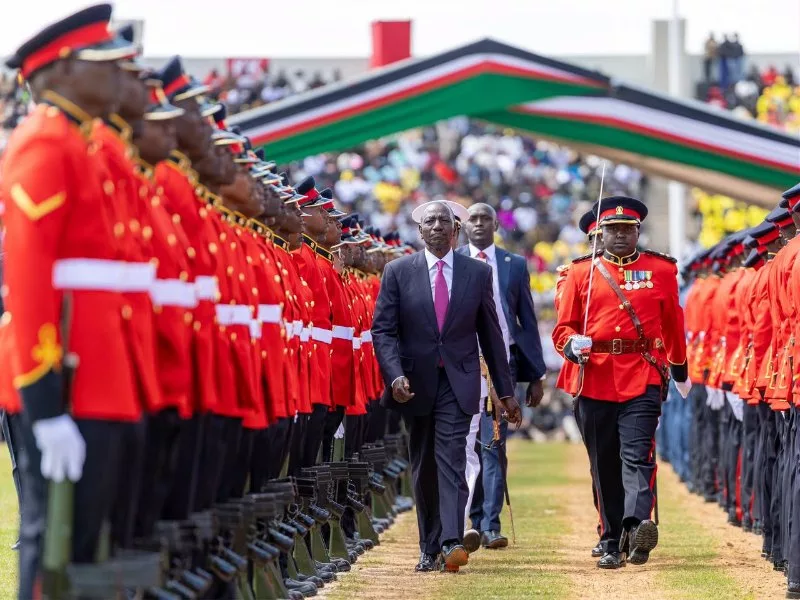
Speaking during Mashujaa Day celebrations at Kipchoge Keino Stadium in Eldoret on Tuesday, the President challenged his competitors to present their plans to voters, saying he was ready to defend his administration's performance.
"The benchmark for that contest must be clear: a track record, a vision, a plan and an agenda," Ruto declared.
He said Kenyans must demand accountability from those seeking elective positions and judge them on their ability to deliver on promises.
The President warned against reversing the political transformation he said began with his election in 2022, insisting that the country must embrace issue-based politics.
"Next year, we will return to the ballot box. The political transition we began in 2022 must not be reversed," Ruto said.
"We must deepen a political culture in which citizens choose an agenda, leaders implement it, and the people judge the results."
His remarks appeared directed at the opposition leaders who are seeking to unseat him in the August 2027 polls.
The President has often attacked the opposition bosses as a group of plan-less, visionless, and agenda-less leaders.
But the opposition chiefs have dismissed his claims, stating that their first agenda was to remove him from power.
Ruto said he would present Kenyans with a comprehensive account of his administration's achievements since assuming office in September 2022.
"I will present to Kenyans an account of what my administration has achieved, and what remains to be done," he said.
"I will explain our contribution to building a country that is not only free, democratic, and governed by the rule of law, but also more equitable and inclusive."
The President described his administration's development programmes as deliberate interventions aimed at addressing historical inequalities and expanding economic opportunities.
"These are not disconnected government programmes. They are commitments made to the people, investments made on behalf of the people and opportunities being created for the people," Ruto said.
He described the programmes as the practical expression of the agreement he entered into with voters in 2022 and the constitutional obligations placed on his administration.
"These are not abstract ideals. They are obligations that must find expression in the daily lives of our people," he said.
Ruto maintained that his administration was pursuing a transformation agenda aimed at ensuring development reaches every corner of the country.
He said the government's commitment to equitable development was anchored on the principle of Usawa, which seeks to guarantee every citizen a fair opportunity to succeed.
"Usawa is the conviction that every Kenyan deserves a fair opportunity to succeed, regardless of ethnicity, birthplace, ability, connections, or circumstances," he said.
"It does not promise identical outcomes. It demands that opportunity should not remain the privilege of a few, but become accessible to all."
The President also defended the formation of the broad-based government, saying the arrangement had demonstrated that leaders from different political backgrounds could work together for the country's benefit.
He commended politicians who set aside their differences to support the arrangement, arguing that political competition should not prevent cooperation on matters of national interest.
"Together, we have demonstrated that political competition need not stand in the way of working together for our nation's good," Ruto said.
His defence of the broad-based government comes as political realignments intensify ahead of the elections.
The President said the ultimate measure of leadership should be the impact of government policies on the lives of ordinary citizens.
"We will be judged not merely by the positions we held or the promises we made, but by the contribution we made," he said.