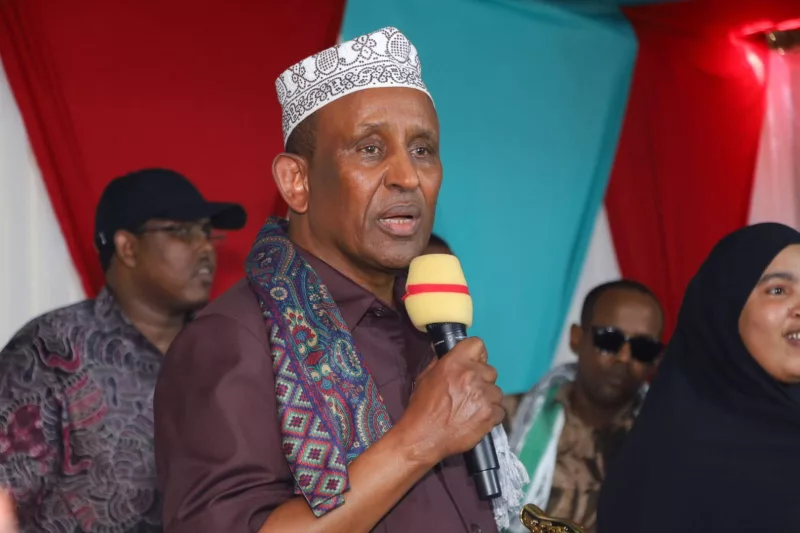
 Dr. Hassan Mohamed who was endorsed by his Fai clan of
the larger Degodia addressing members of the minority community residing in
Wajir. /STEPHEN ASTARIKO
Dr. Hassan Mohamed who was endorsed by his Fai clan of
the larger Degodia addressing members of the minority community residing in
Wajir. /STEPHEN ASTARIKO
The 2027 Wajir governorship race is beginning to take shape, with early endorsements and clan realignments signalling that political mobilisation is already underway.
In Wajir, community alliances have long determined electoral outcomes. Hassan Mohamed is seeking to reclaim political ground after finishing second in the 2022 governor election.
A week after securing the endorsement of the influential Fai sub-clan, he has intensified efforts to expand his support beyond his Degodia base by courting other communities across the county.
The businessman and owner of Nairobi South Hospital, popularly known among his supporters as "Fuje", has shifted his focus from consolidating his traditional support base to building broader political alliances.
The strategy is seen as critical in Wajir's highly competitive clan-based politics.
His latest political boost came over the weekend when he was formally introduced to the wider Ogaden community as the Fai community's preferred candidate before holding a series of consultative meetings with leaders from different communities.
On Monday, leaders and representatives of the Ajuran community also endorsed his candidature, adding to the growing list of groups backing his bid.
Accompanied by the Sultan, elders and members of the Fai Mediation Committee, Hassan also met representatives of minority communities and non-locals living in Wajir.
He said they would be central to his vision of an inclusive county administration. Addressing members of the Ajuran community after receiving their endorsement, Hassan said he was humbled by the support he had received since being named the Fai sub-clan's flagbearer.
"I want to promise all residents of Wajir that I will continue to foster peace, strengthen harmony among all communities, and build a county where every resident feels represented, valued and included in the development and governance of Wajir," he said.
He pledged to lead an administration that embraces all communities regardless of their numbers. "Our vision is to build an inclusive administration where every community has a voice and the rights and interests of minority communities are respected, protected and promoted," he said.
Hassan described the endorsements as more than political backing, saying they reflected a shared commitment to peace and development.
"Your endorsement reflects more than political support. It represents trust, solidarity and a shared determination to safeguard peace, strengthen cohesion and advance meaningful development. We move forward with one voice, one purpose and one unwavering commitment to serve our people with integrity and vision," he said.
Wajir is home to three dominant communities — the Degodia, Ogaden and Ajuran — alongside several minority communities whose support has often proved decisive in closely fought contests.
His campaign strategy appears aimed at demonstrating that, while he has secured the backing of the influential Fai sub-clan, his bid extends beyond a single community and seeks to project countywide appeal.
However, the endorsement has not ended competition within the Fai sub-clan. Several aspirants who sought the elders' backing rejected the consensus process, arguing that it lacked transparency and have vowed to remain in the race.
Among those who have dismissed the endorsement are Capital Markets Authority chairman Ugas Sheikh Mohamed, former Wajir Governor Mohamed Abdi and Hassan Wehliye.
The dispute has reopened divisions within the Fai sub-clan and revived memories of the 2022 General Election, when multiple candidates from the community split the vote.
The development was widely blamed for costing the Degodia the governor's seat. The Fai sub-clan, the largest within the Degodia community, commands a significant voting bloc, particularly in Tarbaj and Wajir East constituencies.
For years, its elders have sought to rally behind a single governor candidate to maximise the community's electoral strength and avoid internal competition.
Political analyst Mohamed Hussein said the endorsement had given Hassan an early advantage but warned that unresolved divisions could weaken the numerical strength that has traditionally made the Fai a formidable political force.
"The Fai sub-clan possesses the single largest voting bloc in Wajir. When united, they are virtually unbeatable. But when internal divisions dilute that strength, as happened in the last election, everyone loses," Hussein said.
With nearly a year to the election, the endorsements underscore the early battle for political influence in Wajir.
INSTANT ANALYSIS
The early endorsements illustrate how the 2027 Wajir governorship race is already revolving around coalition-building rather than campaign promises. In a county where clan arithmetic has historically shaped electoral outcomes, Hassan Mohamed's strategy of seeking support beyond his Degodia base suggests a recognition that victory will depend on broad alliances.
However, the unresolved dispute within the influential Fai sub-clan could prove his biggest political hurdle. If rival aspirants remain in the race, the fragmentation that undermined the Degodia vote in 2022 could recur. The contest is therefore likely to hinge as much on internal unity as on cross-community support.
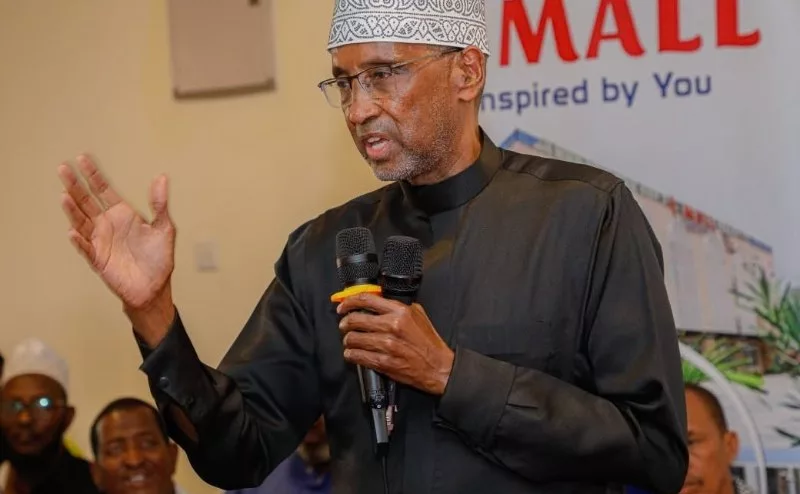
 Dr Hassan Mohamed who was endorsed by his Fai clan of
the larger Degodia, addressing members of the Garre Community residing in
Wajir. /STEPHEN ASTARIKO
Dr Hassan Mohamed who was endorsed by his Fai clan of
the larger Degodia, addressing members of the Garre Community residing in
Wajir. /STEPHEN ASTARIKO
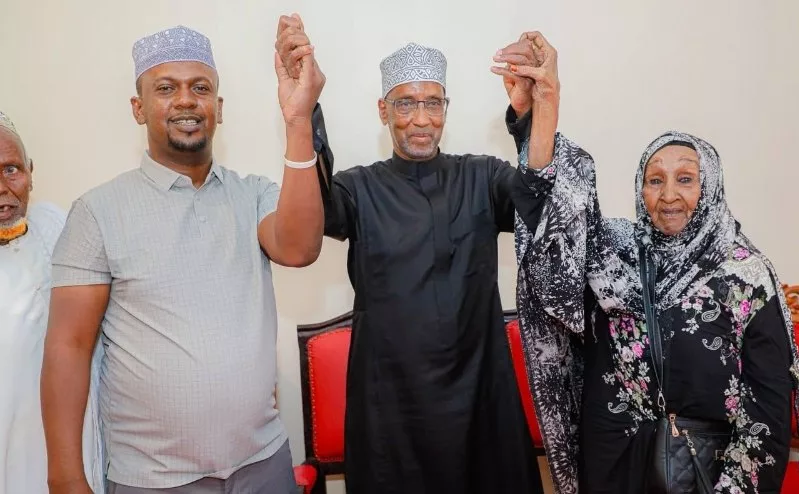 Dr Hassan Mohamed, the Fai sub-clan governorship nominee, with members of the minority community residing in Wajir county after they
endorsed him. /STEPHEN ASTARIKO
Dr Hassan Mohamed, the Fai sub-clan governorship nominee, with members of the minority community residing in Wajir county after they
endorsed him. /STEPHEN ASTARIKO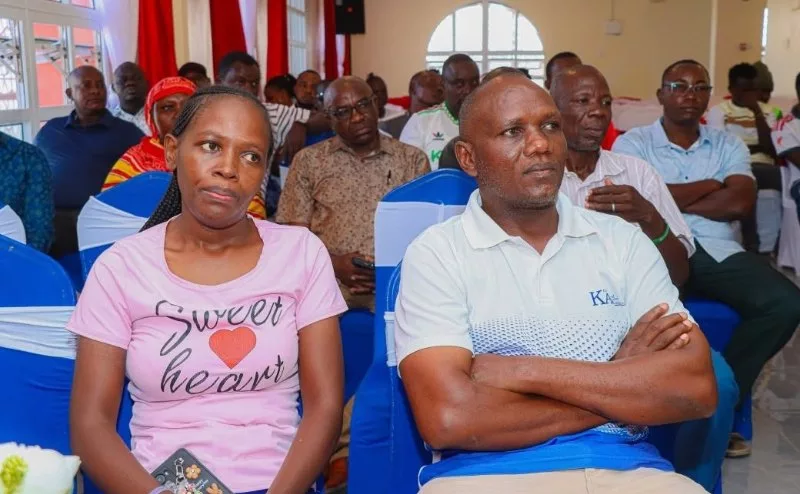 Members of the non-local community residing in Wajir
during a meeting with Dr Hassan Mohamed, the Fai sub-clan governorship
nominee./STEPHEN ASTARIKO
Members of the non-local community residing in Wajir
during a meeting with Dr Hassan Mohamed, the Fai sub-clan governorship
nominee./STEPHEN ASTARIKO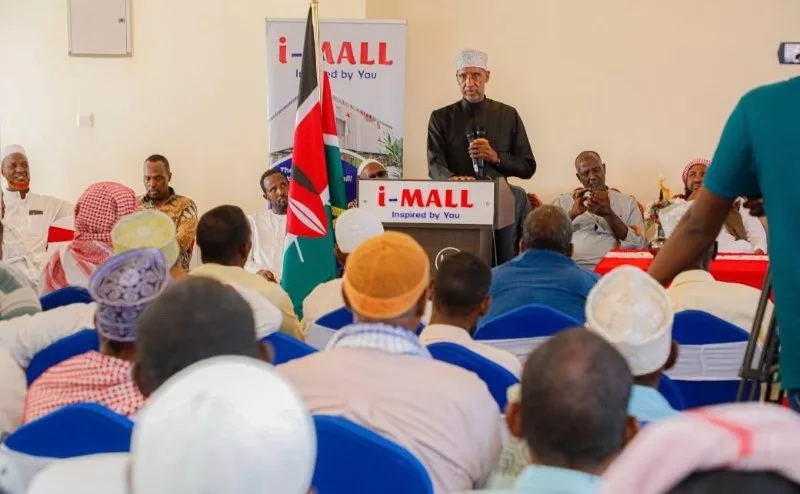 Dr Hassan Mohamed who was endorsed by his Fai clan of
the larger Degodia, addressing members of the minority community residing in
Wajir. /STEPHEN ASTARIKO
Dr Hassan Mohamed who was endorsed by his Fai clan of
the larger Degodia, addressing members of the minority community residing in
Wajir. /STEPHEN ASTARIKO