 Experience under Vision 2030 offers both a record of transformative gains and a reminder of the ambitions that remain unfulfilled.
President William Ruto has thrown open the debate on Kenya's next long-term development agenda after unveiling the proposed Vision 2060 blueprint and inviting citizens to help shape the country's future.
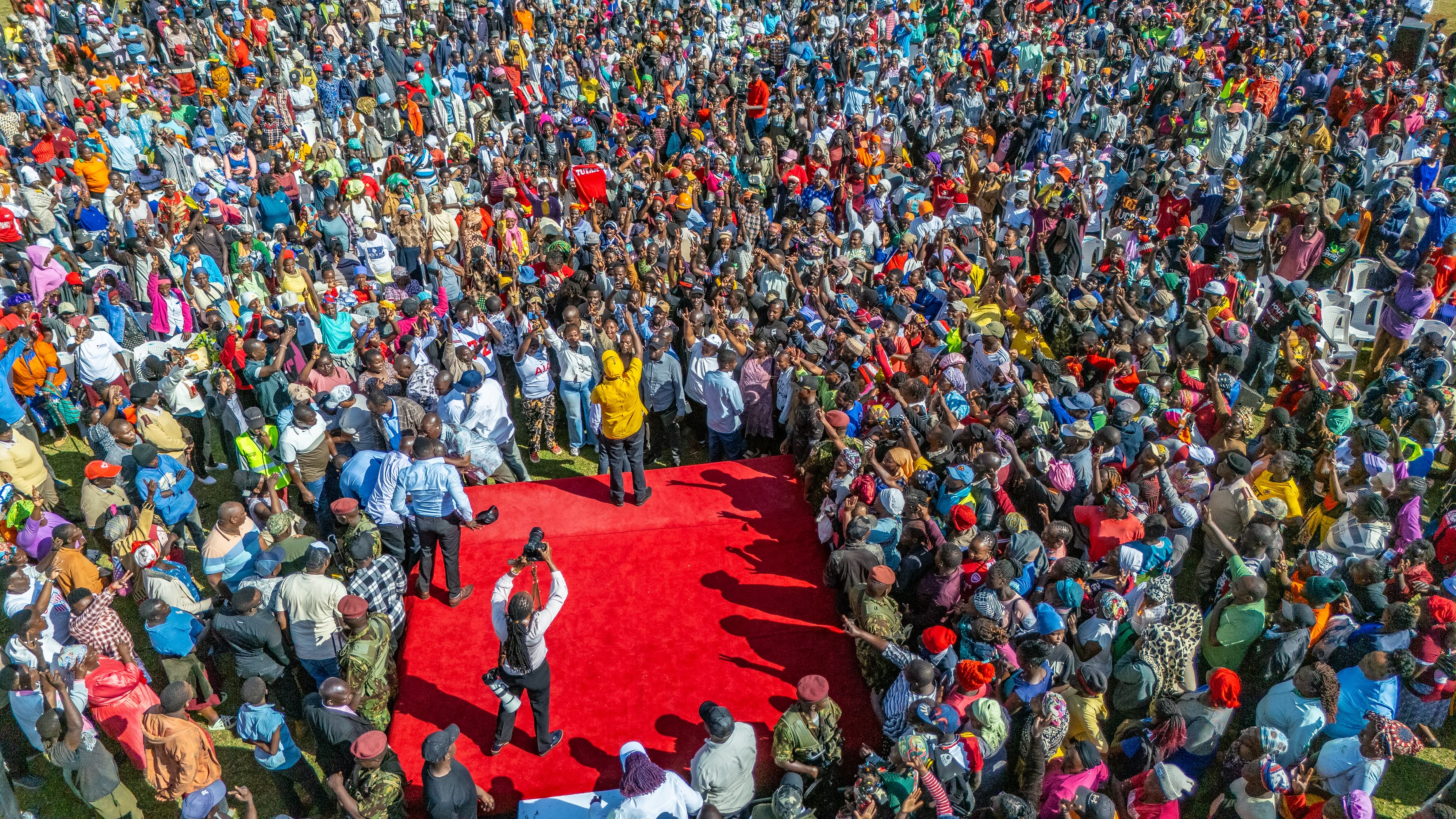
Speaking during a national address on Thursday, July 30, the President announced that public consultations on the new blueprint will begin on August 12, describing the exercise as an opportunity for Kenyans to chart the country's development trajectory over the next three decades.
The proposed Vision 2060 is anchored on three pillars — political freedom, economic growth and social justice — and is intended to succeed Vision 2030, whose implementation is now entering its final years with several of its flagship targets yet to be realised.
"So far, we are off target. This is not a criticism of Vision 2030. Nor is it a reason for disappointment. Rather, it is an opportunity to proudly learn from our successes, reflect with honesty on where we have fallen short, and define, together, Kenya's next long-term vision.
"We can, we must and we shall, together, get it right this time round," the President said.
As the country prepares for that conversation, it is worth examining how far Kenya has travelled under Vision 2030, what has been achieved, and where the country has fallen short.
The assessment offers a useful benchmark for the priorities Vision 2060 will need to address.
Launched in 2008 by President Mwai Kibaki, Vision 2030 set out an ambitious goal of transforming Kenya into a newly industrialising, upper-middle-income country providing a high quality of life for all its citizens by 2030.
The blueprint rests on three pillars — economic, social and political — supported by foundations such as infrastructure, science, technology and innovation, macroeconomic stability, public sector reforms and national security.
Economic ambitions still out of reach
Perhaps the biggest yardstick of Vision 2030 has been its economic pillar, which targeted sustained annual Gross Domestic Product (GDP) growth of 10 per cent through expansion of sectors including agriculture, manufacturing, tourism, financial services, wholesale and retail trade, and information technology.
That target remains elusive. Reflecting on Kenya's economic journey, Ruto noted that the country once outperformed China in GDP per capita but has since been overtaken by a wide margin.
In 1980, Kenya's GDP per capita stood at US$450, while that of China was US$200.
"China overtook us and today has a GDP per capita exceeding US$14,000. A multiple of six compared to ours," he said.
International Monetary Fund projections estimate Kenya's nominal GDP will reach about US$147.3 billion in 2026, up from the World Bank's estimate of US$135.9 billion in 2025.
However, economic growth has consistently remained below the Vision 2030 target.
According to Central Bank of Kenya data, the economy expanded by 4.6 per cent in 2025, down slightly from 4.7 per cent in 2024, while growth accelerated to 5.3 per cent during the first quarter of 2026.
Although encouraging, those figures remain well below the annual 10 per cent growth envisaged when the blueprint was launched.
Mixed progress across the social and political pillars
Beyond economic transformation, Vision 2030 sought to create a just, cohesive and equitable society through investments in education, healthcare, housing, water, environmental conservation and the welfare of women and young people.
Its political pillar envisioned a democratic system that would be issue-based, people-centred and accountable, firmly anchored on the rule of law and respect for individual rights.
Progress across these pillars has been uneven, but several landmark reforms have fundamentally reshaped the country.
One of the earliest breakthroughs came in 2009 when Kenya joined the global fibre-optic network through the landing of The East African Marine System (TEAMS) cable in Mombasa.
The arrival of the privately funded SEACOM cable soon afterwards dramatically expanded international internet connectivity, reduced bandwidth costs and laid the foundation for Kenya's rapid growth as one of Africa's leading digital economies.
The investment accelerated internet access, supported innovation and fuelled the emergence of technology-driven enterprises that have become central to Kenya's economy.
A transformative constitution
Another defining milestone came in 2010 with the promulgation of the constitution, widely regarded as one of the most significant political reforms in the country's history.
The constitution decentralised power from the Executive, strengthened the independence of institutions, expanded the Bill of Rights and created a devolved system of government aimed at bringing services closer to citizens.
Parliament subsequently enacted key legislation to operationalise the constitution, including the Urban Areas and Cities Act, County Governments Act, Transition to Devolved Government Act, Intergovernmental Relations Act and the Public Finance Management Act, among others.
Together, the laws established the legal framework for devolution and strengthened public financial management and intergovernmental relations.
Infrastructure reshapes the economy
Infrastructure development became one of Vision 2030's most visible successes.
Among the flagship projects was the commissioning of the Sh32 billion Thika Superhighway in 2012, which transformed transport between Nairobi and central Kenya by reducing travel times, lowering transport costs and improving connectivity.
The highway also strengthened regional trade by linking Kenya more efficiently with neighbouring countries through key transport corridors.
Momentum continued over the following years as the government embarked on a series of large-scale infrastructure projects designed to modernise transport networks, expand logistics capacity and stimulate economic activity across the country.
These includes the Nairobi Expressway, a 27.1-kilometer tolled dual-carriageway highway that connects Jomo Kenyatta International Airport (JKIA) to Westlands in Nairobi.
Built via a public-private partnership, it cuts across the city to ease heavy traffic jams mostly during peak hours.
Major bypasses are also a core part of Kenya Vision 2030, aimed at decongesting urban areas, improving regional transport corridors and reducing travel costs.
The momentum gathered further from 2013 as the government rolled out reforms aimed at decentralising services, improving healthcare, digitising public services and expanding strategic infrastructure.
Devolution changes governance
A defining milestone came in 2013 when Kenya operationalised devolution following the first general election under the 2010 constitution.
The new system transferred political authority, resources and service delivery functions from the national government to the 47 county governments, fundamentally reshaping governance by bringing decision-making and development closer to citizens.
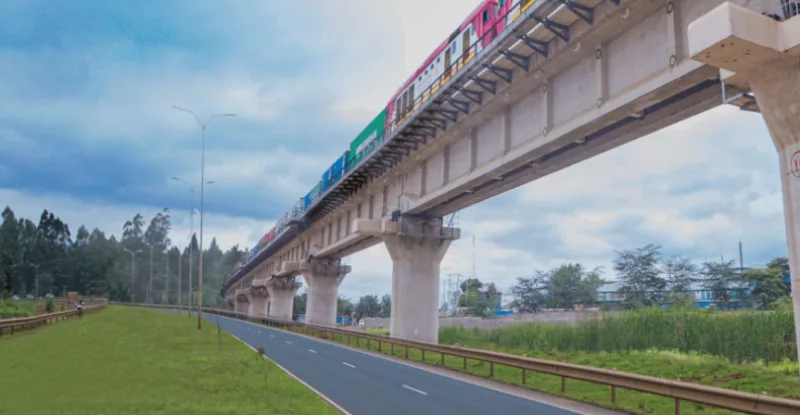
The same year also saw the launch of the Free Maternity Programme, the commissioning of Berth 19 at the Port of Mombasa and the rollout of the first phase of the Standard Gauge Railway (SGR) linking Mombasa and Nairobi.
Government also introduced Huduma Centres as one-stop shops where citizens could access and pay for public services electronically, reducing bureaucracy and improving efficiency.
The maternity programme has since evolved under the Social Health Authority (SHA), with mothers receiving free basic maternal healthcare at public Level Two and Level Three health facilities under revised policy arrangements.
Digital government gathers pace
Kenya's digital transformation accelerated in 2014 with the launch of the eCitizen portal, a platform that fundamentally changed how citizens access government services.
The portal has brought services closer to the public by reducing processing times, enhancing revenue collection and enabling Kenyans, including those living abroad, to access services remotely.
Among the services available are passport and visa applications, driving licence renewals, vehicle registration, business registration, company searches and applications for certificates of good conduct.
Healthcare and education reforms
The following year brought significant investment in healthcare and education.
The Managed Equipment Service (MES) programme was launched in 2015 to improve specialised healthcare by equipping hospitals across the country with intensive care, dialysis, imaging, radiology, theatre and sterilisation equipment.
Although the programme later expired, it has since been replaced by the National Equipment Service Programme (NESP), which operates under a fee-for-service model.
The same year also saw the introduction of the Digital Learning Programme and the Last Mile Connectivity Programme, which expanded electricity access to public primary schools across the country.
The government's digital education drive has continued, with Deputy President Kithure Kindiki launching ICT integration for 10,000 junior schools in July 2026 as the ICT Authority rolls out more than 20,700 digital learning devices, including interactive touchscreens and laptops.
Kenya’s education system has also undergone a massive historic change, shifting from the long-standing 8-4-4 system to the Competency-Based Education(CBE).
Security and transport expansion
Security reforms formed another important component of Vision 2030.
The government invested in new helicopters, armoured personnel carriers, police vehicles and motorcycles to strengthen national security operations, while the recruitment and deployment of an additional 36,000 police officers brought Kenya closer to the United Nations' recommended police-to-population ratio.
Transport infrastructure also continued to expand. Construction of the second container terminal at the Port of Mombasa and the Nairobi-Naivasha phase of the Standard Gauge Railway strengthened Kenya's logistics network and reinforced the country's position as a regional transport hub.
Infrastructure expansion also continued with the commissioning of Outer Ring Road in 2015, easing movement across eastern Nairobi and improving connectivity within the capital.
In 2017, the government commissioned the Sh22 billion Inland Container Depot, launched the Madaraka Express passenger service and completed the Oil Jetty in Kisumu, reviving petroleum transport across Lake Victoria decades after the collapse of the original infrastructure.
The modernisation of Isiolo Airport also improved regional connectivity and supported trade and tourism.
Building for the future Several ongoing flagship projects are also aligned with the aspirations of Vision 2030.
The expansion and modernisation of Jomo Kenyatta International Airport is intended to strengthen Kenya's position as a regional aviation and logistics hub by increasing passenger and cargo handling capacity while supporting international trade and business tourism.
At the same time, construction of the 60,000-seat Talanta Sports City is expected to provide the country's main venue for the 2027 Africa Cup of Nations while creating commercial opportunities through integrated business spaces, ICT hubs and creative studios designed to support the youth economy.
The construction of dams was also a core flagship project under the Kenya Vision 2030 economic blueprint.
However, full achievement remains incomplete. While several medium and multi-purpose dams have been completed or neared completion, large-scale targets face severe financial, structural, and public-private partnership (PPP) execution delays.
From Vision 2030 to Vision 2060
While acknowledging that several Vision 2030 targets remain unmet, Ruto argues that Kenya is entering its next phase of development from a stronger economic position.
According to the President, the country has restored macroeconomic stability by strengthening the shilling, increasing foreign exchange reserves to more than US$15 billion, containing inflation and lowering borrowing costs.
He also said investor confidence has rebounded significantly.
"Last year, Kenya attracted a record US$3.2 billion in foreign direct investment, more than double the amount recorded in 2022," he said.
The President urged Kenyans to participate in the national conversation that will shape Vision 2060, saying the country has laid the foundations for a new phase of long-term development.
"Because we have restored stability, rebuilt investor confidence and laid a firm foundation for our economy, now is the perfect opportunity for Kenya to begin shaping the next phase of our national development," he said.
"That journey has already begun. We have already established the National Infrastructure Fund to ensure the investments essential for Kenya's transformation are financed sustainably. It is also why we have established the Sovereign Wealth Fund, to preserve and invest the wealth our nation creates so that today's prosperity becomes tomorrow's opportunity, shared fairly between present and future generations."
As Kenya approaches the final stretch of Vision 2030, its record presents a mixed but significant picture.
The country has transformed its constitutional order, expanded transport infrastructure, embraced digital government, deepened devolution and invested heavily in connectivity and public services.
Yet many of the blueprint's headline ambitions—particularly sustained double-digit economic growth, industrialisation, job creation and broad-based prosperity—remain unfinished.
That mixed legacy will inevitably shape the debate around Vision 2060.
Rather than starting afresh, the new blueprint will inherit both the achievements and the shortcomings of its predecessor, with its success ultimately measured by whether it can translate decades of planning into faster, more inclusive and sustainable development.
"This national conversation must rise above politics, transcend electoral cycles and unite us around a shared destiny," Ruto told the nation from State House, Nairobi.