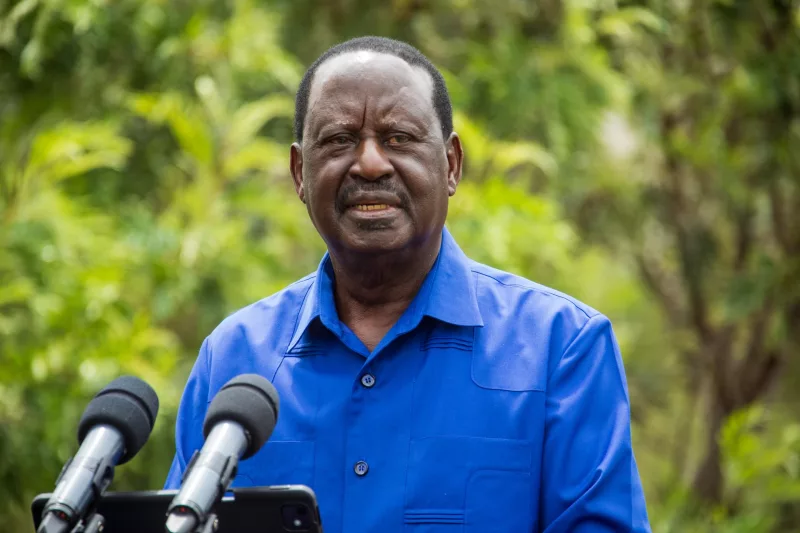
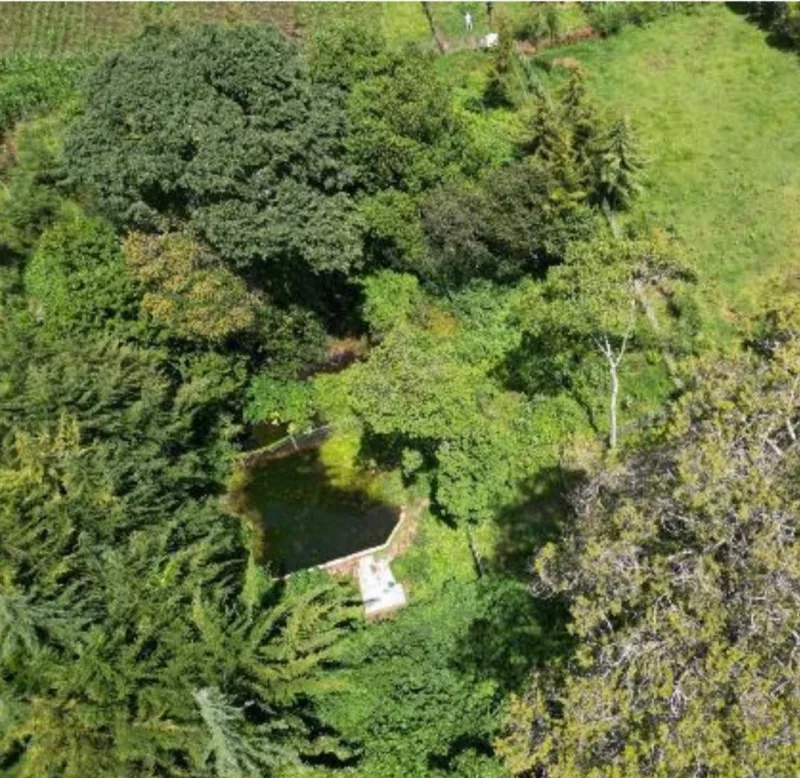
 Only a community that believes in conservation can protect a forest for generations /FILE
There are moments when public debate becomes so emotionally charged that facts are pushed aside, institutions are conflated and individuals are blamed for decisions that may not fall within their mandate.
The unfolding debate over the Kaptagat Forest electric fence is increasingly becoming one of those moments. What began as a legitimate conversation about forest protection, community access and livelihoods is now in danger of becoming a political contest in which a decade of conservation work is being reduced to a single controversial issue.
That would be deeply unfortunate.
The Kaptagat landscape is not merely a stretch of forest surrounded by communities. It is part of Kenya's ecological heritage and a critical natural asset whose health affects water, agriculture, biodiversity, climate resilience and the livelihoods of thousands of people.
The restoration of this landscape did not happen overnight. It required vision, persistence, resources, partnerships and, above all, leadership capable of bringing different actors around a common environmental cause. It is in this context that the decade-long legacy associated with Treasury PS Chris Kiptoo deserves recognition and fair consideration.
Kiptoo's contribution to the Kaptagat restoration agenda should not be judged through the narrow lens of the current controversy over the fence. The broader restoration and empowerment vision sought to demonstrate that environmental conservation and economic empowerment can move together.
The rehabilitation of thousands of hectares across critical forest stations was not simply an exercise in planting trees. It was an attempt to rebuild an ecological system while creating a framework in which communities could participate in conservation and benefit from sustainable economic opportunities.
It is therefore important to distinguish the various institutions and their responsibilities. The Kenya Forest Service (KFS) is the statutory agency responsible for managing and protecting public forests. Its mandate includes forest protection, preventing illegal logging, enforcing forest laws, safeguarding forest boundaries and controlling activities that threaten the ecological integrity of forests.
If an electric fence is constructed to strengthen forest security, protect boundaries and prevent illegal exploitation, responsibility for its technical implementation, management and enforcement belongs to the relevant forest management authorities.
KFS must therefore be held accountable for how the fencing programme is implemented, how access is managed and how communities are engaged. It must ensure that enforcement is lawful, transparent and sensitive to legitimate community concerns.
But it is equally important not to attribute every operational decision by KFS to Kaptagat's broader restoration programme or to individuals associated with its conservation vision.
The Kaptagat Integrated Conservation Programme (KICP) has a different role. It is fundamentally a multi-stakeholder framework for landscape restoration, environmental conservation, community participation and economic empowerment.
Its purpose is to mobilise people, institutions, resources and partnerships around restoring the landscape. Its work extends beyond the physical boundaries of the forest to include tree planting, environmental education, community mobilisation, livelihood development, agroforestry and alternative economic opportunities.
KICP should therefore be understood as the bridge between conservation and community development. Its success depends on ensuring that communities do not see the forest as an obstacle to their prosperity but as an asset whose protection can generate long-term benefits.
The programme's emphasis on initiatives such as dairy development, beekeeping, agroforestry and high-value agricultural enterprises reflects the broader principle that conservation must ultimately improve human welfare.
Community Forest Associations (CFAs) have another distinct but equally important role. They provide an institutional platform through which communities can participate in forest conservation and management. They understand local realities in ways that distant institutions may not.
They can help monitor forest resources, mobilise residents, support restoration and communicate community concerns to government agencies. They should therefore be strengthened as partners rather than treated merely as beneficiaries or opponents.
County governments have responsibilities within their constitutional mandates relating to local development, environmental matters and community welfare. The national government has a role in maintaining peace, security and coordination.
Political leaders have a responsibility to represent their constituents and articulate genuine concerns. But political leadership should not turn conservation into a battlefield. Leaders should be the bridge between the community and government, not the fuel that keeps conflict burning.
The present controversy therefore requires a more intelligent conversation. Communities have every right to ask how the fence will affect access to firewood, medicinal plants, traditional routes and other lawful activities. These concerns should be heard and addressed. At the same time, communities must recognise that illegal logging, commercial exploitation and destructive activities cannot be defended as legitimate community rights.
The answer is not to abandon the fence without considering the ecological consequences. Neither is it to impose conservation measures without listening to the people living around the forest. The answer is a negotiated conservation compact in which KFS protects the forest, KICP coordinates restoration and empowerment, CFAs facilitate community participation, county and national institutions support development, and political leaders promote dialogue.
Where lawful and ecologically appropriate, controlled access points can be considered. Community concerns should be addressed through structured agreements, participatory mapping and transparent consultation. At the same time, the restoration agenda must be accelerated so that communities experience tangible benefits from conservation.
A farmer who earns a sustainable income from dairy, coffee, avocado, beekeeping or agroforestry is less likely to depend excessively on a degraded forest for survival.
This is why Kiptoo's legacy must be viewed through the wider lens of a decade of restoration and empowerment. One disagreement, one fence or one implementation challenge should not erase years of work or undermine the vision that brought government, communities and partners together. If there are weaknesses in implementation, they should be corrected. If communities have genuine grievances, they should be addressed. But correction should not become condemnation, and disagreement should not become historical erasure.
The greatest danger facing Kaptagat is not simply the fence. It is the possibility that mistrust, misinformation and political opportunism will destroy the very partnership that made restoration possible.
The people of Kaptagat should not be forced to choose between conservation and livelihoods. They deserve both. Kenya needs both. The forest needs both.
The legacy of Kaptagat should be one of collaboration, not confrontation. The decade of restoration associated with Kiptoo should be protected and built upon, not casually dismissed because of a disagreement over one component of forest management. The task before stakeholders is to refine the model, clarify institutional responsibilities, listen to communities and strengthen the partnership.
A fence can protect a forest from physical intrusion, but only a community that believes in conservation can protect it for generations. The true measure of Kiptoo's restoration legacy will ultimately be whether the trees planted today continue to stand, whether the rivers continue to flow, whether communities prosper without destroying their natural heritage, and whether Kaptagat becomes a lasting national example of what visionary leadership, community empowerment and environmental stewardship can achieve together.
Let us debate the fence. Let us question policies where necessary. Let us demand accountability from every institution. But let us not, in the heat of political argument, destroy or discredit a decade of restoration whose benefits belong not to one individual, one agency or one generation, but to the entire nation.
Lemlet is a media and communications consultant. Chelimo is the chairman of Jiamni Disability Network.