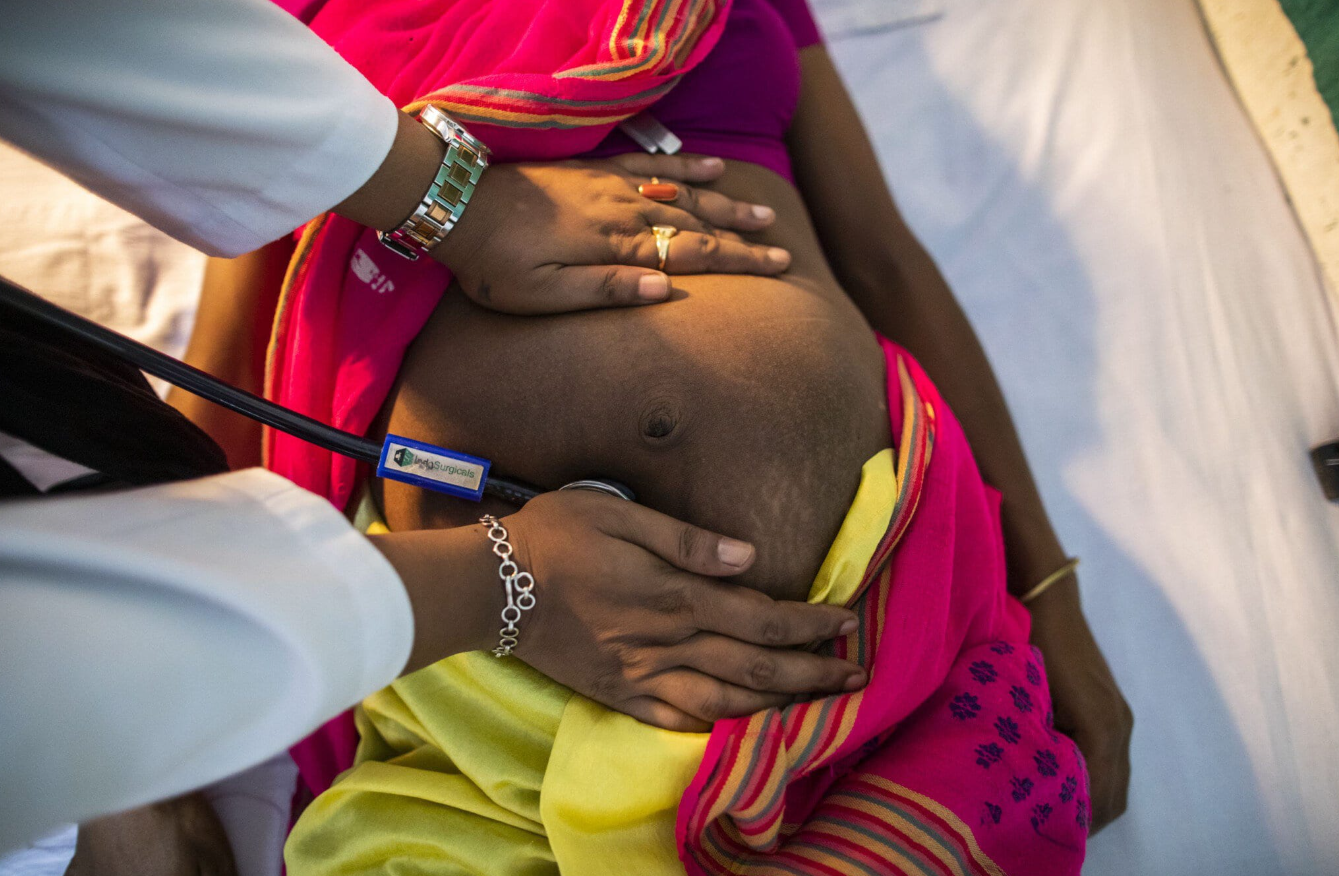
 The investment will improve maternity services.
The government has secured Sh10.4 billion to strengthen maternal and newborn health services, in one of the country's biggest investments in the sector.
The Ministry of Health signed a five-year agreement with non-profit Beginnings Fund, which will invest about Sh10.4 billion (US$80 million) to improve services in approximately 200 high-volume health facilities across 21 priority counties.
The programme aims to reach about 5.9 million women and newborns and help prevent an estimated 46,494 deaths by 2031, the fund said in a statement.
The ministry did not name the 21 counties. Still, previous Ministry of Health maternal and newborn health plans identified 15 counties with the highest burden of maternal and newborn deaths. They include Turkana, Marsabit, Samburu, Wajir, Mandera, Garissa, Isiolo, Tana River, Kilifi, Kwale, Migori, Homa Bay, Kisumu, Siaya and Nairobi.
The ministry said other counties would also be included using equity and health system needs.
Health Cabinet Secretary Aden Duale said the agreement is meant to save lives, not simply add another government programme.
"Frameworks or agreements do not save lives. Implementation does. I therefore urge the Beginnings Fund, implementing partners, and all responsible institutions to move with urgency from signing to execution," Duale said.
"Every delayed procurement, every postponed activity, and every missed milestone represent mothers and newborns whose lives remain at unnecessary risk."
He said success would not be measured by the amount of money spent or the number of meetings held, but by fewer maternal deaths, fewer newborn deaths, fewer stillbirths, stronger health systems and greater public confidence in healthcare.
Beginnings Fund is a philanthropic partnership that works with African governments to reduce preventable deaths among mothers and babies.
It is backed by the Mohamed bin Zayed Foundation for Humanity, the Gates Foundation, the Children's Investment Fund Foundation (CIFF), Delta Philanthropies and The ELMA Foundation.
In Kenya, the money will help improve staffing, ensure hospitals have essential medicines and life-saving equipment, strengthen ambulance and referral services, and improve the collection and use of health data in busy maternity facilities. The investment will also complement funding from the national government, county governments and other development partners.
Pregnancy and childbirth remain big dangers for many Kenyan women and babies.
According to the Ministry of Health, the country still records an estimated 355 maternal deaths for every 100,000 live births, while 21 newborns die for every 1,000 live births.
Another 19 babies are stillborn for every 1,000 births, with many of these deaths considered preventable through timely, quality care during pregnancy, delivery and the first weeks of life.
The latest Kenya National Bureau of Statistics also shows that although more women are delivering in health facilities than before, newborn deaths remain a major challenge, especially during the first month of life. The survey found that nearly nine in every 10 births now occur in health facilities, reflecting improvements in access to skilled delivery care.
Beginnings Fund CEO Alice Kang'ethe said Kenya has shown strong leadership by putting mothers and newborns at the centre of its health agenda.
"We are honoured to partner with the Government of Kenya in advancing its vision for maternal and newborn health," she said.
"Our role is to provide catalytic support that strengthens the people, products and systems needed to deliver quality care, building on the leadership, expertise and commitment that already exists within Kenya's health system."
She said the partnership demonstrates what is possible when governments, counties, health workers, development partners and philanthropic organisations work together towards the same goal.
The programme supports several government priorities, including the Every Woman Every Newborn Everywhere (EWENE) Acceleration Plan, the Maternal and Newborn Health Rapid Results Initiative, Universal Health Coverage reforms and Taifa Care.
Dr Paulin Basinga, Africa Director at the Gates Foundation, said many mothers and babies still die because life-saving care arrives too late or is simply unavailable.
"No family should lose a mother or newborn because lifesaving care was too far away, came too late, or remained out of reach," Basinga said.
"This agreement reflects a shared commitment to tackling persistent and emerging challenges in maternal and newborn health, and shows what is possible when government leadership is matched with catalytic funding to ramp up delivery and impact."
He said the foundation was proud to support efforts that expand quality care to women and newborns who need it most.
Kenya is among the first countries to formally launch a partnership under the Beginnings Fund, joining Malawi, Zimbabwe, Rwanda, Zanzibar, Tanzania, Uganda, Ghana, Lesotho and Nigeria. During its first phase between 2026 and 2031, the fund aims to help prevent more than 300,000 maternal and newborn deaths across 10 African countries while improving access to quality care for an estimated 34 million mothers and newborns.
Instant analysis
The investment signals renewed momentum in Kenya's efforts to reduce one of the highest maternal and newborn mortality burdens in the region. While increased funding is critical, the success of the initiative will depend on how effectively counties strengthen frontline health services, particularly staffing, referral systems and access to essential medicines. By targeting high-volume facilities, the programme seeks to deliver the greatest impact where the need is highest. It also reflects a growing shift towards partnerships between government and philanthropic organisations to bridge healthcare financing gaps. Sustained implementation and accountability will be key to translating funding into improved survival rates for mothers and newborns.