

The government is set to roll out a major engineering project to address the persistent rise in water levels at Lake Baringo, marking a shift from disaster response to long-term infrastructure solutions aimed at protecting communities, safeguarding the environment and unlocking the region's agricultural potential.
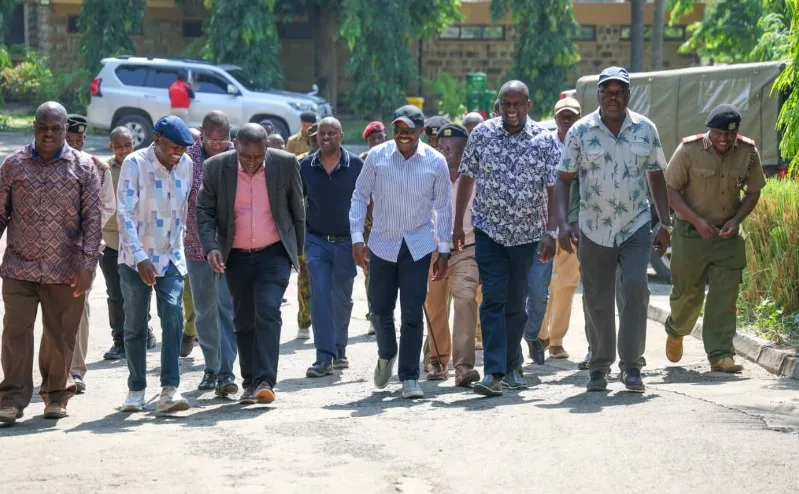
Principal Secretary for Defence Patrick Mariru announced the programme on Tuesday during an inspection tour of Lakes Baringo and Bogoria, accompanied by Principal Secretary for Irrigation Ephantus Kimotho.
The visit formed part of the preliminary assessment phase to validate the extent of flooding and finalize engineering measures ahead of the commencement of construction.
Mariru said the intervention is designed to mitigate flooding, preserve biodiversity, protect livelihoods and create opportunities for irrigation-driven economic development.
"The rising water levels are not the result of a single catastrophic event but of gradual and sustained hydrological changes over the past 15 years," he said.
Lake Baringo has witnessed a steady increase in water volume since 2010, submerging homes, schools, roads, agricultural land, tourism facilities and other public infrastructure. The flooding has displaced thousands of residents and disrupted livelihoods that depend on the lake.
The government also warned of the growing risk that Lakes Baringo and Bogoria could eventually merge if no intervention is undertaken.
Officials said such an occurrence would combine the freshwater ecosystem of Lake Baringo with the alkaline waters of Lake Bogoria, posing a serious ecological threat that could irreversibly damage biodiversity and undermine tourism and economic activities in the region.
Mariru said the government's new strategy departs from previous interventions that largely focused on adaptation and disaster risk reduction by embracing large-scale engineering works intended to provide a lasting solution.
"The new strategy adopts large-scale engineering solutions designed to provide a sustainable, long-term response to the flooding challenge," he said.
At the centre of the programme is the construction of a six-kilometre evacuation tunnel and an approximately 40-kilometre canal that will channel excess water from Lake Baringo to the nearest natural waterway at Chemolingot before flowing towards the Suguta Valley.
In the long term, the diverted water is expected to be directed into the Kerio River to increase inflows into the proposed Lowaat Dam.
The project will also include the construction of a five-kilometre dyke at Sandai to prevent the merging of Lakes Baringo and Bogoria.
In addition, the government plans to build a medium-sized dam across the Waseges River at Sandai to trap excess runoff before it reaches Lake Bogoria.
Beyond controlling floods, the government intends to transform the excess water into an economic asset through irrigation.
Mariru said the project is expected to support irrigation on at least 100,000 acres of agricultural land in Baringo and potentially neighbouring Turkana County under a private investment model.
The initiative is expected to boost agricultural production, strengthen food security and stimulate economic growth in the region.
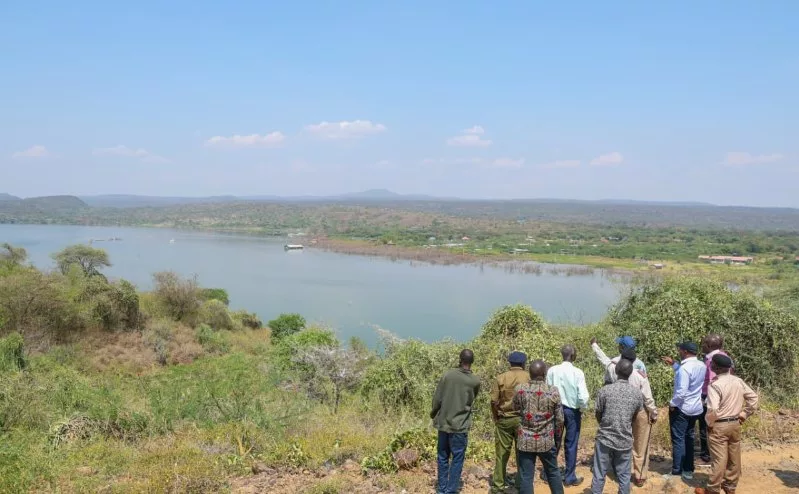
Lake Bogoria is internationally recognised for its geothermal hot springs, spectacular geysers and large populations of flamingos, making it one of Kenya's leading tourist attractions.
Lake Baringo, the only freshwater lake in Kenya's Rift Valley, supports fishing, livestock keeping, small-scale irrigation and thousands of livelihoods that depend on its ecosystem.
The intervention programme will be implemented by the Ministry of Defence through the Kenya Defence Forces in partnership with the State Department for Irrigation and in collaboration with the Baringo County Government.
Also present during the inspection were Tiaty MP William Kamket and the KDF Special Projects implementation team led by Brigadier Titus Sokobe, who are expected to oversee the commencement of the works.
Mariru reaffirmed the government's commitment to implementing the project without delay, saying timely execution was essential to protect vulnerable communities, conserve the region's unique ecosystems and secure its long-term socio-economic future.
"We are now moving into the implementation phase of a comprehensive intervention programme aimed at mitigating flooding, protecting livelihoods, preserving biodiversity and unlocking the economic potential of the region through irrigation," he said.
He added that the project represents a long-term investment in protecting lives while creating sustainable opportunities for development in one of Kenya's most environmentally significant regions.







