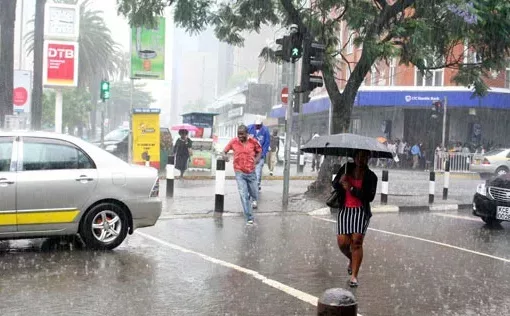
The Kenya Meteorological Department (KMD) has indicated that the country may experience above‑normal rainfall from October as a strong El Niño event develops, raising the risk of wetter conditions extending into early 2027.
KMD has pointed out that there is an 81 per cent probability that the 2026 El Niño will be very strong and a 97 percent chance that it will persist into the first months of 2027.
Narok County Director of Meteorological Services Stanley Kinyua said the country is expected to transition from below‑normal rainfall in the coming weeks to wetter‑than‑average conditions during the October-November-December short rains season.
Kinyua cautioned that the strength of El Niño alone does not determine the amount of rainfall Kenya will receive.
He explained that rainfall will largely be influenced by the Indian Ocean Dipole, a climate phenomenon caused by differences in sea surface temperatures across the Indian Ocean.
Depending on whether the IOD is positive or negative, it can either enhance or suppress the effects of El Niño over East Africa.
Speaking during a meeting on an Ad Hoc Cabinet Committee on El Niño Preparedness and Response to coordinate Narok County’s response to the forecast moderate-to-strong El Niño rains expected later this year, the official flagged flood and landslide hotspot areas of the devolved unit as Narok town, Mosiro, Ewaso Ngiro, Kilgoris and Nkareta.
KMD projects below‑average rainfall across much of western Kenya during the August-September-October period.
However, conditions are expected to change from October, with most parts of the country likely to receive above‑average rainfall through November.
Kinyua cautioned that El Niño is not rainfall itself but a naturally occurring climate pattern in the tropical Pacific Ocean that develops every two to seven years and influences weather globally.
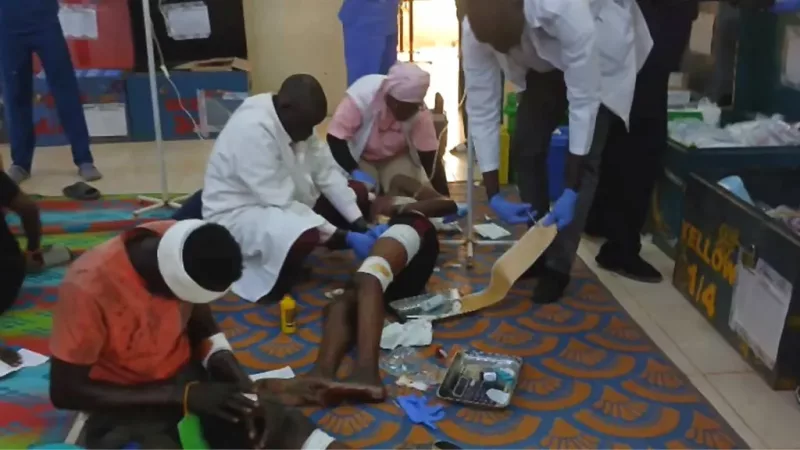
El Niño has been linked to several major flooding events in Kenya. The country experienced one of its worst episodes in 1997-1998, when widespread floods claimed lives, displaced thousands, and destroyed infrastructure.
Other significant El Niño events occurred in 2006-2007, 2015-2016, and 2023-2024, the latter bringing heavy rains, floods, and landslides that killed hundreds and caused extensive damage.
Kinyua said the Indian Ocean Dipole (IOD) is likely to be positive.
“The 2015 El Niño was a very strong one, close to 1997, but because the IOD was weakly positive, we did not experience as much rainfall as was experienced in 1997. The outcome of the season will majorly depend on the strength of the IOD.”
He said some areas have been affected by drought, compromising food security in the nation.
He said depressed rainfall is expected over the Western half of the country in August and September.
“Above average rainfall is expected over most parts in October and November,” he added.
During August-September-October, depressed rainfall is expected over the western half of the country while above-average rains will be expected over most parts in September-October-November.
Kinyua said El Niño will affect those in the informal settlements, floodplain communities, ASAL communities, and those in riparian and wetlands.
Crops, livestock, roads, water systems, markets and health facilities will also be affected.
He said floods become disasters because of weak drainage, poor sanitation, poor housing and weak infrastructure.
In Kenya, El Niño is most commonly linked to heavy rainfall during the October to December short rains season.
Narok North Deputy County Commissioner Joseph Merisho assured residents that a multi-agency team is laying down adequate measures in anticipation of the El Niño rains expected between October and December this year.
The administrator explained that the committee that is co-chaired had activated relevant State agencies and county departments in conjunction with the State Department for Special Programmes and humanitarian agencies to ensure that, in the event of the forecasted rains, they are not caught flat-footed.
He indicated that they had held discussions on mapping the internal resources available within committee members, mitigation measures, the relay of information to the public, strengthening interdepartmental coordination, and identifying priority interventions.
Scientists contend that El Niño, as part of a larger climate cycle, is a naturally occurring climate phenomenon characterised by the abnormal warming of the Pacific Sea surface temperatures.
The World Meteorological Organisation warns that the El Niño climate phenomenon could bring droughts, flooding, heat waves and displacement of people around the world later this year.
The international weather agency warned that the anticipated heavy rainfall could have far-reaching consequences across many sectors, including transportation, agriculture, health and infrastructure.
The national government has also activated an Ad Hoc Cabinet Committee on El Niño preparedness that will also support the devolved governments.
Merisho stated that early preparedness and timely action remain essential in reducing the impacts of El Niño rains, thus averting humanitarian crises and protecting livelihoods.
The Multiagency team will also coordinate farmer advisories to help cushion the agriculture sector from potential losses.
The move is aimed at strengthening national resilience and ensuring better coordination among Government agencies ahead of the expected weather disruptions.
The formation of the special committee comes as Kenya continues to enhance climate preparedness following previous episodes of devastating floods that displaced families, destroyed infrastructure and disrupted economic activities in several parts of the country.
Narok Central Deputy County Commissioner Kennedy Mwangome noted that early planning and inter-agency coordination will be critical in protecting lives, safeguarding property and ensuring continuity of essential services during the El Niño season.
He said the measures are aimed at strengthening national preparedness and ensuring a coordinated response ahead of the anticipated El Niño season.
Kenya is among 22 countries around the world that could be badly affected by a powerful El Niño that is developing and is expected to grow stronger in the coming months.
A new report by the Food and Agriculture Organization (FAO) and the World Food Programme (WFP) warns that millions of people could face threats to their food supplies and livelihoods unless governments and aid agencies act early.
The report says Kenya is among countries facing a high risk of climate-related shocks linked to El Niño between late 2026 and early 2027. Demographics
"An El Niño is forming, and millions of food-insecure people are in its path. Strong El Niño conditions are developing, threatening food security, agriculture and livelihoods across multiple regions into 2027," the report says.
The agencies are asking donors to provide $202 million (Sh26 billion) to help vulnerable communities prepare before disasters strike. They say acting early can save lives, protect crops and reduce future humanitarian costs.
"For the first time, the Food and Agriculture Organization of the United Nations (FAO) and the World Food Programme (WFP) are issuing a joint, forward-looking appeal for anticipatory action at scale," the report says.
"The two agencies are positioned to immediately support 1.2 million people at risk from the predicted El Nino impacts. An additional USD 167 million (Sh21.6 billion) would extend anticipatory assistance to 7.6 million more."
Climate Change and Global Warming
For Kenya and other countries in Eastern Africa, the report warns that the biggest threat is likely to be unusually heavy rainfall and flooding.
It notes that El Niño affects different parts of Eastern Africa in different ways. While some areas may experience reduced rainfall, countries in the Horn of Africa, including Kenya, face a greater risk of floods.
"By contrast, between October and December, in the bimodal areas of the Horn of Africa, including Somalia, Kenya, Uganda and eastern Ethiopia, El Niño is linked to an increased risk of above-average rainfall and flooding," the report says.
"Global models already indicate a high probability of wetter-than-normal conditions during this season."
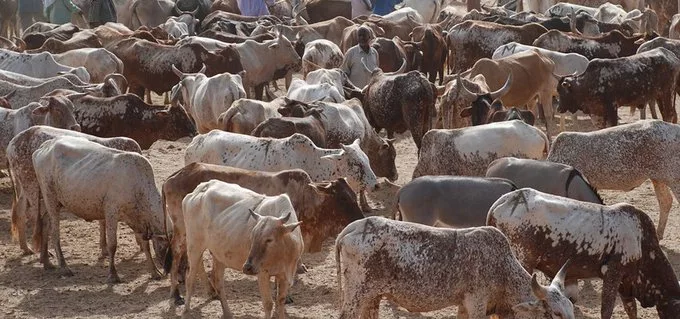
Flooding could damage farms, destroy infrastructure, spread livestock diseases and force families to leave their homes.
Among the key risks identified for Eastern Africa are "crop losses and damage to agricultural infrastructure", "livestock disease outbreaks, reduced milk production and animal losses", and "population displacement and disruption of livelihoods."
"This El Niño is expected to bring significantly drier conditions to Southern Africa, Central America, parts of Asia and the Pacific, and Eastern Africa, while increasing the likelihood of floods and storms in the Horn of Africa and parts of Asia."
Kenya appears on a list of priority countries identified by FAO and WFP for urgent support and preparedness efforts before the worst effects are felt.
The agencies selected the countries based on historical El Niño weather patterns, climate forecasts, food insecurity levels, agricultural calendars and their readiness to respond.
The report says Kenya is among high-risk countries where the two UN agencies are "strengthening readiness efforts and supporting the development or refinement of anticipatory action plans considering forecast El Niño risks." The agencies say countries should begin preparations immediately because there is still time to reduce the impact of the expected weather shocks.
Recommended actions include sending early warnings to communities, providing cash support to vulnerable households, distributing seeds and farm inputs, improving water storage, vaccinating livestock and putting flood protection measures in place.