When Uraia Trust, a Kenyan civic education organisation, says it exists because “Kenyans have rights and responsibilities,” it captures a truth that is increasingly missing from Kenya’s public discourse.
Across television debates, social media activism, NGO campaigns, court petitions and civic protests, the language of rights dominates national conversation. Citizens demand the right to protest, the right to healthcare, the right to education, the right to information, the right to fair treatment and the right to dignity. These rights are real, constitutional and necessary.
But somewhere along the way, Kenya developed an imbalance: we passionately defend rights while often whispering about responsibilities. The result is a society where citizens increasingly demand accountability from the state while feeling little obligation to uphold accountability themselves.
The Constitution of Kenya 2010 is clear that democracy is not a one-way arrangement. Rights and duties are meant to coexist.
Chapter Four of the constitution contains one of the most progressive Bills of Rights in Africa. It guarantees freedoms ranging from expression to healthcare and education.
For example, Article 43 states that every person has the right to healthcare, housing, food, water, social security and education. Article 37 guarantees the right to demonstrate, picket and petition. Article 33 protects freedom of expression.
These provisions transformed Kenya after decades of authoritarian rule. Human rights organisations emerged strongly because many freedoms had previously been denied or abused. Their emphasis on rights was therefore historically justified.
Groups such as Uraia Trust were born in a period when Kenyans needed civic education and protection from state excesses. Yet the constitution never intended rights to exist without limits or obligations.
Article 24 is perhaps one of the most ignored constitutional provisions in public debate. It states that rights may be limited where necessary and where the exercise of one person’s freedom prejudices the rights of others. In simple language, your rights stop where another person’s rights begin. That principle is increasingly forgotten.
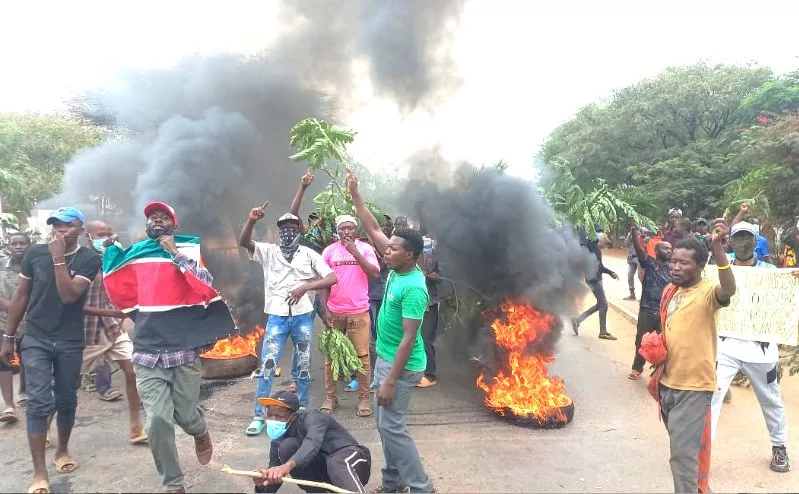
Take demonstrations as an example. Kenyans rightly invoke Article 37 to protest corruption, police brutality or poor governance. But when protests lead to the destruction of businesses, looting of shops, attacks on motorists or disruption of hospitals and schools, the conversation often becomes selective. Rights are loudly defended; responsibilities become invisible.
A trader whose kiosk is burned also has constitutional rights. A child unable to reach school safely also has rights. A patient blocked from accessing a hospital also has rights. Article 24 directly warns against enjoyment of freedoms that prejudice the freedoms of others.
Similarly, freedom of expression under Article 33 does not include propaganda for war, incitement to violence, hate speech or advocacy of hatred. The constitution itself imposes responsibility on speech. Yet Kenya’s digital culture increasingly treats accountability as censorship.
The same contradiction appears in governance. Many citizens condemn corruption among politicians while casually bribing police officers, cheating taxes, obtaining fake certificates or ignoring public rules. We condemn leaders for stealing billions while celebrating small-scale dishonesty as “being smart”.
Article 10 of the constitution lists national values, including integrity, transparency, accountability, patriotism, human dignity and the rule of law. These are not values meant only for State House or Parliament. They apply to citizens too.
Indeed, Article 3 places a direct obligation on every person to “respect, uphold and defend” the constitution. That is a responsibility, not merely a right.
One reason many NGOs emphasise rights more than responsibilities is historical. Civil society in Kenya evolved primarily as a shield against abuse of power. During the one-party era and periods of state repression, the greatest threat came from government excesses. Activists therefore focused on empowering citizens against the state.
That legacy remains important. Without human rights defenders, many injustices would go unchallenged. Cases of unlawful detention, police abuse, electoral injustice and discrimination often come to light because activists insist on constitutional protections.
For instance, public awareness campaigns around Article 49 on rights of arrested persons have helped many Kenyans understand protections against unlawful detention. But a democratic society matures when it moves beyond resistance into responsibility.
The constitution did not create consumers of rights. It envisioned citizens and citizenship requires duty. Parents demanding free education also carry responsibility to guide and discipline their children. Article 53 speaks of the “equal responsibility” of both mother and father in caring for children.
Citizens demanding efficient healthcare must also safeguard public hospitals from vandalism and corruption. Leaders demanding respect from citizens must obey the law themselves. Journalists demanding media freedom must verify information responsibly. Religious leaders demanding freedom of worship must reject extremism and manipulation. Even voters demanding better leadership carry perhaps the greatest responsibility of all: voting wisely.
Kenya’s civic problem is therefore not that rights are overemphasised; rights remain essential. The problem is that responsibility has become unfashionable.
Responsibility sounds moralistic in an era where outrage trends faster than reflection. It is easier to point fingers at institutions than to ask difficult personal questions. Yet nations are not built only by constitutions, courts and NGOs. They are built by habits. Habits of honesty. Habits of civic duty.Habits of restraint.Habits of respecting both freedom and order.
That is why Uraia’s formulation matters deeply. Rights and responsibilities are twins. Separate them, and democracy limps. A Kenya where citizens know only their rights risks descending into permanent grievance. A Kenya where the state speaks only about responsibility risks authoritarianism. The balance between the two is what creates constitutional maturity.
The constitution gave Kenyans freedoms that previous generations could only dream about. But it also quietly asked something in return: responsibility worthy of those freedoms.
V