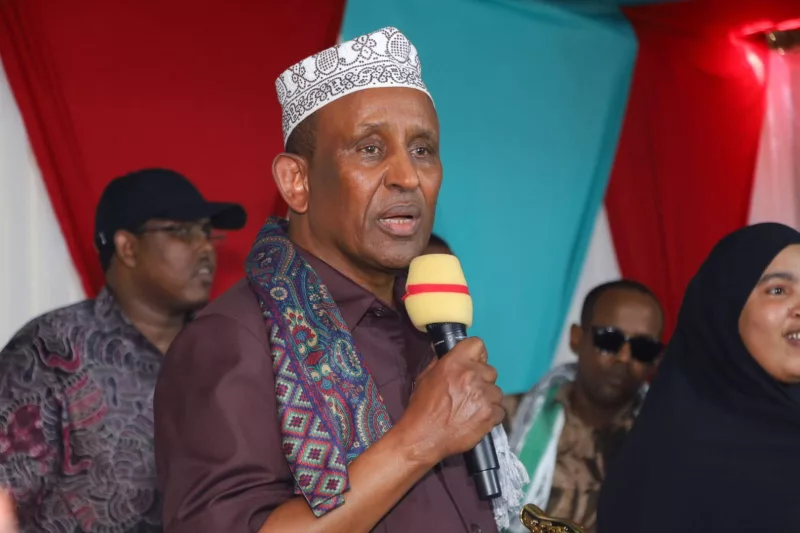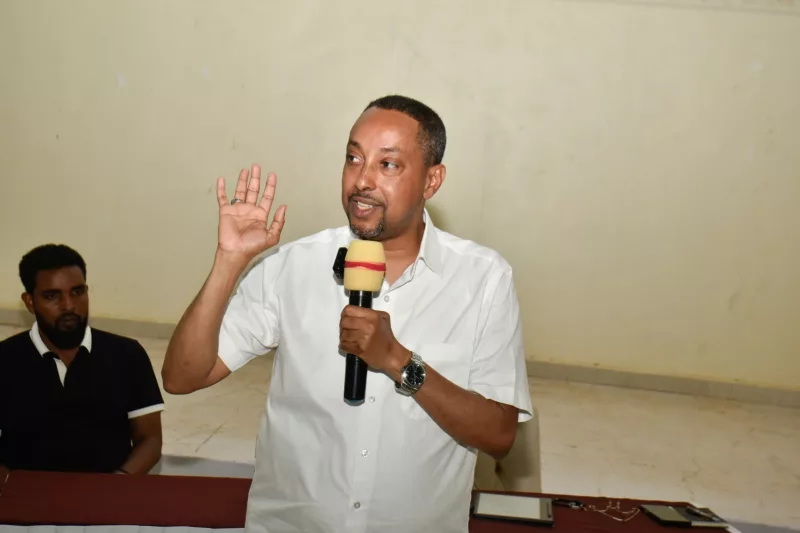
Garissa County Assembly speaker Abdi Idle Gure chairing the meeting that was attended by officials from UNHCR./STEPHEN ASTARIKO
The Garissa County Assembly and the United Nations High Commissioner for Refugees (UNHCR) are exploring a formal institutional partnership aimed at strengthening refugee governance.
The collaboration also seeks to enhance legislative oversight and supporting development programmes that benefit both refugees and host communities.
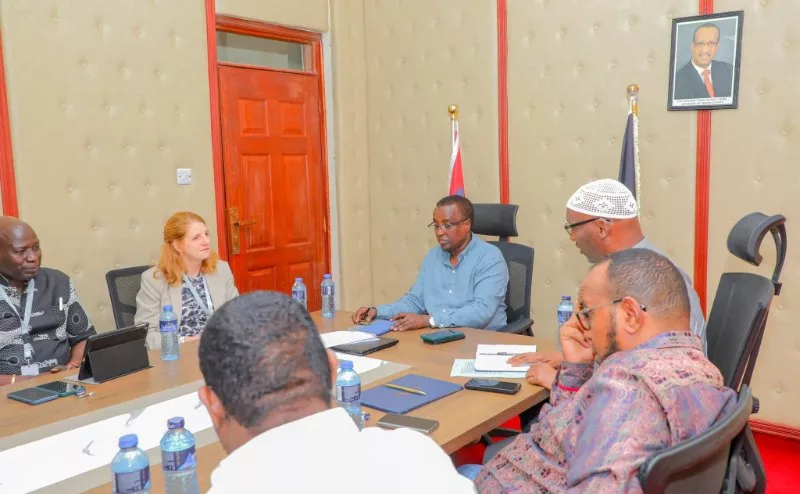
The proposed collaboration emerged during a meeting between Assembly officials led by the Assembly Abdi Idle Gure and a high-level UNHCR delegation led by the Deputy Country representative, Ms. Robin Ellis.
The discussions come at a time when Garissa County is increasingly taking centre stage in Kenya's refugee response, with Dadaab Refugee Complex remaining home to one of the world's largest refugee populations and the government pursuing policies that seek to integrate humanitarian assistance with long-term socio-economic development.
According to the two institutions, the envisaged partnership would establish a structured framework for continuous engagement on legislation, policy development, oversight and budgeting relating to refugee affairs and the welfare of host communities.
Speaker Gure said the County Assembly was ready to play its constitutional role in ensuring that programmes targeting refugees and local residents are anchored in law, properly funded and subjected to effective oversight.
"The County Assembly is not merely a law-making institution. We are responsible for ensuring public resources are used prudently and that policies respond to the realities facing our people. A structured partnership with UNHCR will strengthen accountability while helping us develop legislative solutions that benefit both refugees and host communities," Gure said.
He noted that as the country implements the Shirika Plan, closer collaboration between humanitarian agencies and county governments would be critical in preventing conflicts, promoting social cohesion and ensuring communities benefit equitably from development initiatives.
The Speaker proposed collaboration in several areas, including the domestication of the Refugees Act at the county level, strengthening civic participation through the Ward Youth Champions Programme, capacity building for Members of the County Assembly and the Assembly Secretariat, as well as developing mechanisms for peaceful coexistence between refugees and surrounding communities.
"The success of refugee integration depends on strong institutions and inclusive policies. Our commitment is to ensure that no community feels left behind as these programmes are implemented," he added.
Leading the UNHCR delegation, Ms. Robin Ellis welcomed the Assembly's willingness to institutionalize the partnership, describing county legislatures as critical players in translating national refugee policies into practical solutions at the local level.
"The County Assembly has demonstrated a clear commitment to transparency, accountability and inclusive governance. Those are the foundations upon which sustainable refugee responses are built, and we look forward to working closely with the Assembly to strengthen them," Ellis said.
She noted that UNHCR was keen on learning from experiences in other refugee-hosting counties, particularly Turkana, as it supports implementation of the Garissa Integrated Socio-Economic Development Plan (GISEDP), a long-term development framework intended to improve livelihoods, infrastructure and access to public services for both refugees and host communities.
Ellis said the shift towards integrated planning reflects a broader recognition that refugee-hosting areas require sustained investment in public services rather than humanitarian interventions alone.
The Head of the UNHCR Dadaab Sub-Office, Henok Ochalla, described the County Assembly as an indispensable partner in advancing refugee-related programmes.
He said Garissa already possesses many of the building blocks required for successful implementation of GISEDP, including political goodwill, institutional capacity and growing support for policies that recognise the needs of both refugees and host communities.
UNHCR official Charles Odera also commended the Assembly for enacting legislation on municipal financing, saying stronger urban governance would improve service delivery and enhance access to essential services for residents and refugees alike.
Garissa County hosts the Dadaab Refugee Complex, established in 1991 following the outbreak of civil war in Somalia.
Over the decades, the camps have evolved into one of the largest and longest-running refugee settlements globally, hosting hundreds of thousands of refugees, predominantly from Somalia, alongside smaller populations from other countries in the region.
For many years, refugee management in Kenya largely revolved around humanitarian assistance delivered within camps.
However, the government's recently adopted Shirika Plan marks a significant policy shift by promoting greater socio-economic inclusion of refugees while investing in infrastructure, education, healthcare, livelihoods and public services that benefit both refugees and the communities hosting them.
Within Garissa, the Garissa Integrated Socio-Economic Development Plan (GISEDP) complements this approach by seeking to transform refugee-hosting areas through integrated planning and development, with county institutions expected to play a central role in providing legislative support, oversight and accountability.
The meeting was attended by Budget and Appropriations Committee Chairperson and Damajale MCA Omar Abdi Hassan, County Assembly Clerk Mohamud Santur among assembly staff.
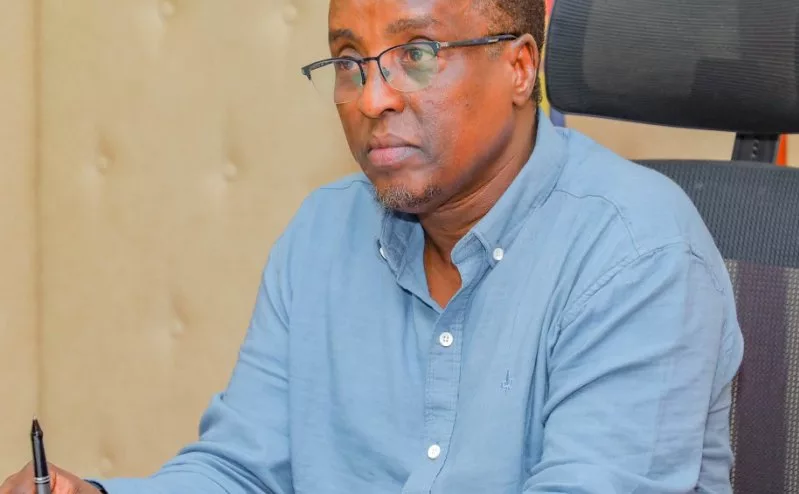 Garissa County Assembly speaker Abdi Idle Gure during the meeting in his
office. /STEPHEN ASTARIKO
Garissa County Assembly speaker Abdi Idle Gure during the meeting in his
office. /STEPHEN ASTARIKO
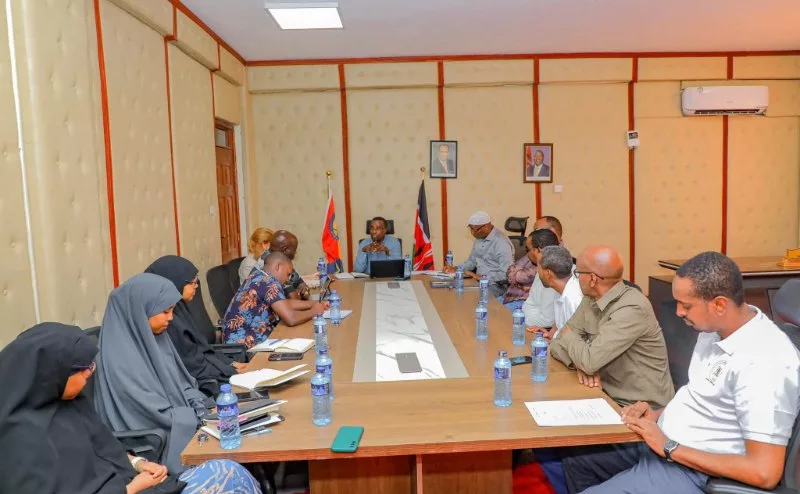 Garissa County Assembly speaker Abdi Idle Gure chairing the meeting that was
attended by officials from UNHCR./STEPHEN ASTARIKO
Garissa County Assembly speaker Abdi Idle Gure chairing the meeting that was
attended by officials from UNHCR./STEPHEN ASTARIKO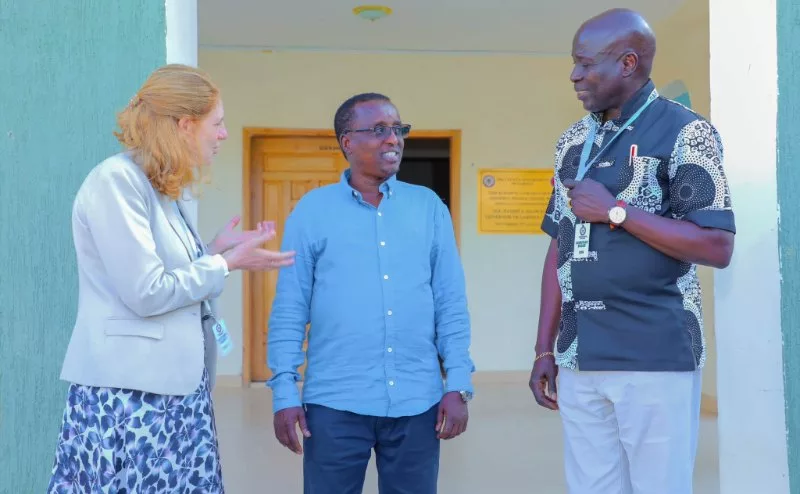 Garissa County Assembly speaker Abdi Idle Gure has a word with Kenya UNHCR Deputy
Country Representative, Ms. Robin Ellis and the Head of the UNHCR Dadaab
Sub-Office, Henok Ochalla. /STEPHEN ASTARIKO
Garissa County Assembly speaker Abdi Idle Gure has a word with Kenya UNHCR Deputy
Country Representative, Ms. Robin Ellis and the Head of the UNHCR Dadaab
Sub-Office, Henok Ochalla. /STEPHEN ASTARIKO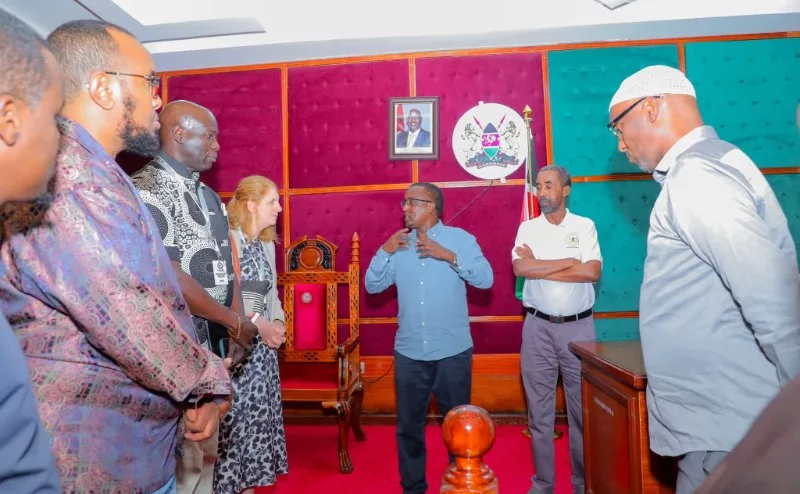 Garissa County Assembly speaker Abdi Idle Gure takes the UNHCR delegation
round the Assembly chambers./STEPHEN ASTARIKO
Garissa County Assembly speaker Abdi Idle Gure takes the UNHCR delegation
round the Assembly chambers./STEPHEN ASTARIKO