

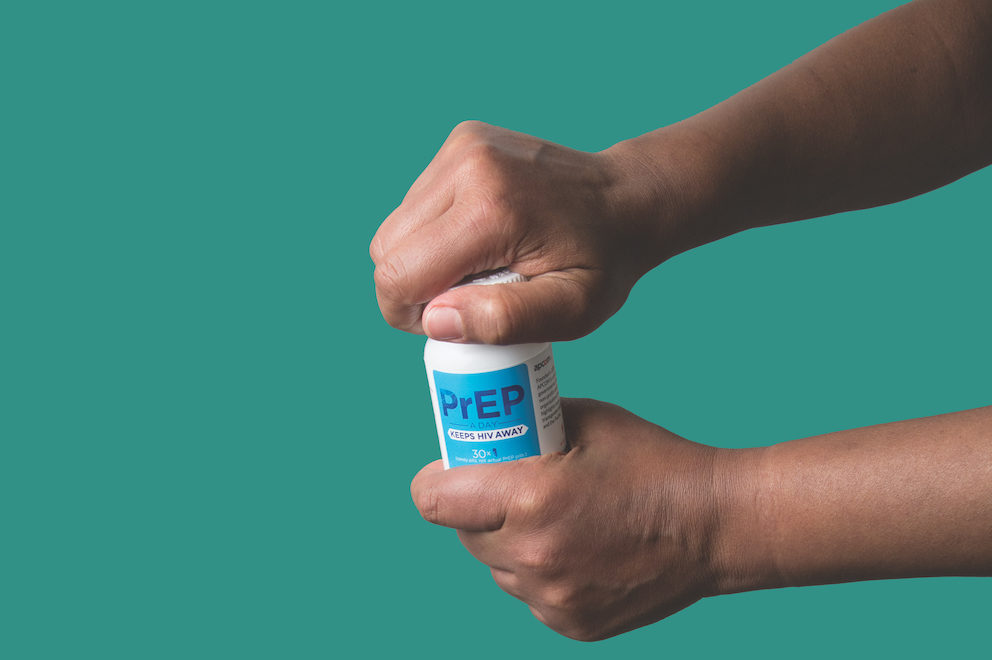
 Prep Pill for HIV
People taking medicine to prevent HIV are more likely to contract chlamydia or gonorrhoea than those not using the drugs, study shows.
This has raised concerns about the growing burden of other sexually transmitted infections (STIs).
The researchers, some from the University of Nairobi, stressed that pre-exposure prophylaxis (PrEP) medicines are highly effective at preventing HIV.
However, they do not protect people from bacterial infections such as chlamydia and gonorrhoea.
The study found that people who reported taking PrEP had a 75 per cent higher chance of being diagnosed with chlamydia or gonorrhoea than those not taking the HIV prevention pills.
"It is encouraging that approximately one in four individuals at high risk for STIs report using PrEP; among PrEP-using individuals, globally, STI rates have been substantial, leading to calls for better integration of STI and HIV services," the researchers wrote.
"Participants self-reporting PrEP use had over 75 per cent increased risk of incident CT/NG infection."
The researchers followed 650 HIV-negative men who have sex with men and transgender women aged 18 to 29 years in Kisumu, Nairobi, Malindi and Mtwapa.
Participants were tested for chlamydia and gonorrhoea in the throat, genitals and rectum before being followed over time.
During the study, 72 participants developed a new chlamydia or gonorrhoea infection, equivalent to about 27 new infections for every 100 people followed for one year.
The researchers were careful to point out that PrEP does not cause chlamydia or gonorrhoea.
Instead, they said people taking PrEP are already among those at higher risk of sexually transmitted infections because of their sexual exposure.
Since PrEP protects only against HIV, users can still become infected with other sexually transmitted infections if they are exposed.
The researchers reminded health workers and patients that HIV prevention pills should not replace other ways of preventing sexually transmitted infections.
"STI prevention and treatment among MSM in sub-Saharan Africa should include notification of both male and female partners... along with education that HIV PrEP does not prevent STI," they said.
The findings were published in the journal BMJ Open by researchers from the Kemri-Wellcome Trust Research Programme, the University of Nairobi, the Nyanza Reproductive Health Society, the University of Oxford and other institutions.
The study is titled, 'Chlamydia and gonorrhoea infections in young Kenyan HIV-negative cisgender men who have sex with men and transgender women: a multicentre cohort study”.
The researchers said the findings show the need for HIV prevention programmes to also offer regular screening and treatment for other sexually transmitted infections.
The study found another strong warning sign. People who already had chlamydia (CT) or gonorrhoea (NG) at the beginning of the study were more than three times more likely to become infected again during follow-up, even after receiving treatment.
"Participants with CT/NG infection at baseline were 3.1 times more likely to acquire CT/NG infection during follow-up despite treatment," the researchers said.
The researchers said this may happen because sexual partners may not receive treatment, some people may not complete their medicine, or infections continue circulating within sexual networks.
The study also found that many infections had no symptoms. This means people can carry and spread the bacteria without knowing they are infected.
Because of this, the researchers say relying only on symptoms may miss many infections, especially in groups at high risk.
PrEP is one of the world's most effective HIV prevention tools. When taken correctly, it reduces the risk of getting HIV through sex by more than 99 per cent.
However, it offers no protection against infections caused by bacteria, including chlamydia, gonorrhoea and syphilis.
The researchers concluded that new ways are urgently needed to reduce these infections while continuing to expand HIV prevention.
"New strategies need to be evaluated to reduce the burden of CT/NG infections in MSM and transgender women in sub-Saharan Africa."
The authors cautioned that the findings may not apply to the general population because the study involved young men who have sex with men and transgender women, groups known to have a higher risk of sexually transmitted infections.
They also said the research was not originally designed to evaluate STI treatments, only a limited number of throat samples were tested because of funding constraints, and they did not collect information on whether participants took all their medicines or whether their sexual partners were treated.
Instant analysis
The study reinforces an important public health message: while PrEP is highly effective at preventing HIV, it is not a substitute for broader sexual health protection. The higher rate of chlamydia and gonorrhoea among PrEP users reflects continued exposure to sexually transmitted infections rather than a failure of the medicine itself. The findings strengthen the case for integrating HIV prevention with routine STI screening, treatment and education, particularly for high-risk populations. They also highlight the importance of partner notification and regular testing, given that many bacterial infections produce no symptoms and can spread unnoticed, undermining efforts to curb transmission.







