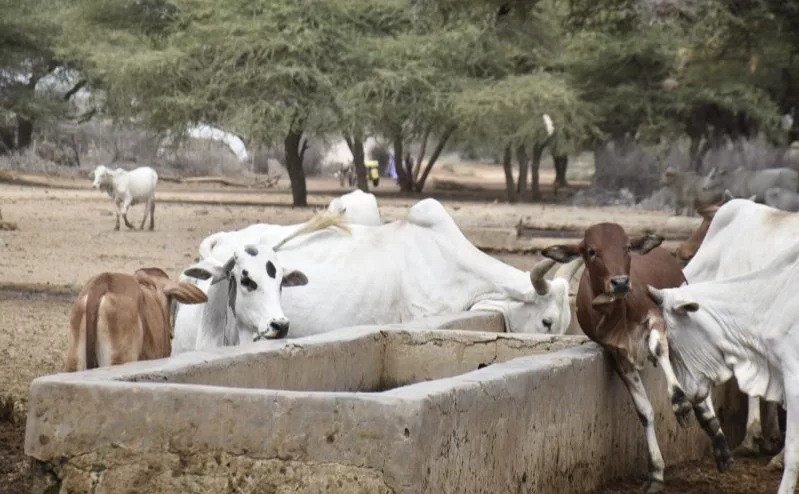
 Cows drinking water a watering point in Tarbaj, Wajir
county /STEPHEN ASTARIKO
Cows drinking water a watering point in Tarbaj, Wajir
county /STEPHEN ASTARIKO
Despite experiencing significantly above-average rainfall in the March-to-May season, Wajir is expected to remain under stressed (IPC phase 2) food security conditions over the coming months.
This is according to the latest food security assessment by the National Drought Management Authority (NDMA).
The report was presented on Friday during the Wajir County 2026 Long Rains Food Security Assessment debrief.
It brought together county officials, development partners and stakeholders to review the food security situation and outline priority interventions.
According to the report, Wajir received about 285.4 millimetres of rainfall during the March-to-May season, well above the long-term average of 187 millimetres, representing an increase of more than 53 per cent above normal levels.
"The 2026 March-May long rains season in Wajir county was generally above average, with fair to good distribution in space and time," the assessment states.
However, it notes the rains ended earlier than expected, with cessation occurring during the first week of May, limiting the full benefits of the season.
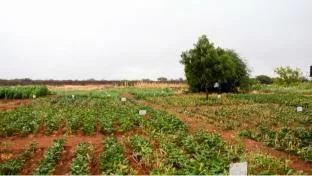
The favourable rainfall encouraged many farmers to increase cultivation.
The area planted with maize, sorghum and pulses expanded by 227 per cent compared with the previous season as producers took advantage of improved moisture conditions.
However, crop production fell far short of expectations.
The county harvested only about 1,920 bags, significantly below the five-year average of 6,290 bags.
The assessment attributes the disappointing harvest to the premature end of the rains, flooding in some areas, pest and disease outbreaks, high temperatures and post-harvest losses.
As a result, locally produced food remains insufficient to meet household needs, leaving many families dependent on markets at a time when incomes remain constrained.
"The county remains food insecure and immediate external support is necessary to prevent further deterioration of food and nutrition security outcomes," the report warns.
The livestock sector recorded stronger gains following the rains, offering some relief to pastoral households that rely heavily on livestock for food and income.
Improved pasture and browse conditions were reported across pastoral and agro-pastoral livelihood zones, while livestock body conditions remained good.
The improved rangeland conditions also supported livestock markets.
Goat prices increased from Sh5,300 in May to about Sh6,000 in June, strengthening pastoral households' purchasing power as maize prices remained relatively stable.
Even so, the assessment notes that household milk production and consumption continue to remain below long-term averages, limiting dietary diversity among vulnerable families.
Food consumption is also expected to deteriorate over the next month if humanitarian assistance continues to decline.
Nutrition remains another major concern in the county.
Survey findings cited in the assessment show acute malnutrition among children under the age of five has consistently remained above the World Health Organization's emergency threshold in recent years.
In June alone, about 12 per cent of children were identified as being at risk of moderate acute malnutrition, underscoring the need for continued nutrition support programmes.
The education sector is also grappling with persistent challenges despite improvements in school enrolment.
More than 70 per cent of schools lack reliable access to safe water, while a similar proportion operate without adequate sanitation facilities.
The assessment further notes that strong winds experienced in recent months damaged classrooms in several schools, disrupting learning and increasing infrastructure needs.
Looking ahead, the report projects that the June-to-August period will remain generally dry across Northeastern.
While pasture and browse are expected to remain in good condition for another one to two months, they are likely to deteriorate thereafter if no additional rainfall is received.
Livestock prices are expected to remain stable in the short term, but the assessment warns that the number of people requiring food assistance could increase if household food access continues to weaken.
To cushion vulnerable communities, the assessment recommends scaling up cash transfer programmes and food relief distribution, strengthening livestock and human disease surveillance.
Others are investing in water infrastructure, expanding nutrition and public health interventions, and reinforcing school feeding programmes to protect children from the effects of worsening food insecurity.
The report concludes that while the above-average rains have improved environmental conditions and offered temporary relief to pastoral livelihoods, sustained humanitarian and development interventions will be critical to preventing a further deterioration in food security across Wajir.
The findings highlight the complex challenges facing the predominantly pastoral county, where improved rainfall has boosted rangeland conditions and livestock productivity but has not translated into sustained food security for many households.
The assessment attributes this to poor crop performance, declining humanitarian support and weak household purchasing power.
Wajir, like many counties in Kenya's arid and semi-arid lands (Asals), has endured repeated drought cycles in recent years that have eroded household resilience, depleted livestock herds and increased dependence on humanitarian assistance.
Although the 2026 long rains offered temporary relief after several difficult seasons, the assessment indicates that recovery remains fragile.
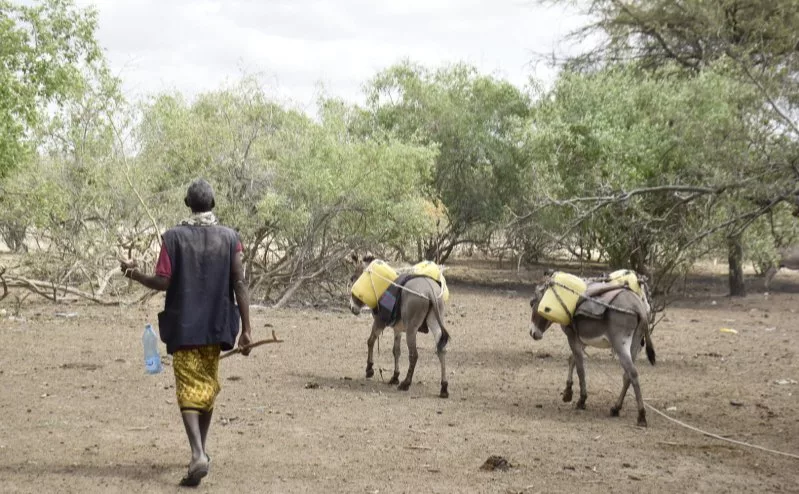
Herders with donkeys loaded with jerricans full of water in Tarbaj subcounty, Wajir /STEPHEN ASTARIKO
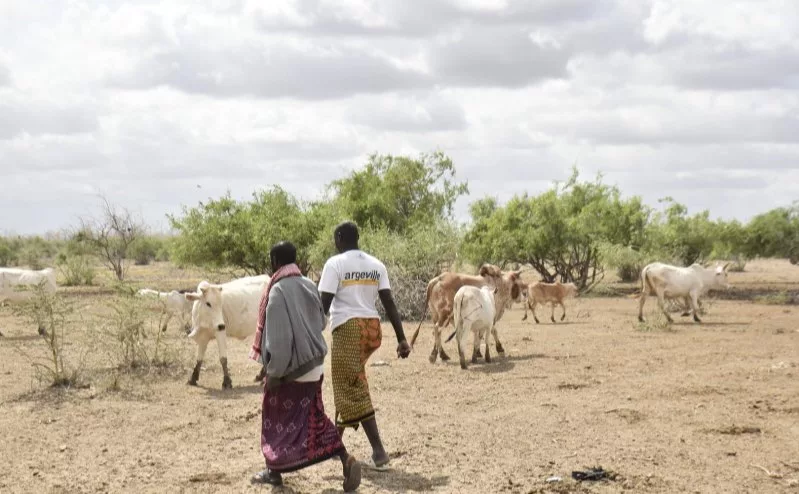
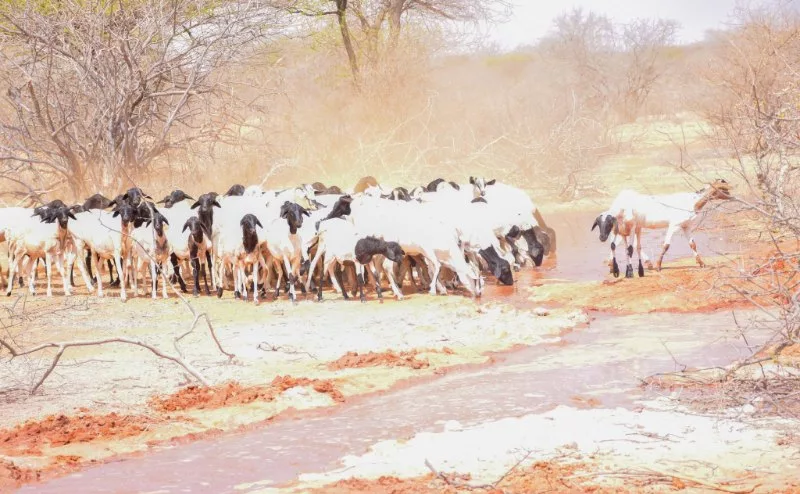
Herders looking after their animals in Hadado, Wajir West subcounty /STEPHEN ASTARIKO
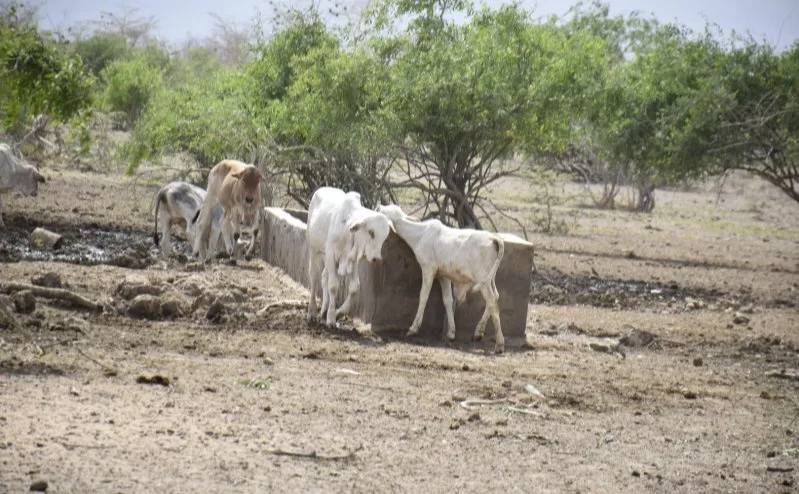
Cows at a watering point in Tarbaj, Wajir county /STEPHEN ASTARIKO