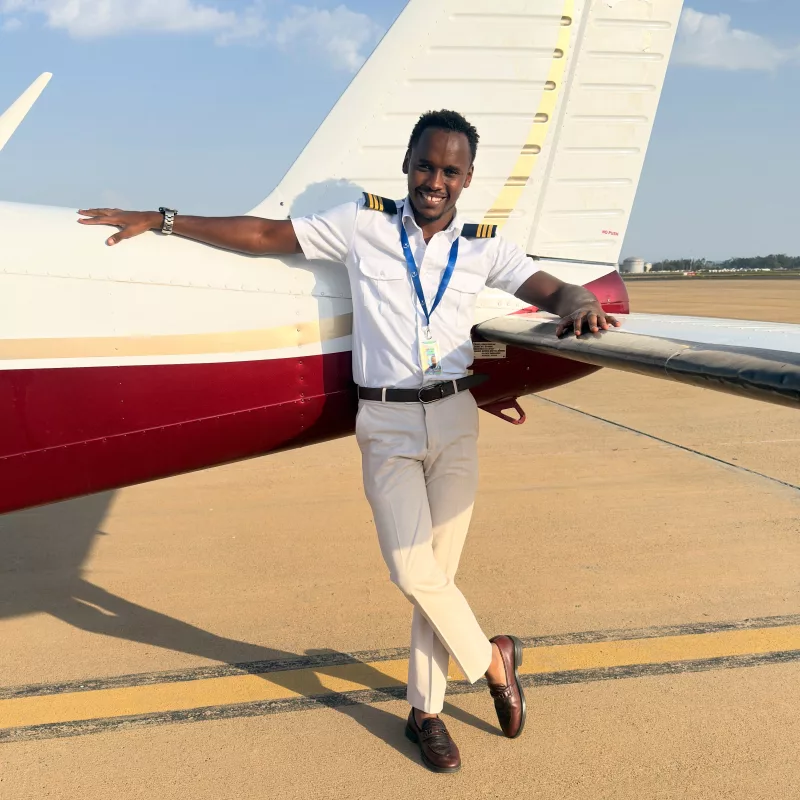
Entrepreneur Khalif Kairo recently ignited debate after revealing that he had established a US-based company to sell cars globally, arguing that the Kenyan market had become too saturated.
His ambition? To build a business capable of selling cars worth billions of shillings to customers around the world.
His central message wasn't necessarily about selling a KSh1 billion car tomorrow. Instead, it challenged entrepreneurs to rethink the limits they place on themselves.
Advertisement
Advertisement
"Scarcity mindset is convincing yourself paying 1B for a car is stupid instead of asking yourself how can you tap such a market."
The tweet attracted thousands of views and a wave of reactions—some inspired, others highly sceptical.
Khalif Kairo // Instagram
The Difference Between Price and Market
Many critics interpreted Kairo's statement literally.
Advertisement
Advertisement
One user questioned whether he could even sell an ordinary Toyota Land Cruiser 100 Series for KSh30 million, arguing that talking about billion-shilling cars was unrealistic.
But supporters argued that the point wasn't about inflating the price of everyday vehicles. It was about recognising that entirely different markets exist, with completely different customer expectations.
The world's luxury market operates under different economic rules from Kenya's mainstream used-car market.
The Psychology of Scarcity vs. Opportunity
Kairo's argument centres on mindset.
A scarcity mindset asks:
Who would ever spend KSh1 billion on a car?
That market is impossible.
Those customers don't exist.
An opportunity mindset asks:
Where are the people spending that kind of money?
How do luxury dealerships reach them?
What value do they expect?
How can I position my business to serve that segment?
The difference isn't optimism versus realism—it's the willingness to study markets that most entrepreneurs never consider.
Luxury Cars Are a Real Global Business
One contributor to the discussion pointed out that once a car reaches the KSh1 billion mark, it enters the world of hypercars.
These are not ordinary vehicles.
They are hand-built masterpieces, produced in extremely limited numbers, often customised for billionaires, royalty, celebrities and elite collectors. Brands like Bugatti, Pagani and Koenigsegg have proven that buyers exist for cars costing millions of dollars.
The market is tiny—but incredibly valuable.
The Counterargument: Brokers Don't Sell Billion-Shilling Cars
Not everyone was convinced.
One response argued that someone wealthy enough to buy a KSh1 billion vehicle wouldn't approach an independent broker. Instead, they would deal directly with the manufacturer and commission a bespoke car.
It's a fair criticism.
Ultra-high-net-worth buyers often work through manufacturers, exclusive dealerships, or long-established luxury brokers with decades-long relationships.
For a newcomer, entering that ecosystem requires far more than ambition—it demands trust, reputation, international networks and exceptional service.
Kenya's Car Market Still Has Bigger Problems
Another thoughtful response shifted the conversation away from mindset altogether.
Instead of debating billion-shilling cars, the commenter highlighted structural challenges affecting Kenya's automotive industry
Lack of a trusted vehicle valuation platform similar to Kelley Blue Book.
Limited transparency around accident history and salvage titles.
Poor access to verified repair and ownership records.
These issues arguably have a greater impact on everyday buyers than discussions of the global luxury market do.
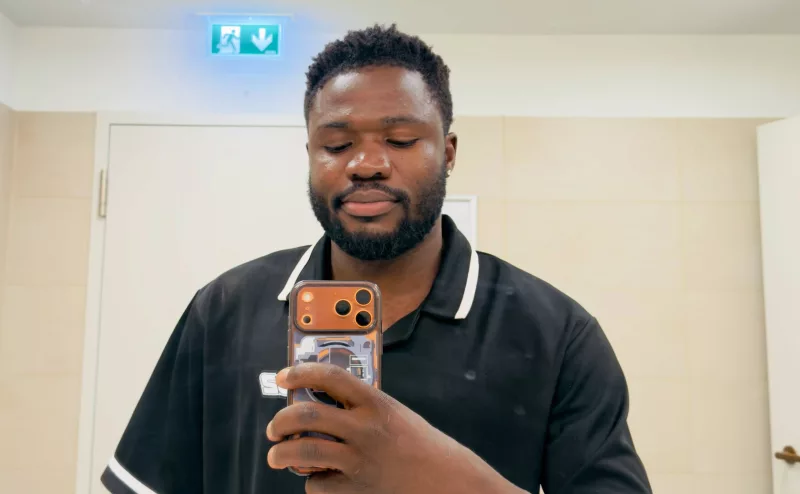
Khalif Kairo // Instagram
Social Media's Mixed Verdict
The responses reflected three broad schools of thought.
The believers saw Kairo's message as an invitation to think globally rather than remain confined to local limitations.
The sceptics questioned whether the business model matched the realities of the ultra-luxury automotive market.
The pragmatists argued that fixing transparency, trust and industry infrastructure would create more immediate value than chasing billion-shilling opportunities.