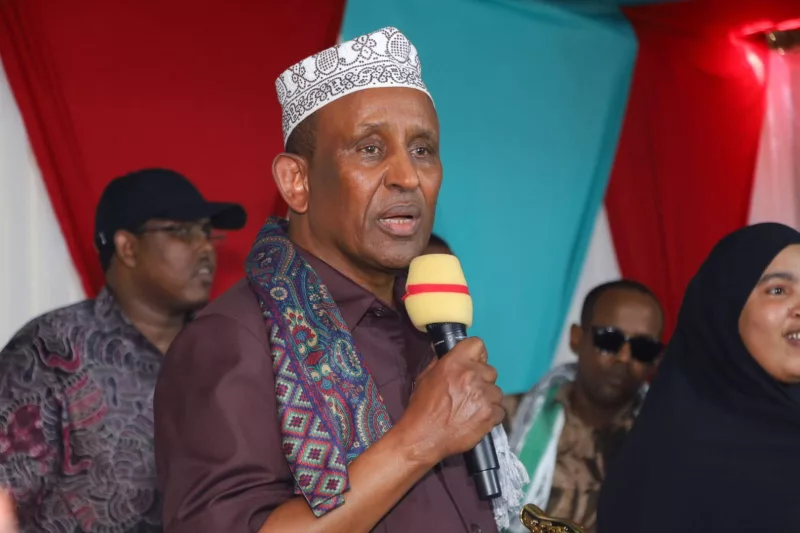
 Health CS Aden Duale speaking in Garissa during the
Devolution Sensitisation Week, where he was the chief guest/STEPHEN ASTARIKO
Health CS Aden Duale speaking in Garissa during the
Devolution Sensitisation Week, where he was the chief guest/STEPHEN ASTARIKO
Health CS Aden Duale has reaffirmed the Ministry of Health's commitment to working hand in hand with county governments on matters promoting healthcare in the country.
Duale said the success of Kenya's devolved healthcare system depends on cooperation rather than competition between the two levels of government.
The Health CS was speaking on Tuesday while opening the 2026 Devolution Sensitisation Week in Garissa under the theme, "Devolution for Better Health, Empowered Communities."
He said the ninistry would continue fostering a respectful, consultative and harmonious relationship with all the 47 county governments to accelerate the delivery of quality healthcare services.
He said the national government remains committed to supporting counties in the spirit of cooperative governance as envisioned under the Constitution, emphasising that devolution can only succeed when both levels of government work as equal constitutional partners.
"This theme reminds us that the true measure of devolution is not the number of functions transferred, but the quality of services delivered to the people," Duale said.
"I wish to reaffirm the Ministry of Health's unwavering commitment to maintaining a harmonious, respectful and consultative relationship with all County Governments," he said.
"Our engagement with Counties will continue to be characterised by dialogue, mutual respect, shared accountability and collective responsibility towards achieving Universal Health Coverage."
Rejecting perceptions that the national government seeks to control county functions, Duale maintained that both levels of government have distinct but complementary responsibilities.
"The National Government does not come to supervise Counties; we come to support them, strengthen them and work alongside them as equal constitutional partners," he said.
He praised county governments for investing in health infrastructure, recruiting healthcare workers, strengthening primary healthcare systems, expanding community health services and improving the availability of essential medicines.
"These responsibilities are complementary, not competing. Neither level of Government can succeed without the other. When we work together, Kenya wins. When we pull in different directions, it is the ordinary Kenyan who suffers," he said.
Duale expressed concern over persistently high maternal and newborn mortality rates, particularly in arid and semi-arid counties, saying preventable deaths continue to rob families and communities of their future.
"Every maternal death is a tragedy. Every newborn death is one too many. These are not merely statistics; they are lives, families and futures lost," he said.
He said the Ministry is strengthening the Maternal and Perinatal Death Surveillance and Response (MPDSR) programme to ensure every maternal and newborn death is reviewed and lessons translated into improved healthcare services.
According to Duale, the reforms are aimed at building an integrated, equitable and sustainable health system that reaches every Kenyan, including those living in pastoralist and other hard-to-reach areas.
"Universal Health Coverage will only succeed if national reforms and county implementation move in lockstep," he said.
The CS also turned his attention to the welfare of healthcare workers, acknowledging that disputes over employment terms, remuneration, career progression and industrial relations continue to affect the health sector.
He urged all stakeholders, including county governments, healthcare workers' unions, the Public Service Commission and the Salaries and Remuneration Commission, to embrace dialogue in resolving the challenges.
Duale warned that prolonged industrial disputes ultimately hurt patients, saying healthcare workers remain the backbone of Kenya's health system.
In remarks delivered on behalf of Council of Governors Chairperson Ahmed Abdullahi by Baringo Governor Benjamin Cheboi, county governments reaffirmed their commitment to working closely with the national government and other stakeholders to deepen devolution.
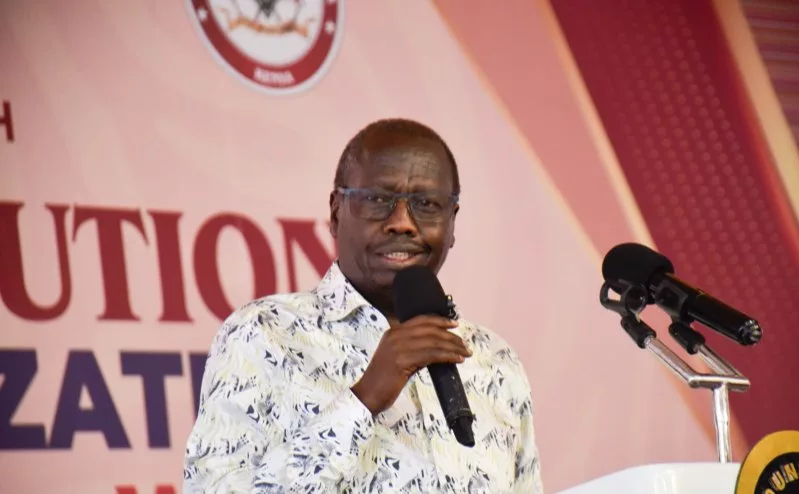 Baringo Governor Benjamin Cheboi/STEPHEN ASTARIKO
Cheboi said the 2026 Devolution Sensitisation Week provides an opportunity to bring devolution closer to wananchi while strengthening collaboration aimed at improving healthcare delivery.
"This Sensitisation Week is more than just a current event. It is an opportunity to bring devolution closer to the people and reaffirm our collective commitment to improving the lives of Kenyans," he said.
He noted that counties have demonstrated over the last decade that devolved governance makes services more responsive and communities more involved in decision-making.
Cheboi emphasised that devolution does not diminish the importance of partnerships with the national government, development partners, civil society and the private sector.
"The fact that we are delivering services in the counties does not mean that we do not work together with the national government. Devolution thrives when citizens are informed, engaged and empowered," he said.
He called on Kenyans to use the week to celebrate the gains made under devolution while honestly reflecting on areas that require greater collaboration, innovation and accountability to deliver better healthcare and stronger local economies.
 Health CS Aden Duale and other leaders join traditional
dancers. /STEPHEN ASTARIKO
Health CS Aden Duale and other leaders join traditional
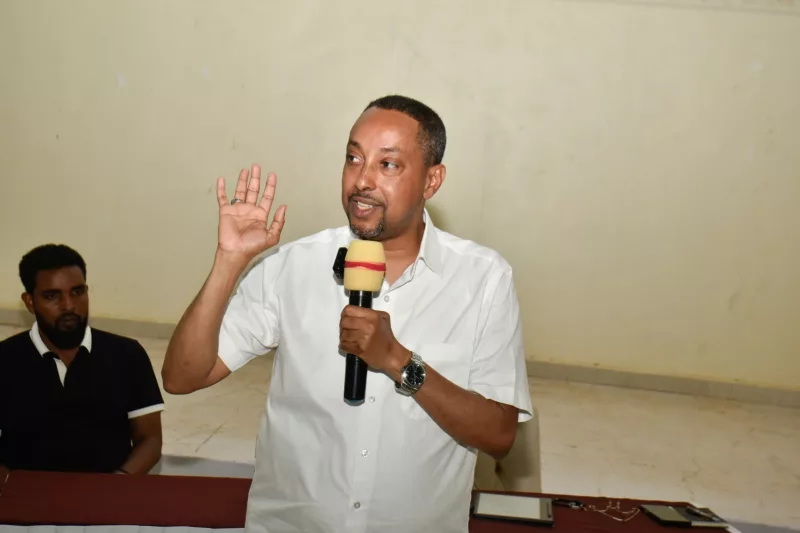
dancers. /STEPHEN ASTARIKO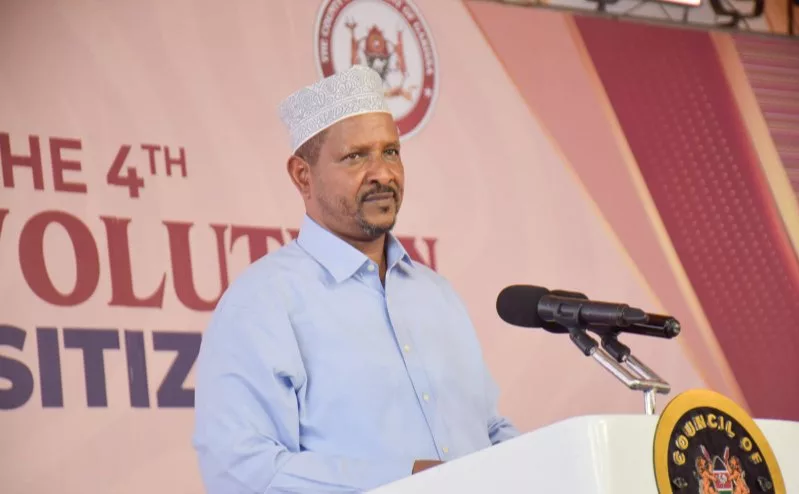 Garissa township MP Dekow Mohamed./STEPHEN ASTARIKO
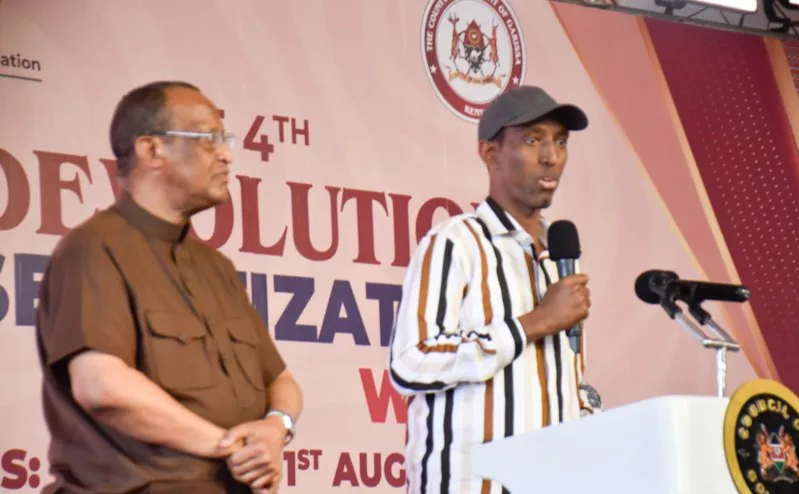 Wajir Deputy Governor Ahmed Muhumed./STEPHEN ASTARIKO