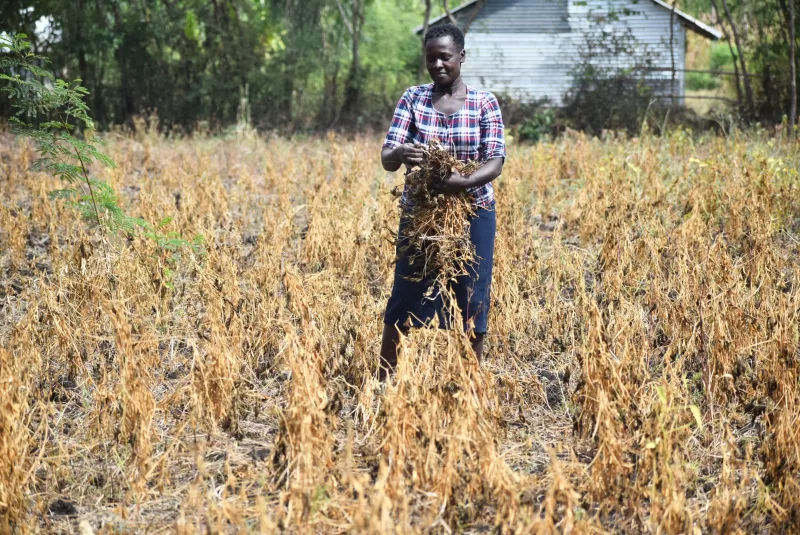
 Tabitha Achieng at her soya bean farm in Miyal village,Lambwe, Suba North constituency/Robert Omollo
The production of soya beans in Homa Bay County has started yielding benefits, following testimonies from a section of farmers.
Large-scale cultivation of the crop began in the county about two years ago after an organisation, Farm Africa, engaged more than 6,000 youths.
The organisation introduced soya bean farming with the aim of eradicating poverty among residents.
The youths, aged between 18 and 35 years, from all eight constituencies were engaged in the project to help them earn a living.
The programme, known as Youth in Sustainable Aquaculture (YISA), recruited 80 per cent female farmers and 20 per cent male farmers.
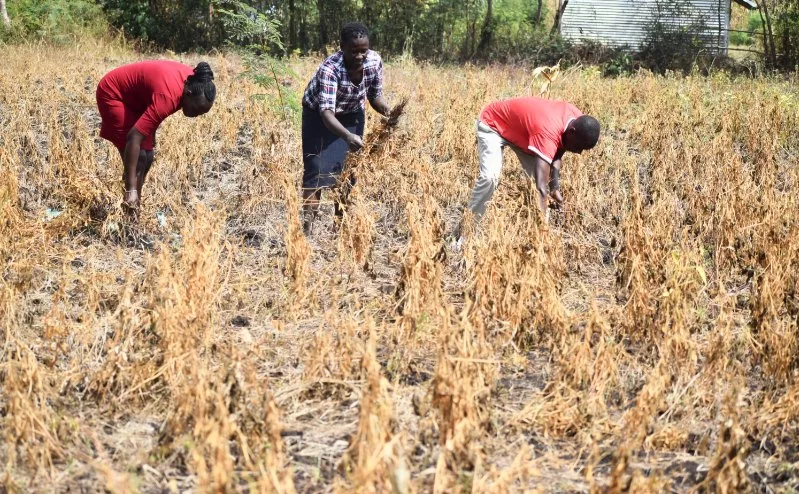 Tabitha Achieng with some of her neighbours at her soya bean farm in Lambwe Ward, Suba North constituency/ Robert Omollo
The farmers were also trained in best farming practices to build their capacity to grow soya beans.
Farmers Tabitha Achieng and Sarah Akelo said growing soya beans has started benefiting them. The crop takes about four months to mature.
Achieng said she produces six 100kg bags of soya beans in a good season.
She sells soya beans at Sh70 per kilogramme, translating to an income of Sh42,000. Soya bean farming has changed her life since she began producing the crop two years ago.
Achieng has constructed a permanent house through income earned from soya bean farming.
“I tell you the truth that I no longer live in a grass-thatched house but in a permanent house because of soya bean production. Soya beans have a ready market, hence encouraging us to grow more,” Achieng said.
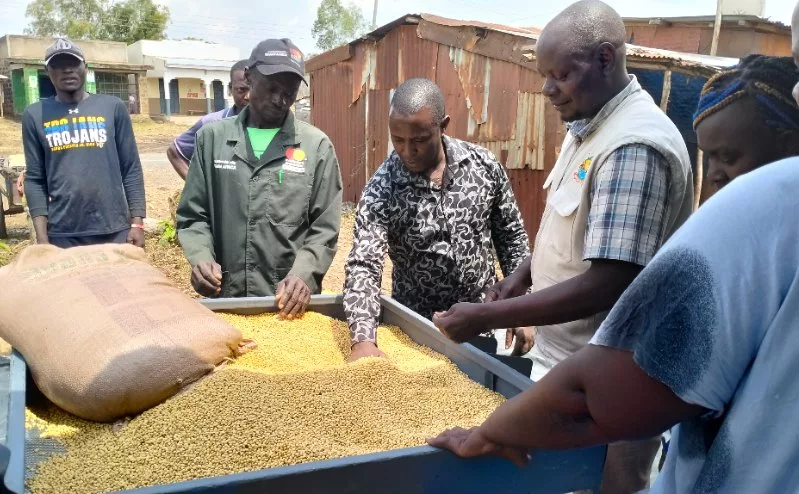 Officials Stephen Bundi and Kennedy Opiyo near shieving equipment for soya bean at God Jope aggregation center in Suba North constituency Robert Omollo
“Apart from building a permanent house, I have bought livestock on my own using proceeds from the crop. I urge our people to venture into soya bean farming,” Akelo said.
Stephen Bundi, Farm Africa's Agronomy Technical Lead for the YISA programme, said the initiative is aimed at improving the living standards of residents.
He said they introduced the crop to enable farmers to fight poverty in the community.
“The farmers have been given an opportunity to create wealth through the production of soya beans. The testimonies of farmers have proven that this project is a game changer in their lives,” Bundi said.
Statistics indicate that Kenya produces 2,000 metric tonnes of soya beans, while the demand stands at 200,000 metric tonnes. Soya beans are among the foods rich in protein.
Bundi said the project will help bridge the gap in the country's demand for soya beans.
“There is a huge demand for soya beans in Kenya. We expect the project to bridge the gap in soya bean production in the country,” he said.
Homa Bay County Director of Agriculture Kennedy Opiyo urged farmers to venture into soya bean production.
He said Farm Africa had made the necessary arrangements to ensure an adequate market for soya beans through the establishment of aggregation centres.
The officer said the county government is collaborating with Farm Africa to provide quality seeds to sustain production of the crop.
“The centres are used to purchase soya beans from farmers in their respective villages. Homa Bay has good soil that supports soya bean cultivation,” Opiyo said.