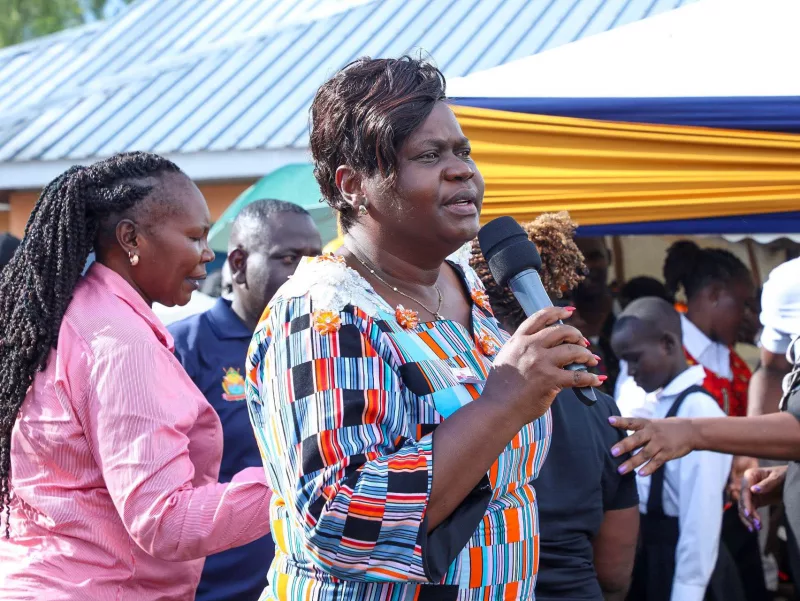
 The National Gender and Equality Commission (NGEC) Chairperson Hon Rehema Dida Jaldesa./COURTERSY
The National Gender and Equality Commission (NGEC) has issued a nationwide advisory warning Kenyans against the non-consensual sharing of intimate images.
The advisory further warns against the circulation of photographs, videos and personal information of survivors of Sexual and Gender-Based Violence (SGBV), saying the practice is illegal and causes lasting harm to victims.
The Commission said it is deeply concerned by what it described as a sharp rise in digital violations, including the sharing of intimate images, the circulation of identifying details of survivors, especially children, and the dissemination of child sexual abuse material on social media and other digital platforms.
In the public advisory issued by Chairperson Hon Rehema Dida Jaldesa on Wednesday, the Commission noted that while technology has improved crime reporting, evidence collection and prosecution of sexual and gender-based violence cases, its misuse has exposed survivors to further suffering.
"The Commission is profoundly alarmed by the sharp rise in the non-consensual sharing of intimate images (commonly known as 'revenge pornography'), the circulation of personal data and images of survivors of Sexual and Gender-Based Violence (SGBV/GBV) — especially children — and the dissemination of child sexual abuse material (CSAM) across social media and other digital platforms," the statement reads in part.
The Wangu Kanja Foundation, a non-profit organisation whose vision is a society free of sexual violence, has also joined the campaign against non-consensual sharing of intimate images and the disclosure of identities of Sexual and Gender Based Violence survivors and the protection of the privacy and dignity of GBV survivors is both a legal obligation and a profound moral imperative.
Wangu Foundation has also provided a toll-free number-1519, where Kenyans can report cases of sexual violence
The Commission said such actions result in "secondary victimisation, severe trauma, stigma, and mental harm to survivors, especially vulnerable survivors such as children." It added that the continued sharing of such material discourages survivors from reporting offences and undermines access to justice.
NGEC reminded the public that Kenyan law strictly prohibits the disclosure of the identities of survivors of sexual offences and the sharing of intimate images without consent.
It cited several laws that criminalise the practice, including the Sexual Offences Act, the Children Act, the Data Protection Act and the Computer Misuse and Cybercrimes Act.
Under the Sexual Offences Act, the publication or revelation of the identity of victims of sexual offences, including names, images, videos or any identifying details, is prohibited.
The advisory states that offenders face severe penalties, including imprisonment and fines, with separate provisions for child and adult victims.
The Commission further noted that the Children Act guarantees every child's right to privacy and protection from abuse, while the Data Protection Act safeguards personal information such as names, photographs, videos and health records. It said unlawful processing of children's data can attract penalties of up to Sh3 million in fines or imprisonment for up to ten years, or both.
NGEC also cited the Computer Misuse and Cybercrimes Act, which criminalises the wrongful distribution of obscene or intimate images without consent and penalises those who aid or facilitate such offences.
The Commission pointed to previous court decisions that have reinforced the constitutional rights to privacy and dignity. It cited the High Court decision in MWK & Another v Attorney General & 4 Others, where the court ruled that taking and sharing nude images of victims violated their constitutional rights to privacy and dignity and awarded damages.
It also referenced Roshanara Ebrahim v Ashleys Kenya Limited & 3 Others, in which the court found that the non-consensual sharing of private nude photographs breached the rights to privacy and dignity.
According to the advisory, these rulings confirm that such conduct is not only a criminal offence but also a violation of Articles 28, 31 and 53 of the Constitution, which protect dignity, privacy and children's rights.
The Commission said protecting the identity of survivors is essential because it prevents further trauma, stigma and re-victimisation, safeguards investigations and court processes, upholds constitutional rights and encourages victims to seek justice without fear.
NGEC urged all Kenyans, media organisations, journalists, bloggers, influencers and content creators to immediately stop sharing or circulating names, photographs, videos or any identifying details of GBV survivors unless authorised by law or a court order.
It also called on media practitioners to anonymise survivor information and adhere to professional ethical standards before publishing related content.
The Commission appealed to the public to report violations to the National Police Service, the Office of the Director of Public Prosecutions, the Office of the Data Protection Commissioner, the Witness Protection Agency or the NGEC, while urging law enforcement agencies to investigate and prosecute offenders promptly.
"The protection of the privacy and dignity of GBV survivors is both a legal obligation and a profound moral imperative. No Kenyan has the right to expose, sensationalise, or exploit the suffering of survivors for personal gain, malice, or negligence."
The Commission finally called on all Kenyans to work together to "create a safe, just, and humane society where survivors can seek justice without fear of exposure, stigma, or retaliation."