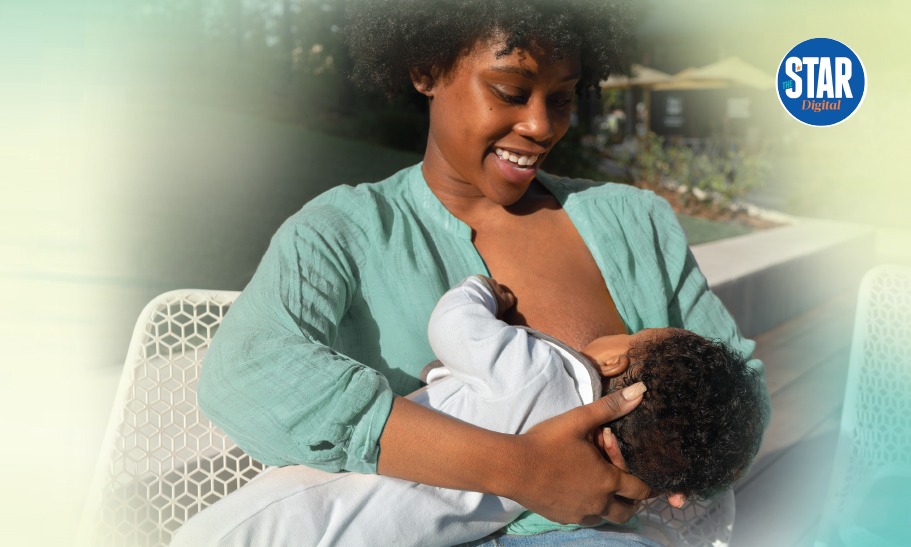
 Breastfeeding mothers
The share of Kenyan babies who are exclusively breastfed for their first six months of life has climbed sharply, rising alongside a government crackdown on the advertising of infant formula and feeding bottles.
The Ministry of Health says the country is now targeting 100 per cent, up from the current 60 per cent.
Kenya passed the Breast Milk Substitutes Regulation and Control Act in 2012 to stop companies from advertising infant formula, feeding bottles, teats and pacifiers to parents.
The law was strengthened in 2021 and came into fuller effect from May 2022, adding tougher warning labels on formula tins similar to those on cigarette packets.
Even so, health officers say the ban has not fully stopped formula companies from reaching parents.
The 2022 changes were brought in after formula companies stepped up aggressive marketing of breast milk substitutes on social media platforms such as Facebook.
Online advertising remains hard to police, which is one reason the exclusive breastfeeding rate has stayed at around 60 per cent for several years instead of climbing further.
The information was shared during a media engagement forum held ahead of the national commemoration of World Breastfeeding Week 2026, which will run from August 1 to 7. The theme is Breastfeeding, a Sustainable Start in Life, Strengthen What Works. This year's national event will be hosted in Murang'a county.
Dr Joel Gondi, director of primary healthcare at the Ministry of Health, said Kenya has made big gains in the past two decades.
"Over the past two decades, our exclusive breastfeeding rate has increased from 13 per cent in 2003 to 60 per cent in 2022. This means that six out of every 10 Kenyan infants now receive only breast milk during their first six months of life, surpassing the WHO target of at least 50 per cent," he said.
Gondi said 60 per cent of newborns are also breastfed within the first hour of birth, which gives babies the best start in life.
He said Kenya loses about Sh3.9 billion every year because of poor child nutrition linked to low breastfeeding rates, through higher healthcare costs and lost productivity.
But Gondi also said the country still has work to do.
He said bottle feeding rose from 26 per cent in 2014 to 34 per cent in 2022, and that mothers who deliver through caesarean section often start breastfeeding late. He said urban mothers breastfeed less than mothers in rural areas.
Esther Mogusu, director of nutrition and wellness at Nairobi county, spoke about the importance of breast milk for the smallest and sickest babies born in Nairobi's hospitals.
She explained how the Pumwani Maternity Human Milk Bank helps babies whose own mothers cannot feed them.
"The Human Milk Bank at Pumwani was established in 2019 and it was actually the first, not just in Kenya, but it was the first in the region. And since then, we have supported a few other places," Mogusu said.
She said Kenya has since helped Uganda and Ethiopia set up their own milk banks.
Mogusu also shared findings from a study done before the milk bank opened.
"Only 14 per cent of the babies were fed on their mother's own milk during that time of separation. So, what happened to the 86 per cent?" she asked.
She said many of the remaining babies were given nothing at all or were fed formula and cow milk, which put their health at risk.
Doctors say breast milk is the safest food for babies below six months because it fights infection and helps the brain grow.
Formula milk lacks the natural antibodies found in breast milk, and it can cause stomach problems, diarrhoea and infections if it is not mixed and stored properly, a common risk in homes without clean water or electricity.