

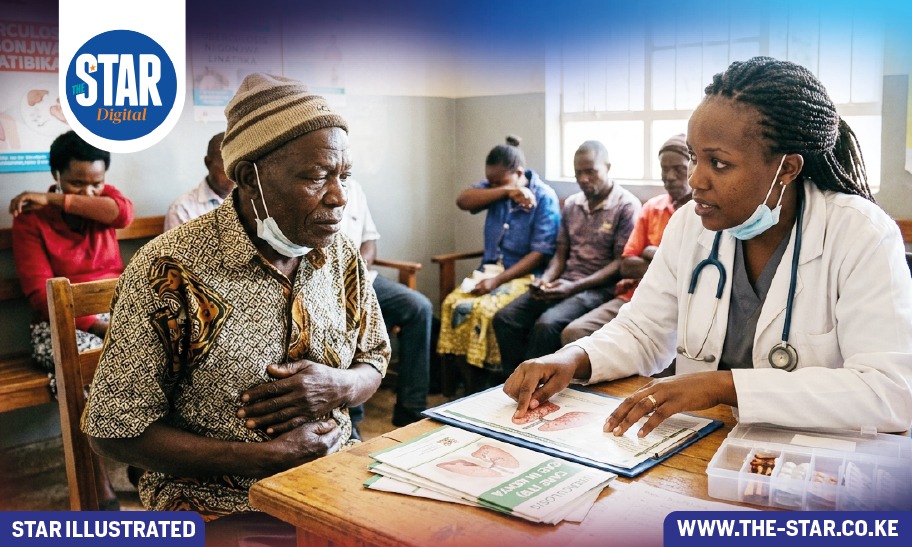
 Tuberculosis: The silent stigma.
People diagnosed with tuberculosis often face high levels of stigma, despite the disease being curable with a standard six-month treatment regimen, a new national study shows.
Stigma from one’s own community is the most widespread form of discrimination, affecting 68 per cent of people with TB. Some 52 per cent report stigma within their families and 51 per cent within healthcare settings and 49 per cent experienced self-stigma.
Researchers found that patients with secondary education or higher were significantly more likely to report stigma than those with primary education or less.
The study, led by the Ministry of Health’s National Tuberculosis Programme, examined the experiences of 357 people receiving TB treatment in 180 health facilities across 11 counties.
Aiban Ronoh, the programme’s head of monitoring, evaluation and research, and his co-authors, said stigma remains a major obstacle to controlling TB in Kenya.
“Tuberculosis related stigma remains a significant barrier to care and treatment adherence in Kenya. Despite progress in TB control, stigma continues to affect individuals diagnosed with the disease and their families, leading to delayed healthcare-seeking behaviours, social exclusion, and economic consequences,” they report published last week in PLOS Global Public Health journal says.
World Health Organization data shows 124,000 people developed TB in Kenya in 2023, but only 97,126 cases were diagnosed and put on treatment. This means nearly one in four cases may have been missed.
The researchers found that stigma continues to discourage people from seeking care and disclosing their illness.
“Globally, stigma is a well-documented barrier to health-seeking, engagement in care, and treatment adherence. Misconceptions about TB transmission and its association with HIV/Aids fuel social isolation and discrimination,” they said.
“Families may isolate members with TB, particularly women, due to fear of infection and social consequences.”
The report is titled “Settings, characteristics, and experiences of stigma among people with tuberculosis in Kenya: National survey results.”
More than two-thirds of patients experience stigma from neighbours or members of the wider community. One quarter said this directly affected their ability to access TB services.
“Community-level stigma was most prevalent, with 68 per cent of respondents reporting stigma from neighbours or the broader community, and 25 per cent stating it negatively impacted their access to TB services.”
“Perceived stigma within healthcare settings was reported by 51 per cent of participants, with 12 per cent identifying it as a barrier to care.”
The report notes that TB remains surrounded by fear and misinformation.
“Stigma within community settings has been widely documented, where fear of infection and misinformation drive gossip, social isolation, and rejection. In Kenya, delayed TB care has been linked to stigma and gender norms, particularly among women and rural dwellers, who face heightened discrimination within families and communities.”
The researchers found that women were especially vulnerable. After adjusting for other factors, women had four times higher odds of reporting stigma than men.
Education also played an unexpected role. Participants with secondary school education or higher had more than nine times greater odds of reporting stigma than those with primary education or less.
“In the multivariable logistic regression model, educational attainment and sex emerged as independent predictors of TB-related stigma. Participants with secondary or higher education had significantly higher odds of reporting stigma compared with those with primary education or less,” the study says.
“Female/other participants also had significantly higher odds of reporting stigma compared with males.”
The researchers suggested that greater awareness of TB and its social implications may partly explain why more educated people reported higher levels of stigma.
The findings mirror similar observations in neighbouring Uganda. The study notes that previous research there found “higher stigma levels among older adults, urban residents, those with higher education, and those with greater TB knowledge.”
The authors said stigma remains a serious public health challenge because it delays diagnosis, keeps people away from treatment and can prolong the spread of infection.
“Overall, TB stigma represents a powerful social label that alters self-perception and social standing. It delays care-seeking, prolongs infectiousness, worsens health outcomes, and drives self-isolation and premature treatment discontinuation.”
The researchers called for stronger community education campaigns, psychosocial support services and gender-sensitive interventions to reduce discrimination against people with TB.
“TB-related stigma in Kenya is prevalent across multiple dimensions, with community, family level, healthcare system and self-stigma particularly prominent,” they concluded.
“These findings highlight the need for targeted community-based stigma reduction strategies, integration of psychosocial support within TB care, and gender-responsive strategies.”
The report co-authors were Population Services, AMREF Health Africa, Centre for Health Solutions, Nairobi, Centre for Respiratory Diseases Research at KEMRI, and the non-profit Stop TB.
Instant analysis
The study exposes stigma as one of the biggest hidden barriers undermining Kenya’s fight against tuberculosis. While TB is curable, fear, misinformation and discrimination continue to prevent many patients from seeking timely care, disclosing their status or completing treatment. The findings reveal that stigma exists not only in communities but also within families, healthcare systems and among patients themselves. Women appear particularly vulnerable, highlighting the need for gender-sensitive responses. Strengthening public education, psychosocial support and compassionate healthcare services will be critical in reducing discrimination. Ending TB requires addressing not only the disease itself but also the social attitudes surrounding it.







