On Thursday, June 25, I was in Nairobi for a very important meeting. Just deciding to show up for this schedule wasn’t an easy task, since my calendar was conflicted - not one - but with three other equally important functions to attend to across Kenya. But I did prioritise the Nairobi meeting over the two based on a criterion I settled on.
But here we had a problem. All over media, coverage was about planned demos across thecountry on that very day. The meeting didn’t happen! Exactly at 05.58am, my phone buzzed.
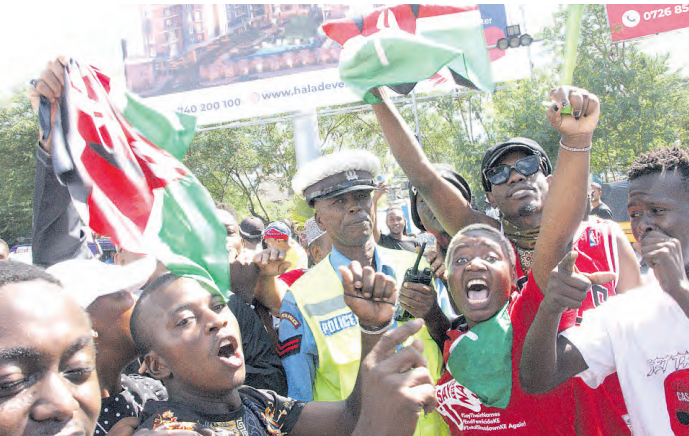
I received informationthat road transport was curtailed due to the day’s events - (upcoming protests, policepreparations and road closures).
In short, I spent the day, regrettably, in the house with no plan for the day. And with nothing on my hands, I decided to laze around and follow the day’s events ontelevision. With remote in hand, I kept on flicking channels, consuming as much as I could,as I also remotely worked.
And I learnt a lot from the coverage. On a national TV, I closely followed the panel discussions on the day’s events. But one of themstood out.
The afternoon panel moderated by a top journalist was interesting. We had threeyouthful panelists, all offering perspectives on demos generally. We had a civil rights lawyer, ahuman rights agency official and a youth think tank dialogue convener.
Whereas the convenercame out more balanced, the civil rights lawyer pushed from the critical left perspective. And theright’s agency official seemed more inclined towards the leftist corner, too, albeit with somegive and take.
The moderation by the journalist was superb, in my estimation. It was well balanced andprofessional.Narrowing the discussion down to key takeaways, one area of contention revolved around Article 37.
It guarantees every person the right to peaceful and unarmed assembly, demonstration, picking and presenting petitions to authorities. It can be legally limited if restriction deemed justifiable and reasonable in a democratic society.
The positions held by the panelists on the topic were conflicting.The convener opined that demonstrations don’t have to be contentious and the only wayto engage with government and call attention to issues, as other inclusive means are available.
The critical left, however, posited that demos were of great necessity, a constitutionallyguaranteed right that remained non-negotiable. And emphasised that this right wasunequivocal to the extent that notification is only a choice invoked by the demonstrators - notof necessity!
And this, unfortunately, is the narrative that is espoused by many from the critical left side ingeneral.Yet those on the conservative right of this debate hold otherwise: that, yes, theconstitution proffers rights.
But many of these rights, including Article 37, aren’t absolute as‘fallaciously’ argued - and so limited by design of the same constitution.
This school of thought holds that the few categorical rights, freedoms and liberties profferedconstitutionally are clearly stated, but with the rest left under the application ambit ofsubordinating statutes for regulation.
In this category is where Article 37 falls. And it’s why the Public Order Act (Poa), a creation of theconstitution for regulating and enabling Article 37, becomes of the essence.
For the simplereason, and to the extent that rights to demonstrate and picket are guaranteed, the rights of othercitizens’ enjoyment of their lives, as equally envisaged by same constitution, are alsoguaranteed.
There must therefore be a bulwark between these competing interests to ensure non-infringement and peaceful coexistence.
Regulation of public order in the exercise of rights of Article 37 comes into play. Notification isthe first action to be fulfilled, mandatorily, and to an OCS (the regulating officer).
This is afundamental non-negotiable requirement, not just a choice to cherry-pick by demo planners.And why so? Because there may be other subsisting circumstances that may curtail thatenjoyment in the public interest, or the national security concerns of the state.
And why are these two interests important? Because they’re more fundamental to any otherindividual rights or interests.
They form the fabric of the state. The state exists as a basic designof a social contract between the people and the state, hence, the import of their collectiveinterests through the state’s representation, not just of a select few out of choice or convenience.
And at the apex is national security, which assigns equal rights to all through equitable protectionof lives and property - the noblest aspirations by far and for all.
Beyond notification, which is for police regulatory purposes (and made to a regulatingofficer, which may be denied under the Poa), this moves further right into the conduct of thedemos themselves, vis-a-vis the stated objectives of such gatherings.
Will police be mereobservers in a process that deviates from its initial stated course, or in contravention of thePoa, hence threatening public peace, tranquillity and security of all? Not at all.
This is where an escalation of events from intended objective/s occur, hence, criminalitythrough chaos. And at every such deviation from objectives, defiance of authority and also ofthe law ¾ the norm and what is expected ¾ police will do what they have to do: react in acountermeasure fashion, and within the stipulations of the very law, with a focus on preservingbaseline peace and security.
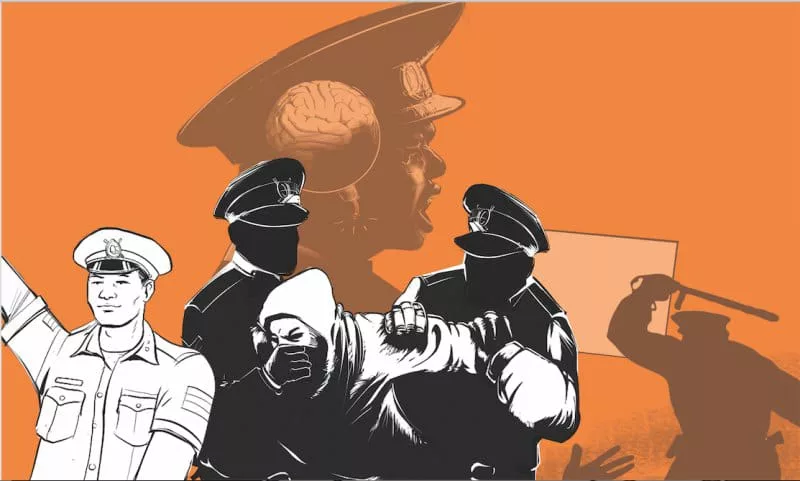
And unfortunately, this event escalation oftentimes ends up with the use of force, as acountermeasure, which could have been avoided in the first instance had compliance toregulation of Article 37 been observed.
And on this, the question should therefore be whetherthe use of force was justifiable or proportionate, or not, based on prevailing circumstances - notwhy police used force.
Therefore, to properly appreciate the rights, freedoms and liberties enshrined in theconstitution, conservatively, we must be deliberate, holistic and not economical in our optionsof what works for our corner, or not. That’s brutal objective honesty. And the starting place is anappreciation of the state, statehood and national security.
Many classical thinkers have toyed with this large question before. Hobbes, in his Leviathanbook, rooted for a strong government in which citizens donate their collective will through asocial contract.
This is so since a state’s first and foremost - and its fundamental objective - is to provide security, preserve peace and assure the people of social order.
This is how the police and other armed agencies come into play and why they matter - as the donees or legal recipients of the state’s instruments of violence for the good of thecollective realm, the collective good.
Therefore, police aren’t designed to be mere bystanders on security-related matters, but activeparticipants and levers - if not guarantors or regulators - utilising the very powers and toolsdonated to them by the collective citizenry for their overall security and safety needs.
And if they can’t rise to this high ideal of agency responsibility to regulate unlawfulassemblies on behalf of the citizenry, they will paradoxically be accused of abdication oftheir fundamental duty to state and the people.
The writer the director-general of Kenya Coast Guard Service and former coordinator - Serious and Organised Crime team, UN Police headquarters