
Top diplomats in Kenya have raised concerns over escalating political violence, warning that the growing trend could be an early indicator of instability as the country heads towards the 2027 general election.
Western diplomats paint a worrying picture, with envoys citing recurrent violence during recent by-elections, disruption of opposition rallies and the increasing involvement of suspected hired goons in political activities.
The political tension, they warn, could undermine investor confidence and public safety.
A senior Western diplomat, who requested anonymity, said the deteriorating political environment was creating uncertainty for foreign missions, businesses and expatriates living in Kenya.
"We would want to have some predictability for our businesses and our citizens working here. Unfortunately, that's not the case," the envoy said.
Another senior diplomat questioned what he described as the "clear facilitation" of goons by politicians allied to the government and the apparent reluctance of security agencies to decisively address the problem.
The diplomat warned that Kenya should not dismiss comparisons with countries that have experienced political violence fueled by criminal gangs.
"Kenyans must indeed be worried because what appears to be pockets of violence might end up becoming a huge security challenge for your government. There is need for caution," the diplomat said.
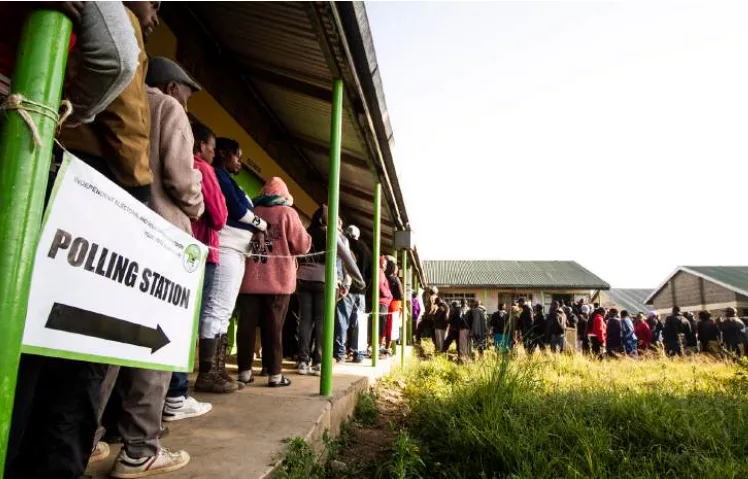
The concerns come amid growing reports of violence during by-elections and political gatherings, with clashes reported in Kasipul, Malava, Mbeere North and, most recently, the Ol Kalou by-election.
Opposition leaders have also repeatedly accused authorities of using hired gangs to disrupt their rallies, allegations the government has denied.
Henriette Geiger, outgoing European Union Ambassador to Kenya,has also cautioned against suppressing public dissent, arguing that political grievances should be addressed through dialogue rather than force.
Speaking in a recent interview, Geiger acknowledged the government's desire to maintain stability but warned that restricting public expression could have unintended consequences.
"On violence, I do understand that the government is concerned about maintaining stability and avoiding unrest. I also think that a society needs to let off steam.
“When there is dissatisfaction, people need to be allowed to articulate it. If you don't allow that, you only create more pressure, and in the long run that pressure will find an outlet," she said.
The ambassador urged greater engagement between the government, civil society and citizens, saying dialogue remained the best way of preventing further tensions.
"I sincerely hope that this engagement will happen and that the government, together with civil society, will move the country forward, because Kenya cannot afford to be a divided society," she said.
Geiger also endorsed many of the issues raised during the Gen Z protests, including the fight against corruption and prudent use of public resources.
"I personally think the recommendations made during the Gen Z demonstrations were good ones—curbing corruption, reducing public spending and so on. Those are measures that would move the country in a better direction," she said.
The diplomatic concerns mirror findings contained in a recent report by the Kofi Annan Foundation, which identified Kenya among countries facing a high risk of election-related violence ahead of the next electoral cycle.
In its latest Electoral Vulnerability Index, the Foundation estimated that Kenya faces an 84.1 per cent probability of electoral violence, placing it among the highest-risk countries globally.
The report also listed Kenya among 10 countries prioritised by the European Union for close electoral engagement during the current election cycle, alongside Somalia, Burundi, Nigeria and the Democratic Republic of Congo.
According to the foundation, three institutions will play a decisive role in determining whether Kenya avoids a repeat of previous electoral crises: the Independent Electoral and Boundaries Commission, the National Police Service and the Judiciary.
It says public confidence in the IEBC will largely depend on how transparently it procures and manages election technology, while the police's handling of demonstrations and respect for human rights will significantly influence the credibility and peaceful conduct of the elections.
However, questions continue to be raised over the preparedness of these institutions.
The IEBC has faced criticism over what observers describe as weak enforcement of the Electoral Code of Conduct despite repeated incidents of violence witnessed during recent by-elections.
The National Police Service has also come under increasing scrutiny following allegations that hooded officers have been deployed during political operations and claims by opposition leaders that criminal gangs have operated alongside security personnel during protests and political meetings.
In Ol Kalou, for instance, hooded men, some armed and travelling in SUV vehicles assaulted journalists, confiscated cameras and teargased residents during the by-election.







