

For generations, Lake Kanyaboli has been more than just a water body.
It has been the heartbeat of communities living around it, providing food, income and a lifeline for residents of Gangu Ninga, Gangu Nyalaji, Kanyaboli, Kadenge, Ndai, Hawinga and Unyolo.
The lake has also supported irrigation activities at Dominion Farms and Lake Agro Limited, making it an important economic resource in the region.
However, years of neglect have placed the lake under pressure.
Pollution, water diversion, wetland encroachment and overfishing have threatened its ability to sustain the communities that depend on it.
Now, efforts are underway to restore the lake's former glory and unlock its potential.
Tree Adoption Foundation (TAF) founder and CEO Fanuel Onyango said the organisation is working with local communities to reclaim the resource and transform it into an environmental and economic asset.
"We are in the process of reclaiming the lake as it has a lot of potential," he said.
Since its establishment in 2024, TAF has implemented community-driven reforestation and climate adaptation programmes across Kenya.
As part of the Lake Kanyaboli restoration project, the foundation plans to plant trees to reduce soil erosion and improve the surrounding environment.
"We will plant trees that we believe are going to bring a big change to the area by controlling soil erosion," Onyango said.
Lake Kanyaboli is Kenya's largest oxbow lake and Africa's second largest, formed naturally when the Yala River changed its course, leaving behind a unique U-shaped water body.
Onyango said the foundation chose the lake because it had been overlooked despite its ecological and economic importance.
"Lake Kanyaboli has been there and has been neglected for so long, yet it is the second-largest oxbow lake in Africa," he said.
Onyango said restoration efforts would help put the lake on the global map while ensuring surrounding communities benefit from its resources.
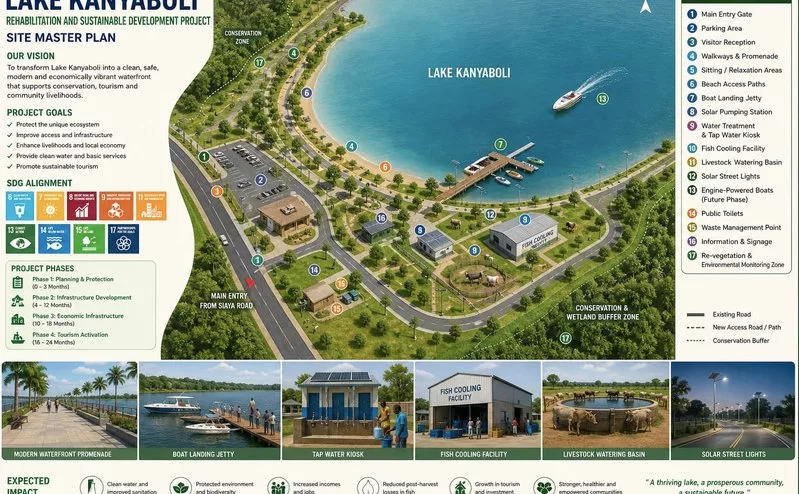
The foundation has already begun improving facilities around the lake.
Renovation of pit latrines has started, bushes around Gangu Beach have been cleared and solar street lights have been purchased for installation.
The organisation is also planning to provide clean water to communities around the lake and support children involved in fishing because of poverty.
"We decided as a foundation that we are now going to look for resources to establish a facility where women, children, men and youth can access clean water," Onyango said.
He said the foundation wants to support affected children to return to school while working with nearby learning institutions.
Women living around the lake will also be supported through table banking initiatives and financial literacy training to help them diversify their sources of income beyond fish trading.
During a community baraza on July 8 involving the Gangu Beach Management Unit, fishermen, local leaders, elders, youth and women representatives, stakeholders agreed on key priorities for the restoration programme.
These include access to clean water, solar lighting, fish preservation equipment, fencing of the beach, improved sanitation facilities, bush clearing and the removal of papyrus blocking the beach entrance.
Onyango said environmental conservation must go hand in hand with community empowerment, education, public health and sustainable livelihoods.
He believes the lake has significant tourism potential and its restoration is the foundation's flagship project.
The local community will be involved through tree nurseries that will provide seedlings for restoration while creating income-generating opportunities.
Onyango said TAF has so far planted about 3.2 million trees across the country.
Gangu Kanyaboli Beach chairperson Martin Onyolo welcomed the initiative, saying the restoration programme would improve economic opportunities and promote the area as a tourism destination.
"The community has welcomed the ongoing initiatives as they will boost economic activities in the area," he said.
For the communities around Lake Kanyaboli, restoring the lake is not just about protecting the environment. It is about safeguarding a source of survival that has sustained generations.
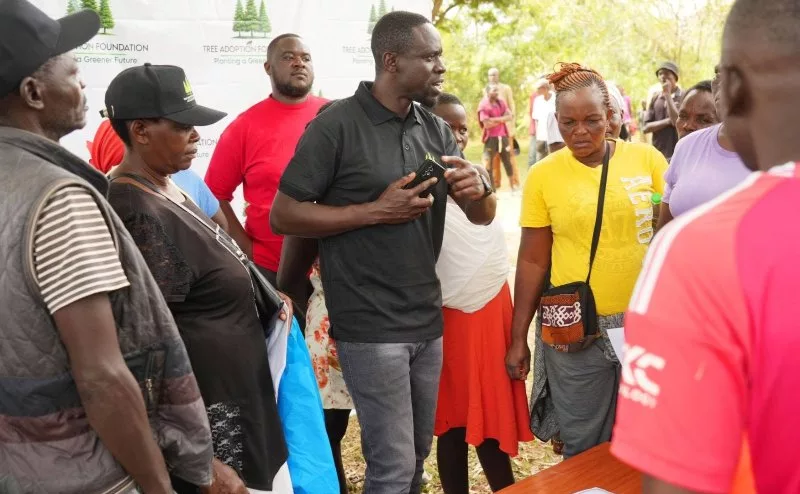
Public baraza on efforts to reclaim lake Kanyaboli/handout







