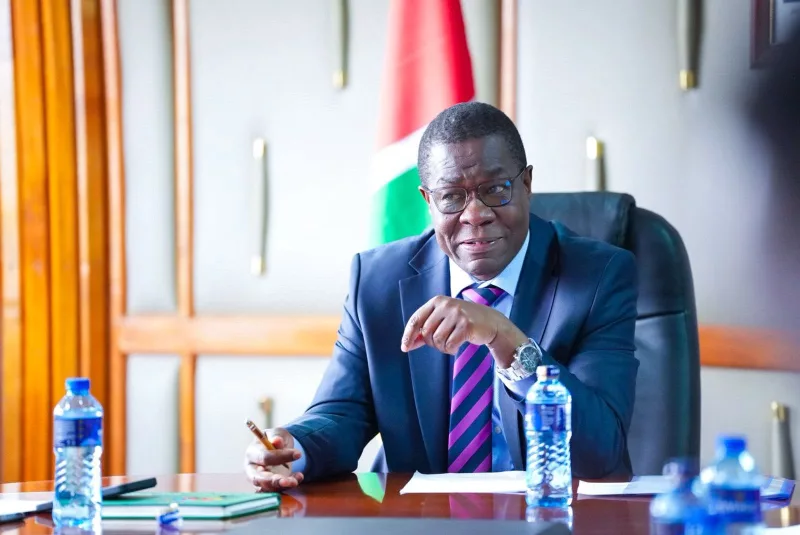
 Energy CS Opiyo Wandayi./HANDOUT
Kenyans could face higher fuel prices in the coming months after the government warned that renewed conflict in the Middle East is beginning to push up global oil prices, with the impact expected to be reflected in future fuel pricing reviews.
In a statement issued on Tuesday, Energy and Petroleum Cabinet Secretary Opiyo Wandayi said international oil benchmarks had started rising again following renewed military escalation around the Strait of Hormuz, a critical global oil shipping route.
"With the restart of the Middle East crisis, international benchmarks have now begun to climb again, and this renewed pressure will be reflected in the pricing cycles that follow," Wandayi said.
The warning comes even as the government moved to cushion consumers from the expected pressure by extending the application of the 8 per cent Value Added Tax (VAT) on petroleum products for another three months, until October 14, 2026.
The government also announced it will inject Sh945 million from the Petroleum Development Levy (PDL) during the July-August 2026 pricing cycle to maintain current pump prices.
According to the Energy Ministry, the interventions are intended to shield households and businesses from volatility in the international oil market while keeping fuel prices as stable as possible.
"These interventions reflect our broader commitment to protecting consumers, supporting businesses and safeguarding the economy from external shocks while ensuring that petroleum products remain as affordable as possible under prevailing global market conditions," Wandayi said.
The CS, however, sought to allay fears of fuel shortages, assuring Kenyans that supplies remain stable despite the geopolitical tensions.
"These global developments have not affected the availability of petroleum products in our country," he said.
He added that fuel remains readily available across the country, supported by adequate national stocks, a resilient import and distribution system and the Government-to-Government (G2G) fuel supply arrangement.
The ministry said the G2G arrangement has enabled Kenya to continue receiving scheduled fuel cargoes despite disruptions in the Gulf region, where attacks on commercial vessels and reduced tanker traffic through the Strait of Hormuz have unsettled international energy markets.
According to the statement, cargoes have continued to be sourced from a wider range of loading regions beyond the Gulf, with all scheduled shipments arriving and offloading on time.
The ministry said the arrangement has also protected Kenya from rising freight and insurance costs that have affected importers relying on spot purchases and open tenders.
"Kenya has continued to pay the same fixed freight and premium," Wandayi said, adding that the arrangement has helped keep landed fuel costs under control even as benchmark prices fluctuate.
He described the programme as one that "is doing exactly what it was built to do", saying its advantages become even more significant during periods of global market instability.
The government said it will continue working closely with industry players to ensure fuel supplies remain uninterrupted while defending the terms of the G2G arrangement as global market conditions evolve.
"I therefore wish to reassure motorists, public transport operators, manufacturers, farmers, businesses, investors and all consumers that there is adequate fuel across the country and that the Government remains steadfast in ensuring that that particular situation continues to obtain for the long haul," Wandayi said.