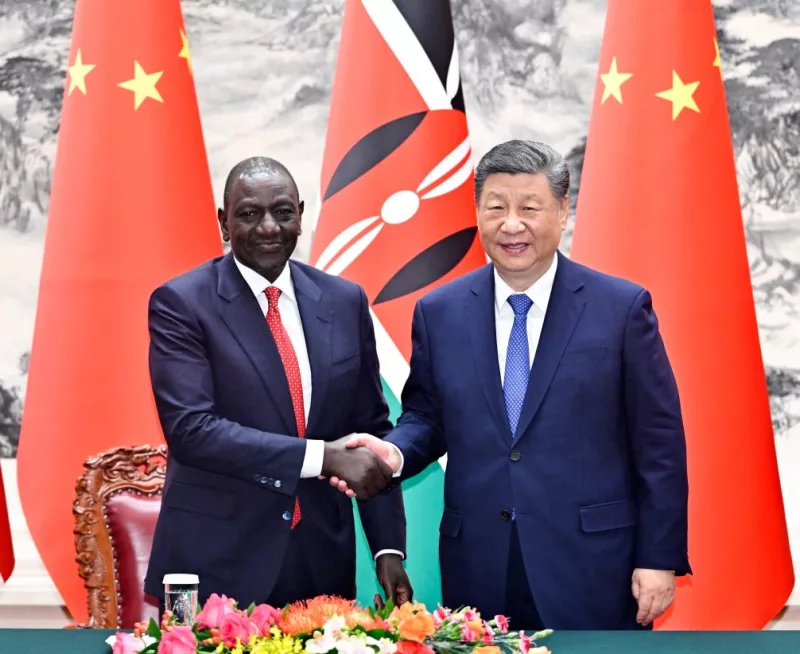
President William Ruto’s vision for a New African Financial Architecture represents one of the most important shifts in Africa’s development thinking in decades.
It is a recognition that the continent cannot continue to finance its future through perpetual dependence on external capital, external priorities and external assessments of African risk.
Africa
must increasingly mobilise its own savings, strengthen its own financial
institutions and invest in its own development on its own terms.
Kenya has already taken a bold step in that direction. Through the National Infrastructure Fund (NIF), the country is mobilising domestic savings on an unprecedented scale.
With Sh300 billion expected to have been raised and the ability to leverage those resources many times over, Kenya is demonstrating that transformative infrastructure can increasingly be financed by Kenyan capital for Kenyan development.
That is a model worthy of support.
But as we build this new financing architecture, we must also ask a fundamental question: where should these investments be directed to generate the greatest return for the nation?
The answer is not complicated. Mombasa.
Every successful economy strategically invests in the cities and regions that drive national productivity. Infrastructure is not simply about geography; it is about economic yield.
Governments that understand this concentrate investment where it unlocks trade, attracts investment, creates employment and expands the productive capacity of the entire economy.
In Kenya, no place offers that multiplier effect more clearly than Mombasa.
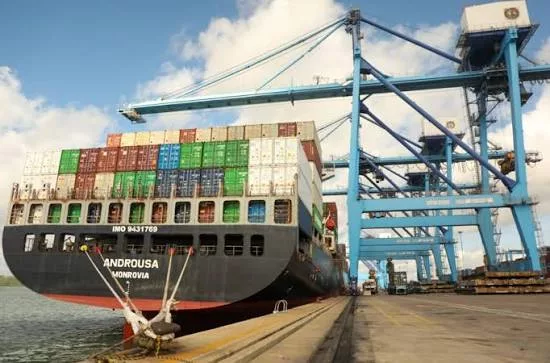
Mombasa is the country’s principal gateway to international trade, home to East Africa’s busiest seaport and the logistical hub serving Kenya and our neighbouring economies. Every container handled through the Port of Mombasa supports businesses across the republic.
Every improvement in transport efficiency lowers the cost of doing business for manufacturers, exporters, farmers and consumers. Every investment that strengthens Mombasa strengthens Kenya’s competitiveness.
This is why infrastructure investment in Mombasa should never be viewed as a county allocation.
It is national economic strategy.
I therefore welcome the government’s approval of an additional Sh16.6 billion to complete the flagship Mwache multipurpose dam project in Kwale county.
Once completed, the dam will supply about 186,000 cubic metres of water every day to Mombasa and Kwale, significantly easing chronic water shortages, supporting households, enabling industrial expansion, strengthening climate resilience and providing reliable water for millions of people.
Water security is among the most important forms of productive infrastructure. It is impossible to build competitive manufacturing, modern tourism, affordable housing or thriving urban centres without reliable access to water.
The Mwache Dam will remove one of the greatest constraints on economic growth along the Coast and unlock opportunities whose benefits will extend far beyond our region.
That investment demonstrates precisely the kind of catalytic infrastructure that NIF should prioritise.
The next project deserving that same strategic consideration is the Mombasa Gate City Bridge connecting Mombasa Island to the mainland through Likoni.
For generations, the Likoni Channel has been both a gateway and a bottleneck. While the ferry has faithfully served millions of Kenyans, the demands of a modern economy require permanent, efficient and resilient connectivity.
A bridge would transform mobility between Mombasa and the South Coast, eliminate costly delays, improve emergency response, facilitate tourism, reduce transport costs and unlock enormous investment opportunities in housing, commerce and industry.
More importantly, it would strengthen the efficiency of Kenya’s principal port city.
When goods move faster through Mombasa, businesses across Kenya become more competitive. When investors can move people and cargo efficiently, more capital flows into our economy.
When tourism expands along the Coast, jobs are created for thousands of Kenyans. These are national dividends generated by local infrastructure.
This is why NIF should deliberately prioritise projects that expand Kenya’s productive capacity rather than simply distributing resources evenly across regions.
Equity in public investment does not always mean equal allocation. It means investing where national returns are greatest while ensuring every part of the country benefits from stronger economic growth.
Mombasa offers exactly that opportunity.
Beyond water and transport, there are equally transformative investments waiting to be unlocked. Modern sewerage infrastructure would support higher-density development, protect our marine ecosystem and preserve one of Kenya’s most valuable tourism assets.
Expanded water distribution networks would enable industrial growth and improve service delivery. Modern waste management infrastructure would create opportunities in the circular economy while improving public health.
Better logistics infrastructure around the port would reduce congestion and lower freight costs nationwide. Climate-resilient coastal infrastructure would protect billions of shillings in economic activity while safeguarding communities from the growing effects of climate change.
These are not county projects in the narrow sense.
They are national economic assets.
The same applies to investments in modern healthcare, technical and vocational education, digital infrastructure and affordable housing.
Mombasa serves not only its own residents but the wider Coast region and, in many sectors, the entire country. Every improvement in service delivery strengthens Kenya’s overall economic resilience.
As NIF grows, it should increasingly embrace partnerships with county governments that have well-prepared projects capable of generating measurable national impact.
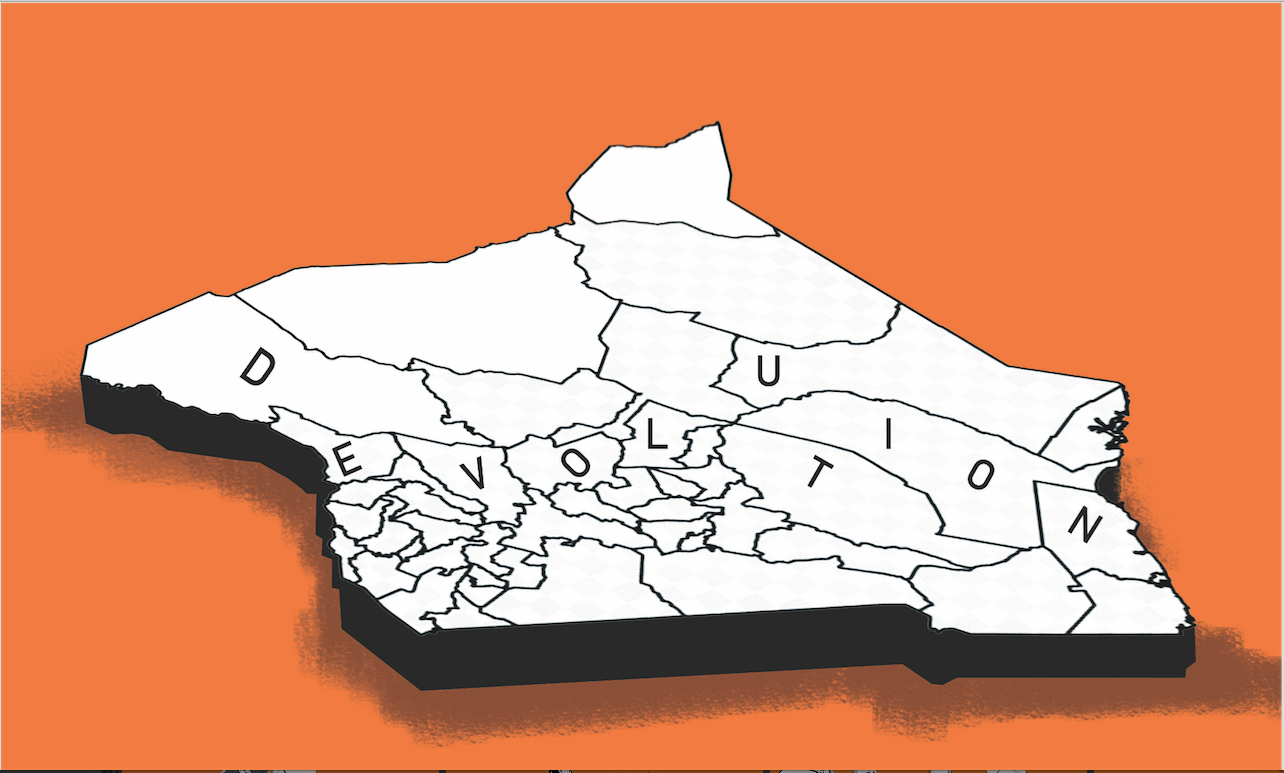
Devolution has demonstrated that counties can successfully implement ambitious infrastructure programmes. Financing mechanisms should evolve to match that reality by backing projects with clear economic returns, regardless of which level of government delivers them.
The Coast is ready.
We have ambitious plans for water security, sewer regeneration, transport connectivity, climate resilience, urban renewal, healthcare, waste management and the Mombasa Gate City Bridge.
These are
investments that will expand Kenya’s productive capacity, deepen regional
integration and strengthen our position as East Africa’s commercial gateway.
The conversation around Africa’s financial future is ultimately about confidence. Confidence that African institutions can mobilise African capital.
Confidence that our savings can finance our own transformation. Confidence that we can invest strategically in projects that create lasting prosperity.
Kenya is showing that confidence through NIF.
The next step is to ensure those resources are directed where they will produce the greatest return for our people and our economy.
Few places offer that opportunity more convincingly than Mombasa.
As Kenya’s principal port city, the gateway to East and Central Africa and the engine room of our blue economy, Mombasa is not asking for preferential treatment. We are making a compelling economic case for strategic investment.
A significant stake for Mombasa in NIF is not a favour to one county. It is an investment in Kenya’s competitiveness, Kenya’s productivity and Kenya’s future.
When Mombasa moves forward, the nation moves forward.
The writer is the Mombasa governor