In recent years, a surge of media coverage and think tank reports has painted China's involvement in African port infrastructure as a calculated geopolitical manoeuvre.
Commentators often frame Beijing's investments as part of a grand strategy to secure military footholds, exploit debt vulnerabilities and exert undue influence over the continent.
This narrative, amplified through lenses of great-power competition, suggests that Chinese firms are aggressively building ports to create debt traps that could lead to asset seizures if African nations falter on repayments.
However, a closer examination of the evidence reveals a different story.
Contrary to portrayals of China as an aggressive lender imposing unwanted projects, nearly all Chinese-funded ports in Africa stem directly from requests by African governments seeking to address longstanding infrastructure deficits.
African leaders have long recognised that inadequate port facilities hinder economic growth, limit trade competitiveness and constrain access to global markets.
With limited domestic capital and waning interest from traditional Western donors, many turned to China as a willing partner capable of delivering large-scale projects quickly and at scale.
Today, Africa’s infrastructure gap, estimated at $130 billion annually, costs the continent up to 2.5 percent of annual GDP growth and inflates intra-African trade costs by up to 40 per cent.
The demand is therefore not manufactured; it is existential. Countries in the region, therefore see ports as gateways to economic transformation. Without modern, deep-water facilities capable of handling mega-container ships, Africa remains locked out of global value chains.
This thinking aligns perfectly with Africa’s own vision. The African Union’s Agenda 2063 and the African Continental Free Trade Area both hinge on seamless movement of goods and people.
The AfCFTA’s success demands efficient logistics hubs that reduce transit times, lower costs and unlock value in agriculture, manufacturing and services. Chinese investments directly support these goals.
The uncomfortable truth is that the traditional Western development partnership abandoned hard economic sectors long ago. Over the past two decades, European and American aid has drifted decisively toward social sectors such as health, education, civil society.
These are often accompanied by a thicket of conditionalities, governance audits and environmental benchmarks so stringent they effectively veto any large-scale civil engineering.
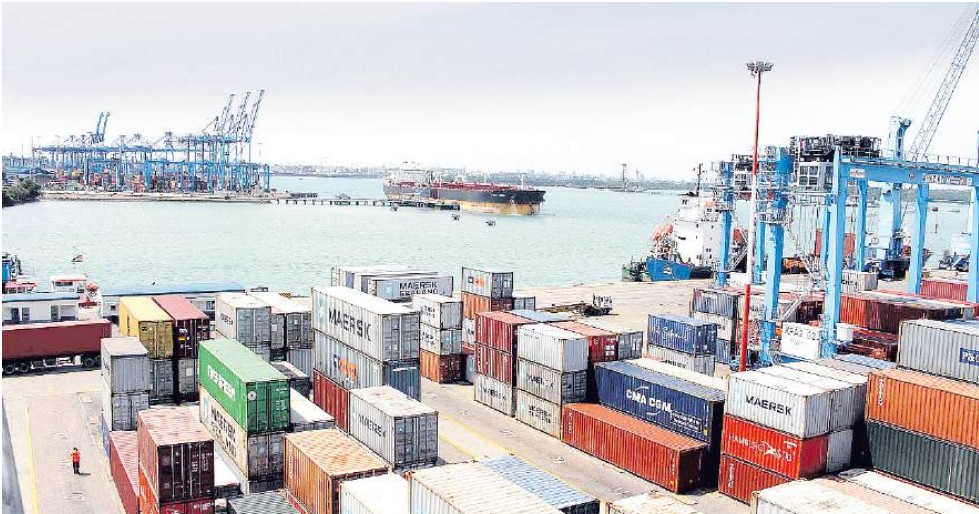
Modern ports, unlike the naval bases of colonial memory, are glass-and-cable hubs of efficiency. They require power, data, logistics and maintenance. They create ecosystems of small businesses, trucking routes and cold storage.
For many countries, including Kenya, the China port expansion partnership also builds the roads and railways to the hinterland; and the industrial park next door. The projects also promote critical technology transfer and job creation for local populations.
Another view often missed by China-Africa port development partnership is that the investments benefit everyone, including the West. More efficient logistics hubs reduce global supply-chain costs, enhance food security and stabilise economies prone to fragility.
A prosperous Africa integrated into world trade is a market for European and American goods, a source of critical minerals and a bulwark against instability.
Framing China’s role as inherently threatening risks alienating the very governments best positioned to shape their futures. It also ignores that diversified partnerships strengthen African leverage, not diminish it.
It is now proper to argue that increased Chinese investments in Africa has led to multiplicity of initiatives by different countries, either individually or in collection, targeted at enhancing development cooperation with Africa.
This is something good for Africa. At the forefront is the Partnership for Global Infrastructure and Investment, a G7 initiative launched in 2022 that aims to mobilise $600 billion for sustainable infrastructure globally by 2027, with a strong focus on Africa.
The United States, for its part, has adopted a deal-based approach, prioritising commercial partnerships and strategic investment in critical minerals over traditional aid models.
The UK launched the Clean Green Initiative in 2021, pledging $4 billion in climate financing for sustainable infrastructure.
From Brussels, came the Global Gateway; the European Union's ambitious strategy to counterbalance China's Belt and Road Initiative by mobilising up to $352 billion for sustainable infrastructure projects worldwide between 2021 and 2027.
Ultimately, China’s port-building in Africa is a story of responsiveness, not ratcheting influence. African governments have requested this development support because the continent’s transformation cannot wait for ideological purity tests.
What the West should do, is not lecture from the sidelines. It should compete. If Washington or Brussels truly worries about Chinese influence at African ports, the answer is not to publish another critical report.
It is to offer better financing for the next generation of terminals; instead of demanding that Africa first abandon the partnerships that are already working.
The writer is a scholar of international relations with a focus on China-Africa development cooperation. X: @Cavinceworld