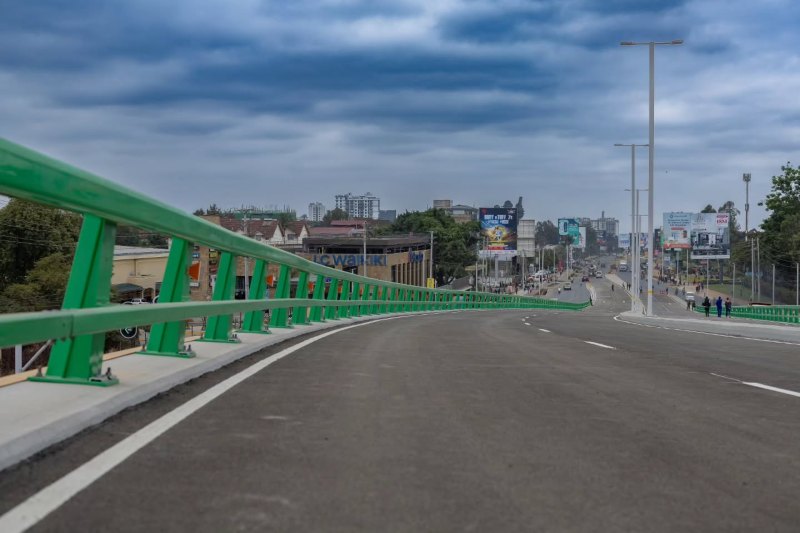
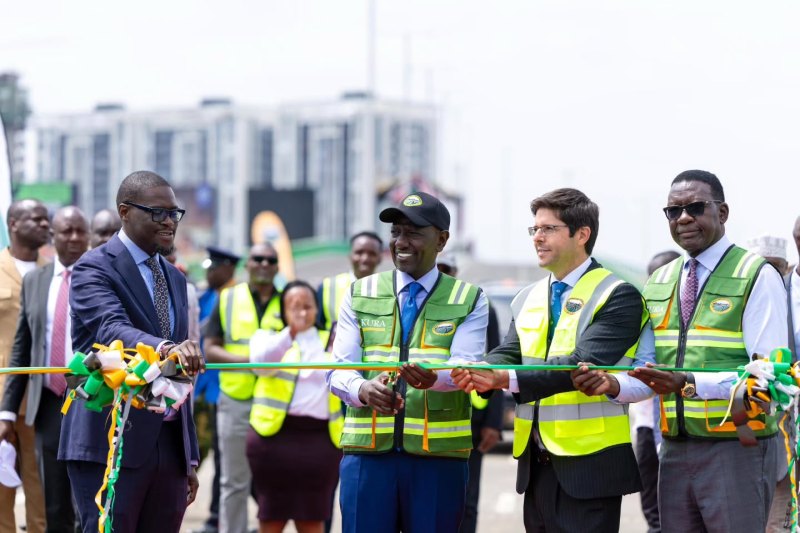
President William Ruto commissioned the 255-meter Ngong Road–Naivasha Road Flyover at Junction Mall in Nairobi. Constructed by the Kenya Urban Roads Authority (KURA) at a reported cost of KSh 3.8 billion, the official brief stated:
"President William Ruto commissions the 255m Ngong Road–Naivasha Road Flyover at Junction Mall, built by KURA at a budget of KSh 3.8 billion."Newly Launched Highway // Instagram
The flyover connects Ngong Road and Naivasha Road, altering traffic flow through the Junction Mall area. The project was completed after several years of construction and serves motorists who use the route daily.
Advertisement
Advertisement
Based on the reported cost and length of the structure, the project costs approximately KSh 14.9 million per meter. This figure is derived by dividing the total project cost of KSh 3.8 billion by the flyover's 255-meter length.
1. Public Reactions and Infrastructure Cost Comparisons
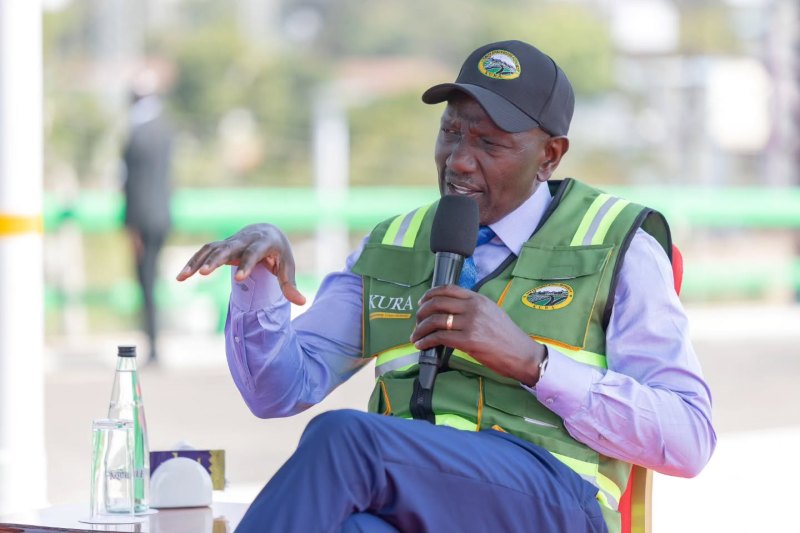
President William Ruto during the Launch // InstagramThe per-meter breakdown prompted reactions online, with Kenyans questioning the project's budget. Media personality @joewmuchiri stated on social media:
"So each meter was 15,000,000/- as in one meter of road. This is what we call development corruption."
Comparisons were made with other major road infrastructure projects in Kenya, including the Thika Superhighway, which was completed in 2012 at an estimated cost of KSh 32 billion.
Advertisement
Advertisement
The highway stretches approximately 50 kilometers between Nairobi and Thika and was funded through government resources and financing from international lenders.Using the project's reported cost and length, the Thika Superhighway averaged about KSh 640,000 per meter, inclusive of multiple lanes, interchanges, pedestrian bridges, and service roads.
An Online user teased sarcastically
"A well equipped level 5 hospital costs not more than 500million😂😂while a level 6 hospital ranges between 500million- 1Billion"
2. Urban Engineering Structural DifferencesH.E President William Ruto // Instagram
The Ngong Road–Naivasha Road Flyover differs in design and purpose from the Thika Superhighway. While the Thika project upgraded a 50-kilometer highway corridor, the Junction Mall project is a grade-separated urban flyover built within a developed section of Nairobi.
Such urban projects involve:
Land acquisition processes.
Utility relocation for existing underground and overhead infrastructure.
Traffic management measures during construction.
Construction within limited spatial footprints.
The Junction Mall flyover handles traffic flow for motorists travelling between Dagoretti, Karen, Kikuyu, and other parts of the capital, serving as an addition to the national and county road network.