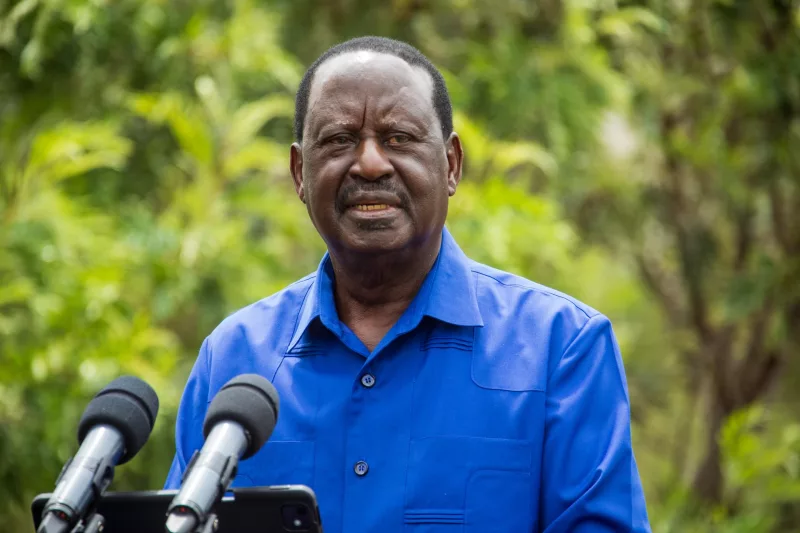
 Kimani Wamatangi, Governor, Kiambu County/HANDOUT
One of the enduring questions in governance is how best to improve people's lives.
Governments often invest heavily in roads, hospitals, schools and other physical infrastructure, all of which are necessary for economic growth and social progress.
Yet there is another dimension of development that is sometimes overlooked. It is the deliberate investment in people themselves.
Across the world, successful societies show that lasting transformation happens when citizens have the tools and opportunities to improve their circumstances. Development is most sustainable when it empowers people to shape their own advancement instead of remaining passive recipients of assistance.
When I assumed office as Governor of Kiambu County, I was convinced that meaningful development required a dual approach. We had to invest in major infrastructure projects and create programmes that directly touched the lives of those at the bottom of the economic pyramid.
That conviction was not universally shared.
When we launched a countywide programme to distribute improved Kienyeji chicks to women, some leaders dismissed the initiative as tokenism.
The programme attracted ridicule and was reduced to political slogans, with some calling me Governor wa tucui (Governor of chicks).
Critics questioned whether 10 chicks could make any meaningful difference in the life of a struggling household.
The answer today is found in villages and trading centres across Kiambu County. Thousands of women who received chicks have expanded their poultry ventures into thriving small businesses. Over 170,000 beneficiaries of this programme now sustain their families. What began as a modest intervention has grown into a source of income, food security, and financial independence for many families.
The true value of empowerment programmes is often not immediately visible because their impact unfolds gradually. Unlike a building that can be seen and photographed when completed, human empowerment reveals itself over time through changed lives, improved livelihoods, and increased self-reliance.
Perhaps the most encouraging outcome has been the shift in mindset. In many places, political meetings were once associated with expectations of handouts. But in Kiambu, that culture is being replaced by a desire for opportunities that generate sustainable income. People want tools to succeed, not temporary relief.
The same philosophy guided programmes targeting young people and men by distributing piglets and supporting agribusiness ventures. Today, many beneficiaries run successful enterprises that support their families and create jobs for others. The transformation may not make headlines, but it is visible in villages where economic activity has expanded and dependency has declined.
Food security is another area where targeted interventions have yielded encouraging results. By distributing free certified maize and bean seeds and fertilizer, many households that once struggled to produce enough food have become self-sufficient.
The results are especially significant in areas that have historically faced recurring food shortages, such as semi-arid Ndeiya and Ngoliba. It is increasingly rare to hear of residents relying on emergency food relief, which has often been abused during campaigns to win votes.
The bodaboda sector offers another example of how targeted empowerment can unlock economic potential.
For years, many have viewed motorcycle transport as a temporary occupation that is also misused during campaigns. Through the “Kazi na Bodaboda” initiative, which encouraged riders to form cooperatives and savings groups, my government has supported investment and enterprise development.
This support has helped the sector evolve into a more structured and sustainable source of employment. Many riders now appreciate the value of collective savings, investment, and long-term planning. Their cooperatives help members access credit, diversify income streams, and build financial security.
None of this suggests that empowerment programmes alone are sufficient. Human development and infrastructure development must go hand in hand.
That is why my administration has pursued both objectives simultaneously.
Over the past three and a half years, Kiambu County has seen unprecedented investment in public infrastructure. We have constructed six new Level Four hospitals and 28 Level Three hospitals. Existing facilities have been modernised and medical equipment upgraded.
In education, 512 new ECDE centres have been constructed, and a free feeding programme has increased enrollment from 32,000 to over 50,000 learners. Security and economic activity have also benefited from the installation of over 12,000 solar streetlights across the county, as well as water, markets and stadiums, among other projects.
As leaders, our responsibility is to remain focused on results rather than rhetoric. Politics will always have its place, but development requires consistency and a commitment to fulfilling promises made to the people. At the end of the day, the people are the ultimate judges of leadership. They will evaluate the tangible changes they see in their daily lives.
The writer in the Governor, Kiambu County