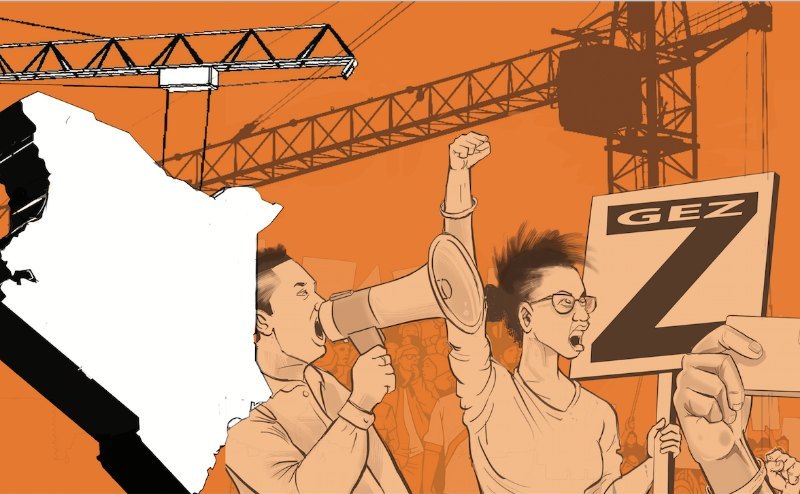
Thursday, June 25, was a special day, a day that will forever commemorate the 60 youth and more killed at the hands of trigger-happy police, killed protesting the then-rejected 2024 proposed finance bill.
This year the question still remains: How meaningfully are young people participating in
shaping the country's economic future? Could this be what is hurting the youth?
Lack of involvement and participation in what matters most?
With nearly three-quarters of Kenya's population under the age of 35, young people have been made merely stakeholders in fiscal policy, and yet, they remain among those most affected by it.
From taxation on digital services, employment opportunities, university funding or the cost of essential commodities, decisions contained in the Finance Bill have direct consequences on the aspirations and livelihoods of the youth—an entire generation of future leaders and future developers of our country.
The events surrounding the 2024 Finance Bill, the June aftermath last year and yesterday clearly signify that Kenyan youth should no longer be perceived as passive observers of governance.
Our youth are highly informed of current happenings, in fact, global issues, digitally connected and increasingly willing to demand accountability from their leaders.
Through social media campaigns, civic education initiatives, public participation forums and peaceful demonstrations, many young Kenyans have constantly shown that they are prepared to engage in issues traditionally viewed as the preserve of elite economists and politicians.
Where our government goes wrong is to think engagement is only during moments of crisis. To the extent of engaging goons to counter genuine youth in protest, which is a very misguided approach.
A serious and healthy democracy requires continuous participation long before a Finance Bill reaches Parliament, and not just the typical, usual newspaper and parliament website publicised call for public participation. Public participation should begin at the policy formulation stage, where young people contribute ideas on national priorities, revenue generation and expenditure.
A lot and a lot of civic education on public finance must also become more accessible, in the language all youth, including the less educated, can understand, enabling our youth and other citizens in general to understand not only what taxes they pay, but how those resources are allocated and monitored.
This challenge for meaningful civic engagement of the youth in shaping fiscal policy also rests with institutions. Government agencies, Parliament, county governments, civil society and educational institutions must rethink how they communicate fiscal policy.
Technical documents often remain complicated, inaccessible to ordinary citizens, particularly young people outside urban centres. Thus, simplified communication, digital engagement platforms and targeted outreach to universities, TVET institutions and community youth groups can transform participation from symbolic consultation into meaningful dialogue.
When young people are genuinely informed, listened to and included in fiscal decision-making, the country moves beyond reactive politics towards participatory governance.
This is something our lawmakers know but ignore. Yet they are happy to facilitate the registration of youth to obtain voter identification cards to be elected in next year's general election.
When priorities change from using the youth as voter machines to meaningful participation in what matters, the economy, then the country might see fewer youth protests in future.
The future of Kenya's economy will not be determined solely by the taxes collected, but by the extent to which its largest demographic is empowered to shape the decisions that define their future.
Bwire writes on African youth, democracy, higher education and development