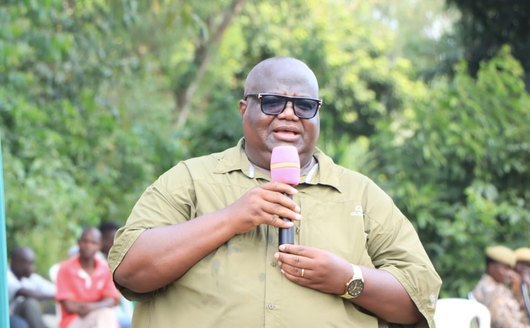
A new bamboo nursery capable of producing 100,000 seedlings is set to boost efforts to restore degraded sections of River Nzoia and strengthen community livelihoods.
The Wildlife Research and Training Institute (WRTI) on Tuesday handed over the nursery to community-based organisations as part of a bamboo-growing campaign targeting the restoration of the Nyadorera section of River Nzoia in Siaya county.
The nursery was handed over to three community-based organisations from Budalang’i and Siaya that are partnering with WRTI in restoring the river ecosystem.
WRTI chief executive officer Patrick Omondi said, “This is a reaffirmation of the institute’s commitment in supporting the 15 billion tree growing campaign that focuses on ecosystem restoration, climate resilience, biodiversity conservation and sustainable livelihoods for our communities.”
WRTI is working closely with Kasigar, Nyamakaha and Simbamon community-based organisations as it expands restoration efforts along the river.
Members of the groups have been trained in bamboo production, nursery management, restoration practices and stewardship of riparian ecosystems.
The training is expected to ensure a steady supply of planting materials, strengthen local ownership and support community-led monitoring and maintenance of restoration sites.
Omondi said the programme would also create opportunities for improving livelihoods, generating green jobs and building resilient communities.
He said River Nzoia supports an important riverine and wetland ecosystem that sustains agriculture, fisheries, domestic water supply and thousands of households across the Lake Victoria Basin.
However, recurrent flooding and unsustainable land-use practices have continued to degrade the ecosystem.
“The bamboo growing campaign is therefore a practical and nature-based solution to these challenges,” he said.
The pilot bamboo restoration project began in October 2024 in Budalang’i, Busia county, with support from the United Nations Environment Programme–International Ecosystem Management Partnership (Unep-IEMP) in collaboration with the Chinese Academy of Sciences.
The project recorded significant progress, with 3,600 bamboo seedlings planted across 18 acres under bamboo agroforestry systems.
With additional support from the government, WRTI scaled up the initiative in March 2026 by planting a further 12,500 bamboo seedlings.
The total area under restoration in Budalang’i now covers 95 acres of riparian land.
The latest expansion in Nyadorera, Siaya county, targets the planting of 21,000 bamboo seedlings across an estimated 130 acres of riparian zone.
Once completed, the restoration efforts at the two sites will cover about 243 acres.
On March 30, WRTI launched the Bamboo Growing Campaign, a landmark initiative aimed at rehabilitating degraded riparian zones along River Nzoia.
Wildlife PS Silvia Museiya said the project demonstrated the government’s commitment to environmental restoration, climate resilience and socioeconomic transformation.
“It exemplifies what can be achieved when government institutions, research organisations, development partners and communities work together towards a common vision,” she said in a speech read on her behalf by conservation secretary John Chumo.
WRTI board director Albert Long’ora said the
initiative highlighted the importance of community-led conservation efforts
whose impact extends beyond local boundaries.
“This is the core focus of environmental restoration activities that not only enhance lives and livelihoods of local communities but support national and global conservation efforts—as we are reminded many times, think global, act local,” he said.
Long’ora said the campaign successfully bridged research and practical action.
He said ecological mapping of degradation along River Nzoia had informed a solution that addresses local environmental challenges while supporting livelihoods.
“Research must not only provide knowledge but be translated into action,” he said.
The board reaffirmed its commitment to supporting the initiative and expanding restoration of degraded riparian land along River Nzoia.