The Nairobi Rivers Commission has reported significant progress in the ongoing multi-agency programme to restore the Nairobi River Basin and transforming the capital's urban environment.
Commission chief executive officer Joseph Muracia said key components of the project are at different stages of completion, with several major infrastructure works already more than halfway complete.
He said parks, roads, pedestrian pavements and outdoor sports facilities, alongside a 72km trunk sewer system, are 55 per cent complete.
The Kariobangi Waste Water Treatment Plant, with a capacity of 60,000 cubic metres, is 25 per cent complete, while catchment restoration and protection works stand at 40 per cent.
Muracia added that flood control and storm water management works are 45 per cent complete, while rehabilitation of the Dandora dumpsite has reached 55 per cent.
Transport infrastructure, including footpaths and cycle lanes, is 28 per cent complete, while development of urban landscaped recreation facilities stands at 45 per cent.
Support infrastructure, including service buildings, is 25 per cent complete, while social and affordable housing and market development along the river corridor are 35 per cent complete.
He further said the government will provide alternative land to mechanics currently operating in the Grogon area to allow redevelopment of the river corridor to proceed without disruption.
The Nairobi Rivers regeneration programme is being implemented under a broader government-led concept developed by a special task force working with China Energy Engineering Corporation on design and planning.
The first phase of the catalytic project was approved on September 18, 2024, following consultations with ministries, departments and agencies.
The programme, led by the Ministry of Defence, covers 27.2 kilometres of the Nairobi River Basin and focuses on restoring the river ecosystem while addressing urban challenges such as pollution and flooding.
Key interventions include the construction of more than 54 kilometres of new trunk sewer lines stretching from Naivasha Road to Dandora Falls, aimed at reducing the flow of untreated waste into the river system.
The plan also includes dredging, widening and rehabilitation of the Nairobi, Ngong and Mathare rivers. Urban regeneration components include the construction of affordable housing units, development of modern markets, and creation of pedestrian walkways, cycle lanes and landscaped riverbanks designed to enhance recreation and environmental quality.
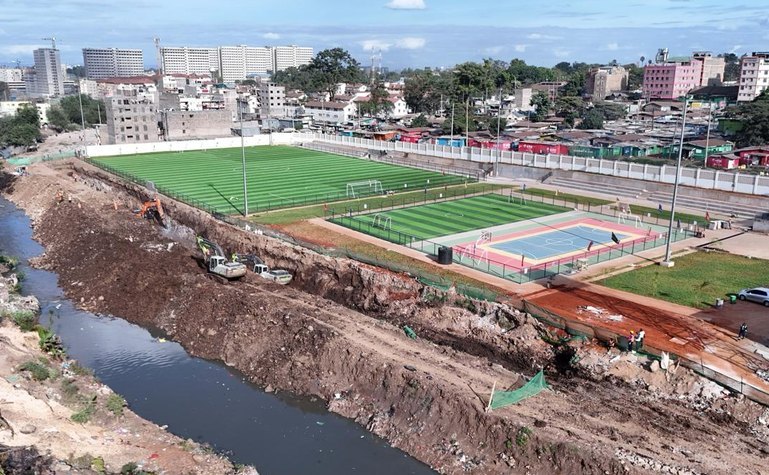
Riverbank stabilisation works are also under way to reduce flooding risks during heavy rains and improve the resilience of surrounding communities.
According to the commission, the project is expected to deliver significant social, environmental and economic benefits.
These include reduced flooding and erosion, improved sanitation, safer living conditions for riverine communities and enhanced urban aesthetics. Environmental gains are expected through improved water quality, restoration of aquatic ecosystems and strengthened climate change adaptation capacity.
Economic benefits include job creation and the development of new tourism and recreational spaces. The State Department for Housing and Urban Development is also spearheading complementary urban renewal projects across Nairobi as part of efforts to modernise the capital and improve public infrastructure.
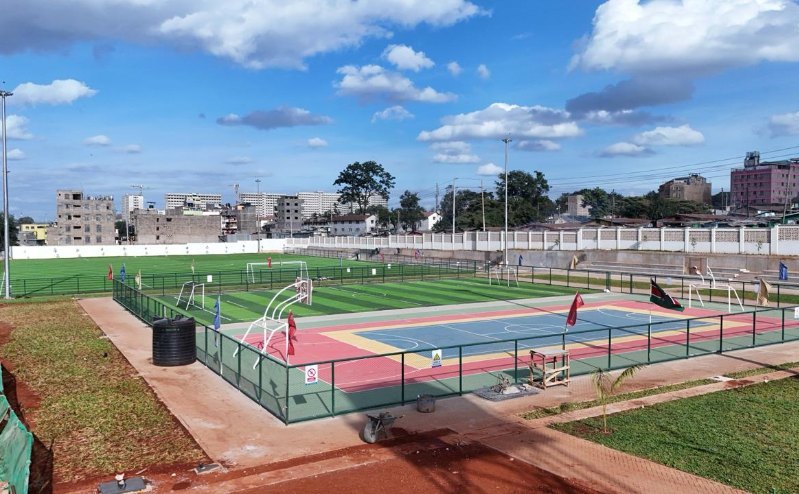
Among these is the transformation of Kamukunji Grounds into Kamukunji Recreation Park.
The upgraded facility now includes football pitches, basketball courts, a boxing ring, a community centre with a library and ICT hub, an amphitheatre, children's play areas, landscaped gardens, paved walkways and solar-powered lighting.
The site has also incorporated improved drainage and flood-control systems aligned with the wider Nairobi Rivers regeneration agenda.
Kamukunji Grounds remains a historically significant civic space, having hosted key gatherings during the Saba Saba movement, which played a central role in Kenya's push for multi-party democracy.
As the country approaches another Saba Saba commemoration on July 7, the ongoing regeneration of such public spaces underscores broader efforts to link historical civic identity with modern urban development and an improved quality of life in the capital.