 Leadership, Learning and Partnership in Action
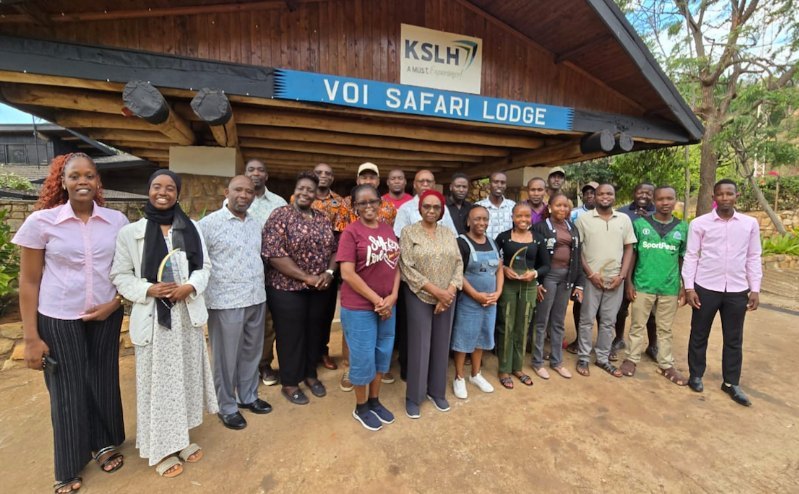
Pwani University management, led by Prof James Kahindi, together with leaders of the Pwani University Students Association, pose for a group photo during an induction workshop at Voi Safari Lodge /Handout
Leadership, Learning and Partnership in Action
Pwani University management, led by Prof James Kahindi, together with leaders of the Pwani University Students Association, pose for a group photo during an induction workshop at Voi Safari Lodge /HandoutAt a time when many institutions of higher learning are grappling with mistrust, disconnect and strained relationships between management and student leadership, Pwani University has demonstrated a refreshing and progressive approach to governance.
The recent student leadership induction and team building programme held at Voi Safari Lodge from June 11–13 was not merely a retreat; it was a bold statement on the importance of dialogue, partnership, mentorship and shared responsibility in institutional development.
Led by the vice chancellor Prof James Kahindi, the university’s top management intentionally created a platform where student leaders and administrators could engage openly on issues affecting governance, education, leadership, accountability, and student welfare.
This initiative deserves commendation because it reflects visionary leadership anchored on inclusion, consultation and collective responsibility.
In his keynote address on transformative and visionary leadership in higher education, Prof Kahindi underscored the need for universities to move beyond rigid administrative structures and embrace participatory leadership models that empower all stakeholders.
His message resonated with the realities of modern governance: institutions thrive not through authority alone, but through collaboration, trust-building and shared vision.
Indeed, transformative leadership is about creating leaders, not followers. By engaging student leaders directly, the vice chancellor demonstrated confidence in young people as legitimate partners in institutional growth.
This is the hallmark of progressive governance. Universities are not only centres of academic and research excellence; they are incubators of future national leaders. When students are treated as partners rather than adversaries, institutions cultivate responsible leadership, innovation, and civic consciousness.
Similarly, the Deputy vice chancellor for academic and student affairs prof Rose Ruto Korir, delivered a timely and impactful presentation on student welfare, governance and leadership accountability.
Her presentation highlighted an often-overlooked reality: effective student leadership must go hand in hand with responsibility, integrity and service to the student body.
Student welfare remains central to academic success and institutional stability. Issues such as mental wellness, accommodation, inclusivity, academic support, safety and fair representation cannot be effectively addressed without meaningful engagement between management and student leaders.
Prof Korir’s emphasis on accountability reminded student leaders that leadership is not about privilege or political posturing, but about stewardship, ethical conduct, and advocacy grounded in the common good.
Equally important was the presentation by the Deputy vice chancellor for administration, finance and planning Prof Hellen Mondoh, on strategic resource management and sustainability. In an era of financial constraints facing universities across Kenya and beyond, it is crucial for student leaders to appreciate the realities of institutional planning, budgeting and sustainability.
Often, conflicts between students and management arise from misinformation or lack of understanding regarding institutional capacities and priorities. By exposing student leaders to these conversations, Pwani University is nurturing informed leadership capable of engaging constructively rather than confrontationally.
Prof Dr Halimu Shauri’s presentation on “research and innovation leadership for community impact” underscored a fundamental shift in the role of universities- from being mere centres of knowledge generation to becoming catalysts for societal transformation.
Effective university leaders must therefore create an environment that supports inquiry, innovation, collaboration and the translation of knowledge into solutions that improve people’s lives.
Perhaps one of the most intellectually stimulating moments of the programme was the debate challenge led by outgoing and incoming student leaders on the topic: “Should Administration be involved in Student Leadership?” This debate captured the essence of democratic engagement within institutions.
While student leadership must remain independent and representative of student interests, administration cannot be completely detached from leadership development processes. Constructive involvement through mentorship, policy guidance, dialogue and institutional support is essential in cultivating mature, ethical and visionary student leaders.
What Pwani University has demonstrated through this initiative is a powerful lesson for other universities, counties and even national governance structures. Development cannot be achieved in silos. Sustainable progress emerges when leaders deliberately create platforms for participation, consultation, and consensus-building among stakeholders.
The Pwani University initiative reflects the African philosophy of collective responsibility: that leadership is a shared journey. When university management and student leaders sit together, engage openly, challenge ideas respectfully and jointly envision the future of their institution, they create a culture of ownership and mutual accountability.
Such cultures reduce conflict, strengthen institutional cohesion and enhance problem-solving.
Moreover, this approach nurtures future leaders equipped with practical governance experience. Today’s student leaders are tomorrow’s governors, legislators, policymakers, scholars and corporate executives.
Universities therefore have a responsibility not only to educate students academically but also to shape their leadership values, emotional intelligence and governance competencies.
As institutions across the country search for sustainable governance models, the Pwani University experience offers an important reminder: collaboration is not weakness; it is strength. Dialogue is not compromise; it is wisdom. And leadership is not about control; it is about inspiring people to work together toward a shared vision.
In a world increasingly divided by mistrust and polarisation, institutions that embrace participatory governance will not only survive — they will thrive. Pwani University has shown that when management and student leadership walk together, institutions move forward together.