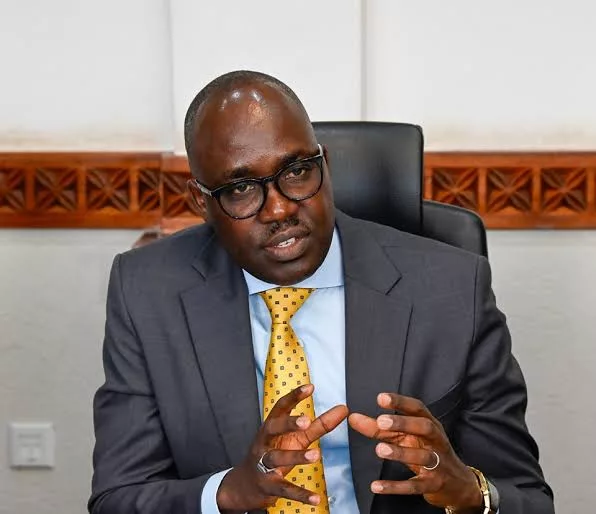
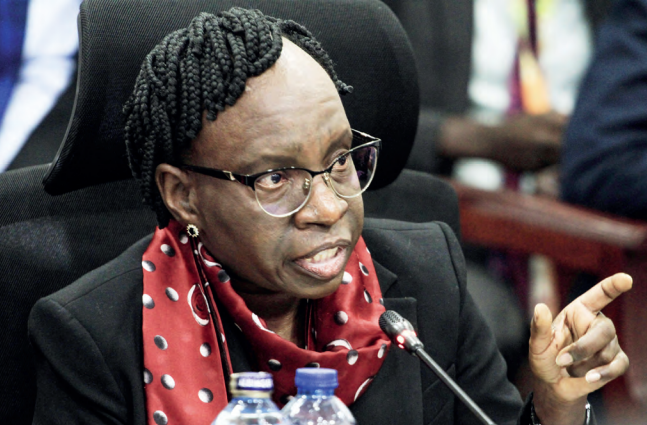
 Auditor General Nancy Gathungu
Dozens of marginalised counties risk missing out on the transformation promised under the Equalisation Fund.
A new report has flagged the failure by the government to remit Sh51.9 billion owed to the fund with time running out before its expiry.
There are only six years remaining before the fund lapses, that is the financial year 2031-32, being the 20th year set in the Constitution.
The Constitution created the kitty more than a decade ago to bridge the country’s development divide.
It was to help bring marginalised counties to the level of services enjoyed in the rest of the country.
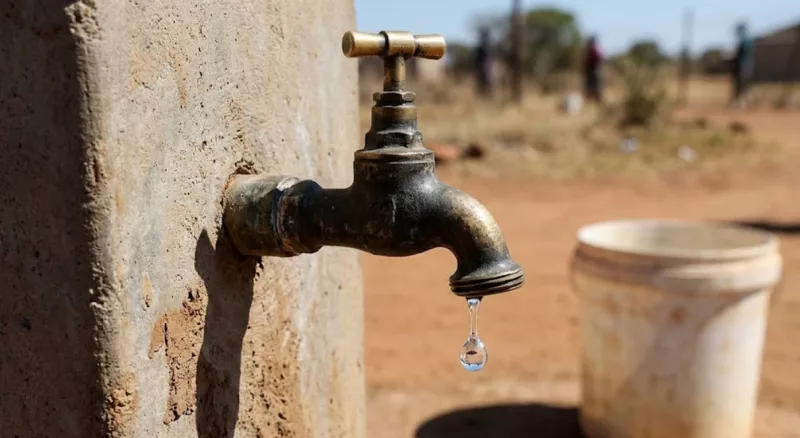
The fund was designed to finance water, roads, health facilities and electricity projects in marginalised regions.
However, in the review, Auditor General Nancy Gathungu has warned that Kenya is unlikely to achieve the objectives for which the fund was established.
The June 30, 2025 audit paints a grim picture of how the kitty is struggling to deliver basic services to some of the country's poorest communities.
The Constitution requires that 0.5 per cent of national revenue be channelled annually into the fund.
However, the audit shows that while the fund should have accumulated Sh67.8 billion between 2011-12 and 2024-25, only Sh15.93 billion has been transferred.
This means nearly three-quarters of the money intended to uplift neglected communities has never reached the fund.
"The National Treasury had not remitted the remaining balance of Sh51.8 billion to the Fund as at 30 June, 2025 and was, therefore, in breach of the Constitution," the audit states.
Gathungu has warned that with the low disbursements, the objective of improving services in disadvantaged areas may not be realised within the timelines envisioned by the Constitution.
"Given the low level of disbursements as indicated above, the country is not likely to achieve the objectives of the Equalisation Fund," the report says.
The concern is particularly significant because the programme was expanded far beyond its original scope.
The first marginalisation policy developed by the Commission on Revenue Allocation in 2013 identified 14 beneficiary counties, including Turkana, Mandera, Wajir, Marsabit, Samburu, West Pokot and Garissa.
A second policy, adopted in 2018, widened the reach of the fund to 1,424 marginalised areas spread across 34 counties.
But despite the expansion, implementation has lagged badly, a point that Tiaty MP William Kamket raised in Parliament on Thursday.
The lawmaker has demanded answers from Treasury on when Baringo would get its full share of the proceeds from the kitty.
The Equalisation Fund Appropriation Act, 2023 allocated Sh10.02 billion to projects under the second policy.
But auditors found that six counties, namely Bomet, Bungoma, Kericho, Kitui, Lamu and Narok, had not received approval for any projects despite a combined allocation of Sh1.37 billion because they had not submitted project proposals.
At the same time, only Sh2.9 billion, equivalent to 48 per cent of approved project funding, had been requisitioned and transferred.
Thirteen counties with approved projects worth more than Sh2 billion recorded zero absorption of allocated funds.
Overall, only 29 per cent of appropriated funds had been transferred by June 2025, significantly slowing implementation of projects meant to improve living conditions in underserved regions.
Gathungu holds that even if Treasury were to release the outstanding billions immediately, administrative hurdles could still prevent counties from fully utilising the resources before the fund's deadline.
Regulatory weaknesses are also complicating implementation.
The audit identified conflicting provisions in the Public Finance Management (Equalisation Fund Administration) Regulations, 2021.
This included confusion over who is responsible for conducting public participation, approving projects and preparing financial reports.
The National Treasury and fund managers are yet to amend the regulations to address the gaps.
As a result, the fund is caught between chronic underfunding and weak implementation systems, with potentially serious consequences.
The Equalisation Fund was conceived as a once-in-a-generation intervention to close historical development gaps.
Yet with only 23 per cent of its entitled resources received and six years left before expiry, the promise appears increasingly at risk.
As such, many of the marginalised areas identified for support may never receive the full benefits, unless Parliament extends the life of the fund.
The other alternative relief would be if the government significantly accelerates both funding and project implementation.
Even so, concerns are abounding on whether the already disbursed resources have been used appropriately.