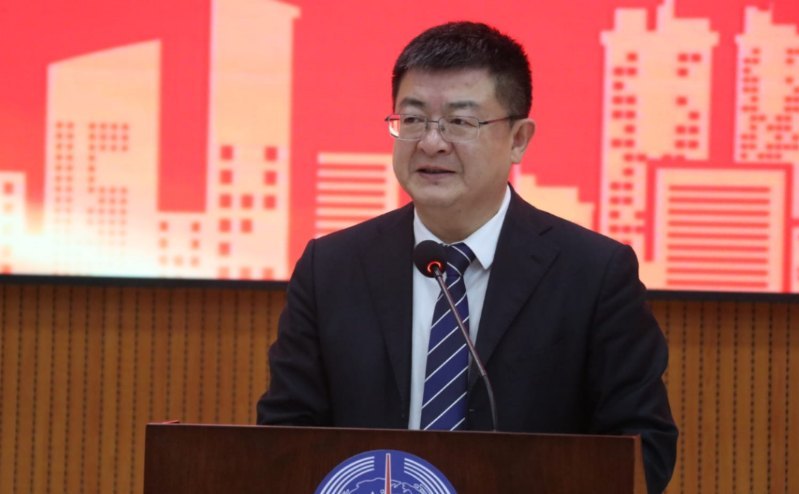
(Speech by Ying Qiang, director Xinhua News Agency Africa Regional Bureau at the Seminar on China-Kenya People-to-People Connectivity hosted by the Star Publications Limited on June 11, 2026)
My sincere thanks to the organizers of this seminar for bringing us together to talk about something that truly matters – for our industry, for our two nations, and for the moment in history we share.
This year, as many of you know, is the China-Africa Year of People-to-People Exchanges, designated jointly by President Xi Jinping and African leaders. And since President Ruto's state visit to China, China and Kenya have elevated their relationship into a China-Kenya community with a shared future for the new era. So today's conversation is well-timed. There could hardly be a better moment to ask, together with our Kenyan friends in media and business: how can our two countries' media bring our peoples closer? And how can we, as colleagues, walk forward side by side?
Xinhua has had the privilege of working on this continent for more than sixty years, and of operating from Nairobi. We are deeply grateful to our Kenyan friends – colleagues, partners, hosts – who have stood with us along the way. Within the theme of this session, Media Ethics and Editorial Leadership, I'd like to share three observations on China-Kenya media cooperation in the era of new media, and then put forward five concrete proposals.
Let me begin with a word about that history.
In the 1950s and 60s, as Africa's independence movements swept the continent – as one African nation after another stepped into the dawn of self-rule – Xinhua’s correspondents arrived too. In early 1959, we opened a bureau in Accra, Ghana – the first by any Chinese mainstream media organization on this continent. In late 1963, the same year Kenya gained its own independence, we opened our bureau here in Nairobi. And in April 1986, with the support of the Kenyan government, our Africa Regional Bureau was formally established in this city – and has served as our regional hub ever since.
Over the decades, thanks to generations of Xinhua professionals and to the friendship of our Kenyan partners, that footprint has grown. Today, with Nairobi as our hub, we run 30 bureaus across the continent. Our network reaches 48 Sub-Saharan countries, in six languages – Chinese, English, French, Arabic, Portuguese, and Swahili. We have worked closely with the Kenya News Agency, The Standard, the Daily Nation, and our host today, The Star – and along the way, we have built friendships that last.
It is on that foundation that we come to today's conversation – with appreciation, and with a real desire to deepen what we have built together.
My first observation: new media is opening new space - for our two peoples to know each other.
The first change is reach. Kenya is one of Africa's most digitally active markets – high mobile penetration, high social-media use. Short videos, podcasts, and instant messaging have brought Chinese and Kenyan audiences closer than ever before. A young person in Nairobi learns about China's high-speed trains on TikTok. A homemaker in Beijing discovers Kenyan coffee farmers through Douyin. A Chinese student in Kenya shares the starlit skies of the Maasai Mara with friends back home. These person-to-person encounters give China-Kenya friendship a depth and warmth that earlier generations could only have imagined.
The second change is in how we tell stories. Multi-modal, light-weight content matches the rhythm of everyday life. The China-Kenya story is no longer carried by grand declarations alone, but by ordinary people – a Chinese doctor at a hospital in Kenya, a local manager at a Chinese-invested company, a Kenyan student studying in Beijing, a Chinese-Kenyan family. Their everyday lives – their smiles, their work, their dreams – are the truest, warmest fabric of China-Kenya relations.
The third change is the audience itself. People are no longer just readers and viewers – they participate, they respond, they push back. Data shows us which stories truly land. Comments and replies create real conversation between newsrooms and the public. All of this asks us to listen more carefully – and more humbly – to our audiences, and especially to the real concerns and the bright hopes of Africa's young people.
My second observation: this era brings new responsibilities for professional media – in China and in Kenya alike.
A changing time calls for media professionals who are equal to the moment. As information flows at unprecedented speed, and as new forms of communication keep emerging, the role of professional media is not shrinking – it is becoming more important than ever. Let me share four words that point to that mission.
The first is fact-checking. In a world of constant information, the most valuable thing a professional newsroom offers is trust – earned through care, not speed. The more information swirls around our readers and viewers, the more they look to us for what is verified, weighed, and reliable. When Chinese and Kenyan media work side by side to deliver information audiences can rely on, that is one of the strongest contributions we can make to the friendship between our peoples.
The second is local storytelling. In recent years, our Africa Regional Bureau has worked hand in hand with Kenyan colleagues and Chinese correspondents on the ground. Kenyan stories need Kenyan voices. Chinese stories need to be told in ways Kenyan readers can understand and trust. We hope to keep working with you so that audiences in both countries find something familiar – and something resonant – in each other's everyday lives.
The third is depth. Short video and long-form journalism are not rivals – they nourish each other. Behind every short video that truly moves an audience lies the kind of reporting that only patience and craft can produce. Our two countries' media holding firm on depth – that is the steady hand the profession owes to its time.
The fourth is cross-cultural editorial judgment. China and Kenya each bring their own beauty, their own depth, their own way of looking at the world. Only when our editors understand technology and culture both – only then – can what we do across cultures be accurate, alive, and worth listening to.
And my third observation - really, an invitation: let us open a new chapter, together, in China-Kenya media cooperation.
Let me put forward, here today, five concrete proposals for our work together.
First, content exchange and joint planning. In areas where our two countries' stories overlap –green energy, the digital economy, youth, cultural heritage – let us commission joint reporting projects, and let our best stories illuminate one another.
Second, collaborative new media production. Let us produce bilingual short-video series with Chinese and Kenyan journalists on screen together, so that audiences in both countries can hear both voices in the same frame.
Third, journalist exchange and training. Through visits, joint workshops, and youth- journalist programs, we hope frontline reporters and editors on both sides can build the kind of friendship that lasts.
Fourth, information sharing andcoordination. On the topics that most matter to our bilateral relationship, let us keep open and effective lines of communication – so that the way we cover each other stays accurate, and stays human.
Fifth, telling Africa's story – together. Beyond the bilateral lens, we hope to work with our Kenyan colleagues to bring more of Africa's own progress, spirit, and promise to the wider world.
Before I close, I'd also like to mention a book Xinhua published this year – the first volume of China's Governance Under Xi Jinping's Leadership. The book documents the governance practices of Chinese President Xi Jinping, and presents China's development philosophy, path and achievements. It offers the international community an important window for better understanding China and Chinese modernization. We hope this volume can serve as a starting point for sharing more of China's development story with our friends in Kenya's media and think-tank communities – and that through such mutual understanding, our two countries' media will grow ever closer, and walk further together.
Ladies and gentlemen, There is a Swahili proverb you know far better than I do: "Haba na haba hujaza kibaba" – drop by drop fills the cup. The friendship between our two peoples is exactly that kind of work – patient, daily, worth every drop.
Xinhua looks forward to working with all Kenya media – and with all of you here today – with professional dedication, with the friendship we cherish, and with confidence in our shared future. We will tell – page by page, frame by frame, drop by drop – the stories of how the people of China and Kenya come to understand one another, to trust one another, and to wish one another well.
I am confident that, under the strategic guidance of our two leaders and through our joint efforts, China-Kenya media cooperation will reach ever broader horizons, infusing the China-Kenya community with a shared future for the new era with ever warmer and stronger people-to-people strength.