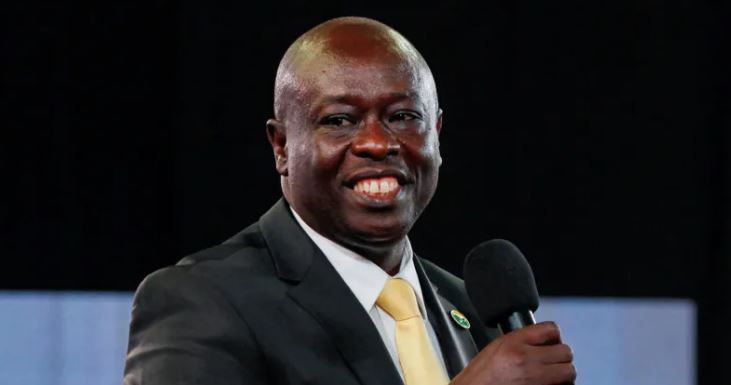
 Former Deputy President Rigathi Gachagua/FILE
The High Court’s long‑awaited judgment on the former Deputy President Rigathi Gachagua’s impeachment petitions has finally landed, and it was a unique one.
It is rare to see a court acknowledge a constitutional violation so clearly yet refuse to grant the remedy the aggrieved party most desires. But that is precisely what the judges did.
Although Gachagua was measured in his response to the ruling, his supporters are crying foul which is to be expected regardless of the guilt or innocence of the subject of the ruling.
What is surprising, however, is having well informed individuals, including senior counsel no less trashing the ruling in a manner that is simply unbecoming of anyone with the honour of that distinction.
What is equally disturbing is when individuals like these who instead of educating and informing the public even when they disagree with a court’s ruling, they instead opt to do the opposite by trashing the decision or muddying the waters with half-baked, unprincipled, ill-informed and often personal agenda-driven drivel.
Case in point is this narrative out there that the court contradicted itself in acknowledging constitutional violation of the former DP’s right to a fair trial while letting the impeachment stand as validly obtained. That is not a contradiction when analysed strictly as a matter of law.
When it comes to resolving even ordinary legal cases, our courts—and many across the world rely on doctrines and principles that go back centuries to common law England.
In this case, the judicial balancing the court did to both find constitutional violations and let the impeachment stand rests comfortably on an outgrowth of a common law doctrine known as “harmless error,” a doctrine which owes its origin to the 1870s when England passed laws to erase appellate courts positions that any legal error — no matter how trivial — required reversal.
The new laws instructed appellate courts to ignore errors that did not affect the merits.
And with that, the harmless error doctrine was born and spread first to the new colonies in the US and to many countries, including here in Kenya where the doctrine was inherited indirectly initially through statutory provisions in the Criminal Code and judicial development by the Court of Appeal and Supreme Court.
Most notably, the 2010 Constitution transformed the doctrine by embedding in it the right to a fair trial and the obligation to avoid miscarriage of justice.
The Supreme Court sharpened the doctrine in impeachment and administrative‑law contexts in the Sonko case where it held that procedural errors in legislative processes may be overlooked if they do not affect the substance or fairness of the outcome.
The court in the Gachagua case had this in mind when it said yes, there were some violations in the process, and that those violations deserved a remedy (money), but the violation was not serious enough to invalidate the entire impeachment process.
This is not a contradiction but the product of two competing legal principles: constitutional rights must be protected, courts should not undo major constitutional processes unless the defect is outcome-determinative.
The judges were conscious of the institutional consequences. If every procedural defect automatically voided an impeachment, then almost any parliamentary impeachment could be undone by identifying a single procedural mistake. On the other hand, if procedural rights never matter, Parliament could violate due process with impunity.
The court attempted to steer between those extremes. It punished the violation without destroying the process.
But the court also confronted a constitutional reality that some are unwilling to accept: Article 145(7) makes the Senate’s impeachment resolution final. The judges were candid about the absurdity that would follow if they invalidated the impeachment — Kenya would be plunged into the constitutional impossibility of dual incumbency.
The Court of Appeal is unlikely to disturb what this panel of three High Court judges have done; if anything, it is more likely that they may toss the finding of constitutional violations altogether and render the decision even worse than it is for Gachagua, not that there is anything the higher courts could do to have the bar he faces go away given the finality of Article 145(7).