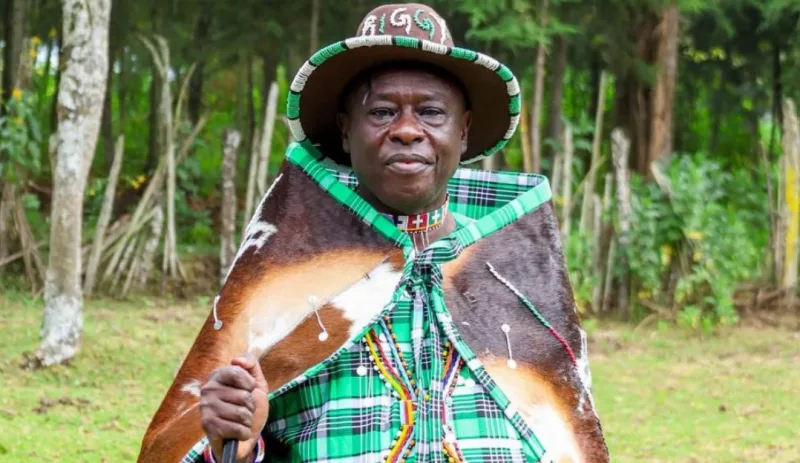
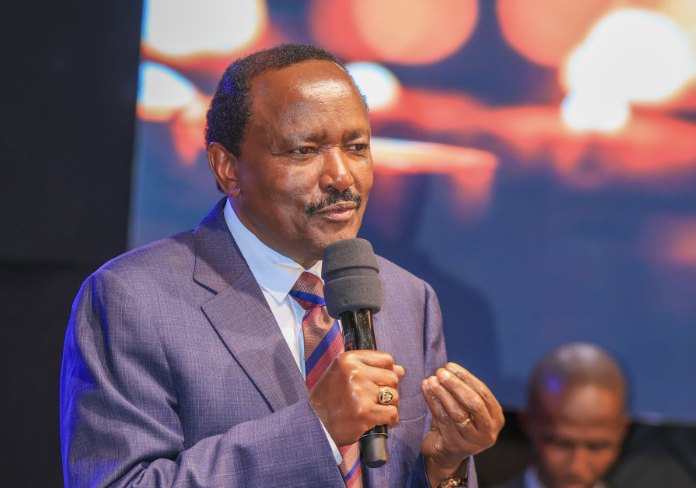
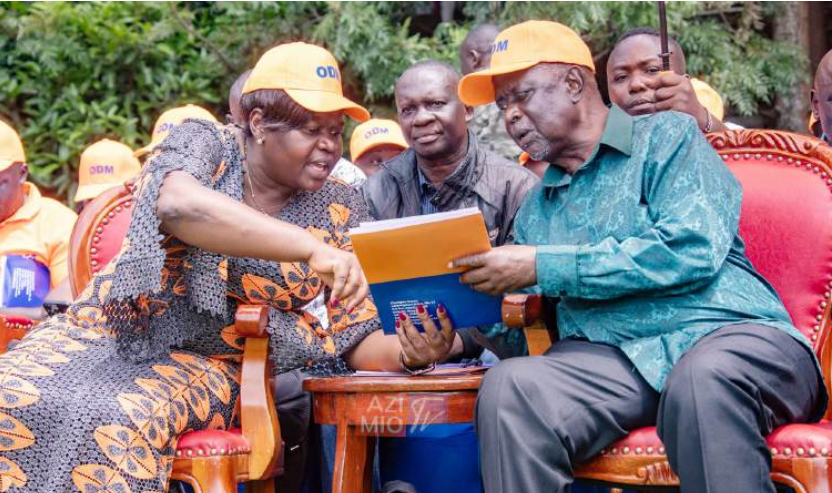
 ODM national chair Gladys Wanga and leader Oburu Oginga at Nyanza region delegates forum /EMMANUEL WANSON
ODM has embarked on an ambitious strategy to consolidate its traditional strongholds, tame internal divisions and rebuild grassroots structures ahead of the 2027 polls.
Read Also
The renewed mobilisation comes amid growing internal contestation over the party's future direction.
A recent TIFA survey showed that 73 per cent of ODM supporters back the faction associated with Nairobi Senator Edwin Sifuna, while only 24 per cent support the camp aligned to party leader Oburu Oginga.
The findings have heightened pressure on the Orange party leadership to reconnect with supporters and reassert its influence across its traditional support bases.
In response, ODM has shifted away from the factional battles that have threatened to weaken the party in recent months.
The leadership is now projecting a message of unity and has moved to abandon labels and activities seen as deepening divisions within the party.
For months, ODM has been caught between rival camps operating under the banners of Linda Ground and Linda Mwananchi.
The Linda Ground wing was associated with Oburu, while Linda Mwananchi has been championed by Sifuna and Siaya Governor James Orengo.
Rather than allowing those rivalries to dominate the party's agenda, ODM leaders are now focusing on grassroots mobilisation, membership recruitment and strengthening party structures.
At the heart of the strategy is a series of rallies and public engagements planned across ODM strongholds in Nyanza, Western, the Coast, Kajiado, Narok, North Eastern, Turkana and parts of Nairobi.
Speaking to the Star, ODM national chairperson Gladys Wanga said the party has developed an extensive outreach programme targeting both traditional strongholds and emerging support zones.
"The Central Committee will meet and release the official itinerary, but largely we want to move to Northern Kenya, Turkana and meet the Maa community," Wanga told the Star.
"We also want to engage our supporters in places such as Eldoret. We have a comprehensive schedule that will be confirmed after the Central Committee meeting."
Wanga said the tours are intended to reconnect the leadership with supporters, recruit new members and address emerging concerns.
The rallies will also provide a platform for ODM leaders to articulate the party's agenda and demonstrate that its grassroots machinery remains intact despite recent political realignments.
Acting ODM Secretary General Catherine Omanyo said the party is targeting at least 25 counties where it enjoys significant support.
"The Central Committee resolved that we embark on a vigorous exercise to popularise and strengthen the party in all parts of the country, particularly in our strongholds. We have no choice but to expand and strengthen our identity," Omanyo said.
The renewed focus on grassroots mobilisation is also viewed as critical in preserving ODM's bargaining power in coalition negotiations with its broad-based partner, UDA.
Beyond mobilisation, ODM is also seeking to contain internal disputes that have increasingly spilled into the public domain and exposed divisions within the party.
Since the death of veteran opposition leader Raila Odinga, disagreements have emerged between leaders allied to Oburu and those aligned to Sifuna over the party's relationship with President William Ruto.
While the Oburu camp has signalled openness to supporting Ruto's re-election bid, the Sifuna faction has consistently argued that ODM should distance itself from the government and chart an independent opposition course.
The ODM leadership is also quietly working to prevent disagreements from escalating further by encouraging leaders to focus on strengthening the outfit rather than engaging in public political battles.
A recent meeting between Oburu and ODM Director of Elections and National Assembly Minority Whip Junet Mohammed was interpreted as part of efforts to close ranks within the party.
Junet had notably been absent from recent ODM activities, including the Kisumu rally, fuelling speculation about internal tensions.
However, after meeting Oburu, the Suna East MP sought to project an image of unity.
"The ODM party is strong, united and determined as never before to strengthen our partnership and prepare for future political contests," Junet said.
"We have resisted attempts to weaken our party, consolidated our support base and kept the movement focused on its mission."
Also part of ODM's strategy is reforming its nomination process, an issue that has haunted the party for years.
Previous primaries have often been marred by allegations of favouritism, manipulation and irregularities, leading to defections, court battles and voter apathy in some regions.
Determined to avoid a repeat in 2027, the party leadership is exploring reforms aimed at guaranteeing free, fair and transparent nominations.
The Star has established that ODM is considering benchmarking with established political parties in the region and beyond to improve its internal electoral processes.
Wanga revealed that the party is studying various models, including that of South Africa's ruling African National Congress.
"Our electoral body is examining different models, including the ANC system. The objective is to improve our processes and assure members that nominations will be free and fair," she said.
"We have tasked the National Elections and Coordinating Committee to develop enhanced and fail-safe mechanisms for conducting transparent and credible nominations."
Oburu has repeatedly assured party members that no aspirant will receive preferential treatment.
"Nobody should be worried because their rivals are my friends. Everyone will go through a free and fair nomination process and nobody will be handed a direct ticket," he said recently.
The assurances have been welcomed by many aspirants who have long complained about the conduct of previous nominations.
ODM is also investing in revitalising grassroots structures that many leaders believe have weakened over time. Efforts are underway to strengthen ward, constituency, and county-level organs to improve coordination between the party leadership and members.
However, political analyst Martin Andati argues that the reforms may come too late to reverse the shift in support reflected in recent opinion polls.
"It is too little, too late. The people shifted a long time ago. The latest TIFA survey shows the Sifuna faction commanding about 75 per cent support while Oburu's side remains far behind," Andati said.
"Even if they won over all the undecided supporters, the gap would still be enormous. The damage has already been done."
INSTANT ANALYSIS
ODM is betting that a united party with energised grassroots structures and credible nominations will be better positioned to navigate the increasingly competitive political landscape ahead of the next General Election.