Presidential aspirant Eliud Owalo has sparked an intense online debate following a high-profile visit to Kisumu. Owalo travelled to Nyando to meet with Ker Odungi Randa, the president of the Luo Council of Elders, at his Boya home.
The meeting aimed to discuss the various troubles currently facing Kenya.
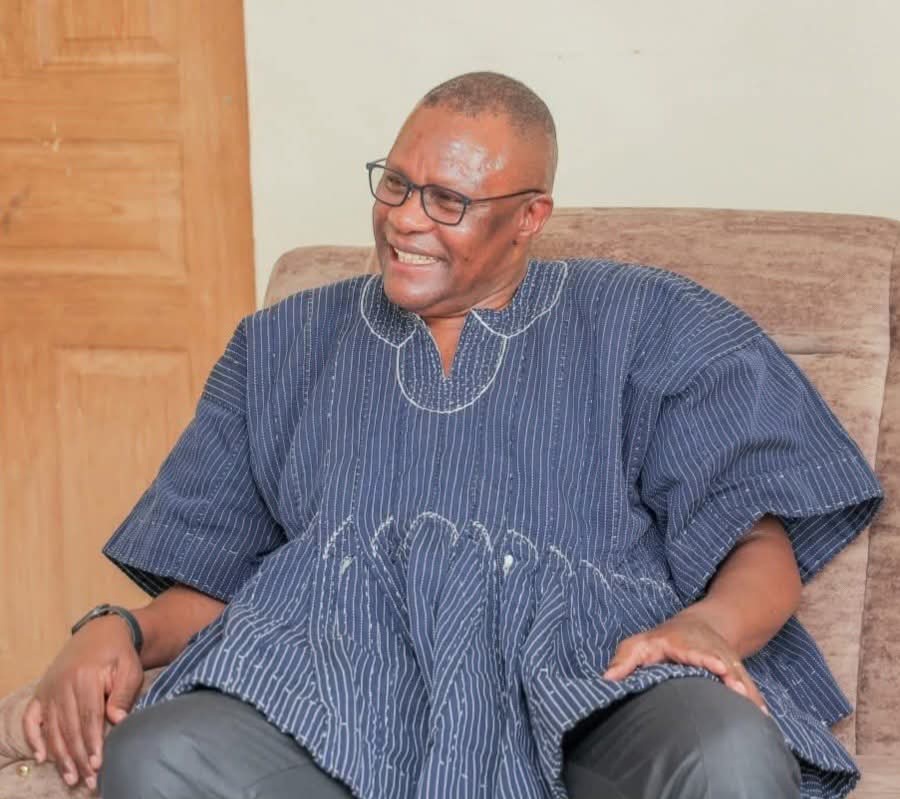
However, it was not the political discussion that captured the public's attention. Instead, social media users focused on Owalo's choice of attire: a flared, V-neck tunic that many Kenyans found unfamiliar.
A Storm on Social Media
As photos of the meeting circulated on X (formerly Twitter), reactions poured in. Many users mocked the garment, comparing it to feminine clothing or questioning its style.
"Is it a shirt or blouse, or is it a short dress 😂" — @ChrisMWasike
The criticism was often blunt. @ZimunduMundu remarked, "Ame vaa ya mama. Bure kabisa." Others expressed genuine confusion, with @WinnieSpeaks asking, "I’m still confused coz hiyo ni nini?"
Some users questioned Owalo's suitability for leadership based on his wardrobe. @LabanMbunya wrote, "Eliud Owalo, you are now a big joke... Kenya needs real vision, not catwalk dreams. Leave serious leadership alone, brother". Similarly, @ob1tomi joked that the politician had "raided his wife's closet."
The Royal Roots of the 'Fugu'
Despite the mockery, several users were quick to identify the garment and defend its cultural significance. @Jahkaiz1 identified it as "Ghanaian Fugu/ Bakatari attire," while @ruddebwai noted the outfit is "not for ordinary men, fit for kings!"
The garment is known as a Fugu, or a Ghanaian Smock. In the southern regions of Ghana, it is commonly called Batakari, while the Dagomba people refer to it as Bin’gmaa.
"Our African fashion is diverse across the continent... Different cultures in Africa have their beautiful clothing." — @Billionair1w
Historical records show the Fugu originated in Northern Ghana among the Dagomba, Mamprusi, Gonja, and Frafra ethnic groups. Its history stretches back to the 1600s, specifically to the reign of King Yaa Naa Zanjina of the Dagbon Kingdom.

Cultural and Political Significance
The Fugu is not merely a fashion statement; it is a symbol of leadership and status. It is traditionally hand-woven by women who process local cotton into thread. Men then stitch these narrow strips together on wooden looms to create the distinct flared design.
The attire holds a heavy weight in African political history. It became a global symbol of Pan-African identity on 6 March 1957, when the founding fathers of Ghana wore it to declare independence from British colonial rule.
While the debate continues on Kenyan social media, the garment remains one of the most powerful national emblems of Ghanaian pride and spiritual protection.