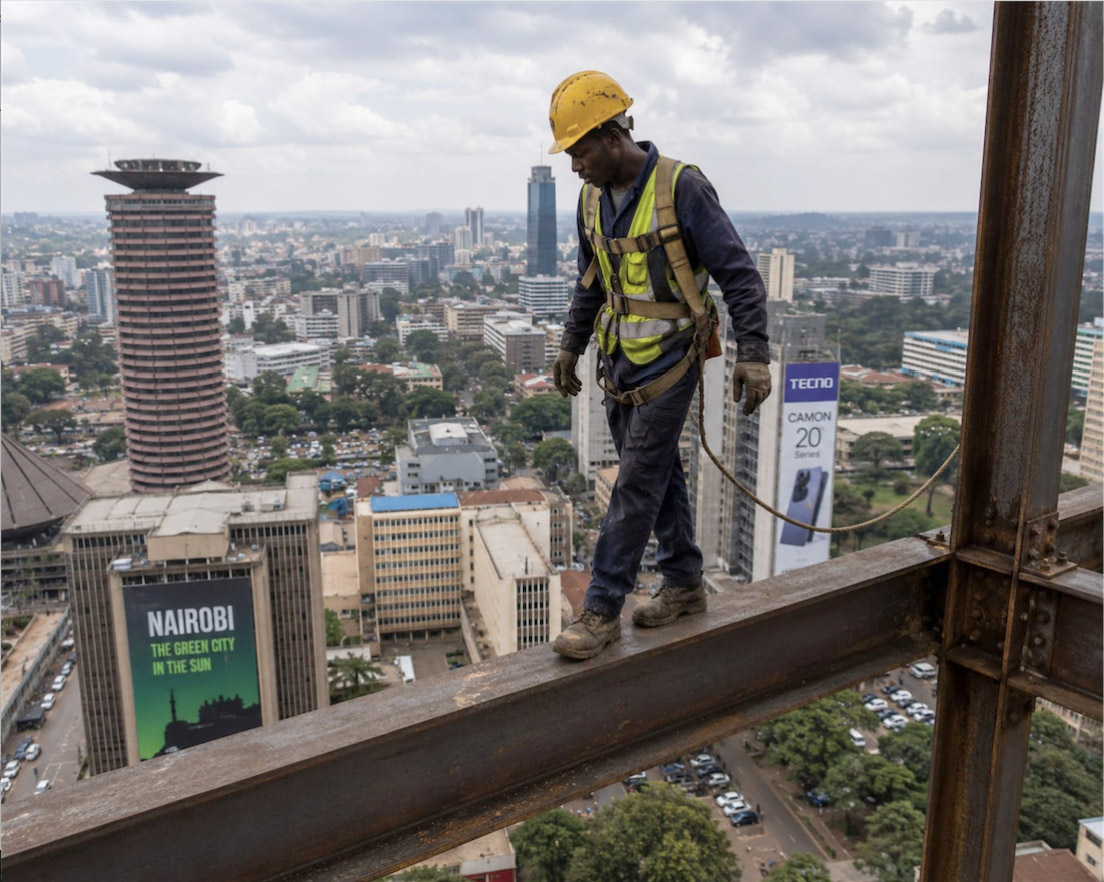
Every year on April 28, the world observes the World Day for Safety and Health at Work. Led by the International Labour Organisation (ILO), this day was set aside by the United Nations to raise awareness about occupational safety and health and to prevent work-related accidents and diseases globally.
For years, discussions around policies, procedures and practices designed to protect employees from harm while they are on the job have been crucial and ongoing. This is because, according to the ILO, over 2.3 million people die every year due to work-related accidents and diseases. That translates to about 6,300 deaths every single day.
Behind these numbers are workers who are parents, youth and breadwinners whose lives are cut short or permanently altered because safety was overlooked, systems failed or risks were ignored. A perfect example is the commemoration of International Chernobyl Disaster Remembrance Day on April 26.
In Kenya, occupational safety and health (OSH) is recognised as a fundamental right and is anchored in law and policy frameworks overseen by the Ministry of Labour and Social Protection. Bill of Rights clearly provides that every citizen has the right to fair labour practices, reasonable working conditions and a clean and healthy environment.
Also, the country has established institutions like the Directorate of Occupational Safety and Health Services (DOSHS), which is mandated to inspect workplaces, enforce compliance and promote safer working environments.
In spite of these efforts, the gaps remain significant and very costly. This is because Kenya’s workforce is largely informal. KIPPRA findings show that out of approximately 18 million workers, about 15 million are in the informal sector, where regulation and enforcement are weakest. Unfortunately, this clearly shows that millions of workers operate in environments where safety standards are minimal, monitoring is limited and protections are often absent.
Additionally, the formal sector is not immune, as inspection capacity is a major challenge as well. Research confirms that out of an estimated 140,000 workplaces that require inspection, only about 4,000 are inspected annually.
This is not because the need is small, but because resources are stretched. Kenya has historically had a limited number of occupational safety officers, making it difficult to effectively monitor compliance across the country.
Data systems also remain weak. Reports show that workplace accident data is not consistently collected or analysed, limiting the country’s ability to track trends, identify high-risk sectors and design targeted interventions. As we all know, what is not measured becomes difficult to fix.
Let it be known that workplace safety is not just about compliance. It is about dignity, productivity and national development as well. Unsafe working conditions lead to injuries, lost income, increased healthcare costs and reduced productivity. At a national level, poor occupational safety and health practices are estimated to cost nearly four per cent of global GDP annually.
For a country like Kenya, striving toward industrial growth and economic transformation, this is a cost we cannot afford to ignore. More importantly, it is a human issue. No one should have to choose between earning a living and staying alive.
As a nation, we must come up with solid measures to address this. First, we should begin to strategically integrate Artificial Intelligence into occupational safety. AI can help predict workplace risks before accidents happen by analysing patterns in data, flagging high-risk environments and supporting smarter inspections.
For example, AI-powered systems can monitor hazardous conditions in industries like construction and manufacturing, while digital tools can help track compliance and improve reporting accuracy.
Second, strengthening labour inspection systems is key. Increasing the number of inspectors, investing in their training, and digitising inspection processes would significantly improve oversight and compliance.
Third, the country must prioritise the informal sector. Innovative approaches such as community-based safety programmes, partnerships with local associations and simplified compliance frameworks can help extend protection to workers who are currently left out.
Third, data systems must be modernised. Reliable, real-time data on workplace injuries and risks is essential for informed decision-making and effective policy design. This will be efficient if we also incorporate AI within the systems.
Additionally, employers must take greater responsibility. Safety should not be seen as a regulatory burden but as a core part of business sustainability and worker well-being.
Lastly, workers themselves must be empowered. Awareness, training and the ability to report unsafe conditions without fear are critical in building a culture of safety.
The country has made meaningful progress, but the existing gaps continue to cost lives, limit productivity, and slow down national development. Closing these gaps will require deliberate investment, stronger enforcement, smarter use of data and emerging tools like Artificial Intelligence, and a shared commitment from government, employers and workers alike.
Ultimately, these measures will lead to a healthier, more reliable labour force and significantly increase productivity, which in turn will drive sustainable economic growth and strengthen the country’s overall economy.
Trauma and orthopaedic officer based in Nairobi