When Kiprono Kittony took over as chairman of Kenya Airways, he inherited an airline weighed down by years of losses, grounded aircraft, rising debt and frustrated passengers.
Now, the veteran businessman and former Nairobi Securities Exchange (NSE ) chairman says he has one mission: restore Kenya’s national carrier to profitability and rebuild confidence in one of the country’s most strategic companies.
Two years ago, the airline showed signs of recovery with its first profit in 11 years, posting Sh5.4 billion in net earnings for the year that ended December 31, 2024.
But dropped back to the red last year with a Sh17 billion loss.
However, with a change in executives, the office bearers now say that an aggressive recovery plan, backed by local banks, fleet expansion, and fresh investor interest, could soon pull the airline out of turbulence and return it to profitability.
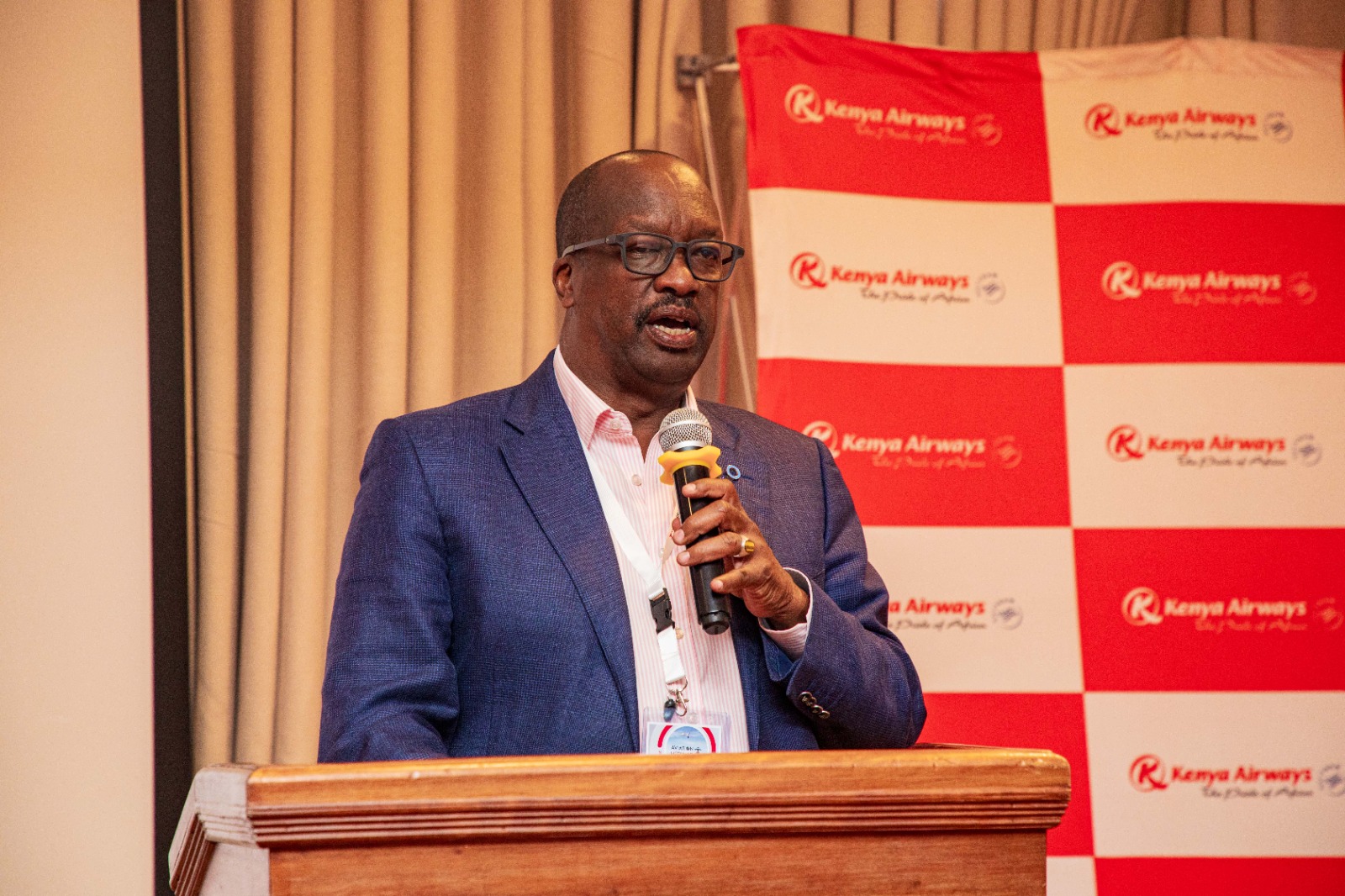
New chairman Kiprono Kittony, speaking exclusively to The Star weeks after taking over the role, says the airline has already secured short-term financing to stabilise operations and restore more aircraft into service.
“We do have a plan. The new board of Kenya Airways has been tasked with the job of reviving the airline, and we have raised some short-term funding already,” Kittony said.
The funding, provided by a consortium of Kenyan banks, will help the airline clear obligations owed to long-standing creditors and aircraft lessors while supporting operational recovery.
“It is going to allow us to meet some of the obligations to creditors and lessors. It will also enable us to raise the amount of equipment that we have in the air,” he said.
For years, the National Carrier has battled multiple crises, ranging from high debt levels and costly aircraft maintenance cycles to global fuel price shocks and supply chain disruptions, which have made sourcing spare parts increasingly difficult.
But Kittony says the airline is now focused on rebuilding capacity fast, after a failed bid earlier in the year, to secure a strategic investor to pump $2 billion (Sh258 billion) into its turnaround strategy.
“We hope that by the end of this summer, we will have up to four additional aircraft in the air. By the end of the year, we intend to raise our fleet by an extra seven or eight,” he said.
The airline is also preparing to return one of its Boeing 777 aircraft into service in July, with its first scheduled flight expected to land at London Heathrow on July 17.
The fleet expansion is part of a broader three-year strategy that aims to grow the Kenya Airways Group fleet to 68 aircraft.
According to Kittony, the recovery strategy will unfold in phases, beginning with emergency financing, followed by the search for a strategic investor and long-term operational restructuring.
The airline is currently finalising an investment memorandum alongside KPMG that will guide the recruitment of a strategic investor.
“We are open-minded. We will be looking at airline experience, funding capability and access to equipment,” he said.
Kittony revealed that both local and international investors have already expressed strong interest in the airline.
“There are so many actors globally who want to invest in Kenya Airways. Similarly, in the local economy, we have many interested parties willing to put more funds into Kenya Airways,” he said.
For now, however, the rescue effort is being powered largely by domestic institutions.
“The money supporting Kenya Airways right now is Kenyan money. We are providing Kenyan solutions to Kenya Airways’ problems,” he said.
The airline is also betting heavily on technology and customer experience improvements to regain passenger confidence.
Kenya Airways is currently reviewing its passenger service system, which will determine the technology platform it uses over the next decade. The airline is also working to equip more aircraft with Wi-Fi while upgrading cabins and onboard experience.
“By the end of this year, I assure you that you will see a huge change,” Kittony said.
Operational reliability has remained one of the airline’s biggest challenges, with frequent delays frustrating passengers.
Kittony said fleet shortages and unforeseen technical issues, such as bird strikes, have worsened the situation.
“Only recently, I was a passenger on a flight to Cape Town, and we had a bird strike. When that happens, the plane has to go into maintenance immediately,” he said.
Global supply chain disruptions have also affected the availability of aircraft spare parts across the aviation industry.
“The global supply chains have been affected by geopolitics and OEM situations,” he said, adding that increasing maintenance reserves has become a key strategic priority.
Despite the challenges, Kittonny believes Kenya Airways remains strategically important to the country’s economy and regional influence.
He pointed to recent geopolitical disruptions in the Gulf region that temporarily affected major international carriers, arguing that countries without national airlines suffered the most.
“When wide-bodied aircraft from the Gulf stopped flying, many countries were crippled. Kenya was not one of them because we still had our own airline,” he said.
He also tied the airline’s future growth to planned redevelopment at Jomo Kenyatta International Airport, which he described as central to Kenya’s ambitions of becoming a leading regional aviation hub.
“The strategy for JKIA redevelopment is ambitious, robust and exciting, and Kenya Airways is at the centre of that plan,” he said.
For an airline that has spent years battling uncertainty, Kittony says the goal is now simple: rebuild confidence, restore operational strength, and return the Pride of Africa to profit.
“The plan is robust, the plan is steadfast, and the plan is to ensure that Kenya maintains a national carrier,” he said.