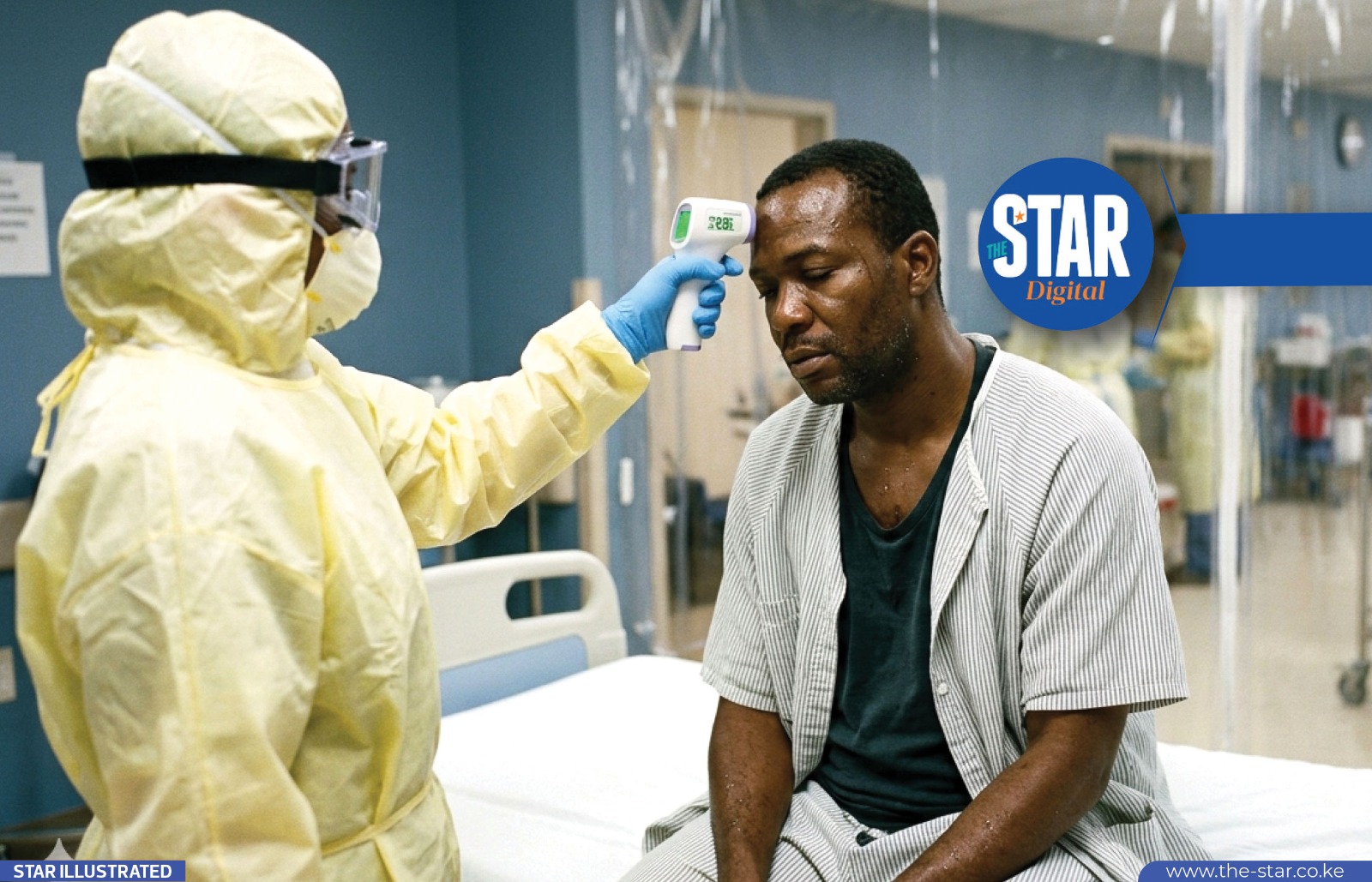
 Ebola screening.
The White House and Kenya’s Ministry of Health have confirmed plans to establish an Ebola quarantine and treatment facility in Kenya for Americans exposed to the virus in Central and East Africa.
Health CS Aden Duale on Wednesday confirmed the proposal saying Kenya was well prepared to handle any emergencies.
The planned centre has triggered debate among health experts, civil society groups and ordinary Kenyans, many of whom fear the country is being turned into a medical buffer zone for the United States.
Global health expert Dr Bernard Muia asked the Kenyan government to provide more information to allay fears from citizens.
“Having treatment capacity closer to outbreak areas can help reduce delays in care and transport. However, such plans only work well if the host country has adequate infrastructure, trained staff and clear operational agreements,” he said.
Some US media outlets reported that the facility could be established at an air force base in Laikipia and staffed by officers from the US Public Health Service.
A US official told several international media outlets that the facility would provide high-quality care for Americans who need to leave the Congo quickly without enduring a long evacuation flight to the United States.
But many Kenyans are questioning why infected or exposed Americans cannot simply be treated in their own country, especially given the United States has some of the world’s most advanced infectious disease units.
“This arrangement creates the impression that African countries are being used as convenient holding grounds for diseases that rich countries do not want near their borders,” said Maureen Ndolo, a manager at a Nairobi hotel.
The criticism has been fuelled by reports that the Trump administration recently tightened travel restrictions for people coming from Ebola-affected countries including Congo, Uganda and South Sudan. The US has expanded screening measures and temporarily barred some travellers and green card holders linked to the affected countries.
Public health experts in the United States have also expressed concern about the proposal.
Jennifer Nuzzo, director of the Pandemic Center at Brown University School of Public Health, said there were profound ethical concerns with the approach. She warned that poorly managed quarantine facilities could increase rather than reduce the risk of transmission.
“Any Ebola preparedness arrangement must be guided by transparency, strong biosafety systems and public trust. Countries have a right to ask questions about how such a facility would operate and who would benefit from it most,” she told The Guardian.
Amesh Adalja of the Johns Hopkins Center for Health Security questioned whether a newly built facility in Kenya could match the standards of specialised American biocontainment centres.
Jeremy Konyndyk, president of Refugees International and former executive director of the Usaid Covid-19 taskforce as well as a former leader in the 2014-2015 USAID Ebola response said preventing exposed Americans from travelling to their home country discourages them from volunteering in Ebola zones.
“That’s basically telling any American health worker who might go and work on the effort to contain this outbreak that if they get sick, they can’t come home,” Jeremy told The Guardian. “It disincentivises people from going. In 2014, we faced this exact scenario – cases coming back to the United States – and we fought really hard not to put a travel ban in place because we knew that would ultimately be counterproductive to the goal of ending the outbreak.”
Although Kenya has not reported any Ebola cases, the country has already intensified surveillance at borders and airports because of the outbreak in neighbouring countries. The Ministry of Health says national laboratories are on high alert while isolation facilities have been activated in designated hospitals.
Health Ministry has confirmed discussions with the United States and other international partners about cooperation on Ebola response efforts. However, officials say no final agreement has been announced.
“Kenya remains committed to playing its role as a responsible regional and global partner in advancing health security. As we continue to strengthen preparedness and resilience, our approach will remain guided by science, collaboration, national interest and the shared objective of protecting populations from emerging public health threats,” Duale said in a statement.
The latest Ebola outbreak has already become one of the largest recorded outbreaks involving the Bundibugyo strain of the virus. The World Health Organization has declared it a global health emergency. Reports indicate there are more than 900 suspected cases and over 220 suspected deaths in Congo alone.