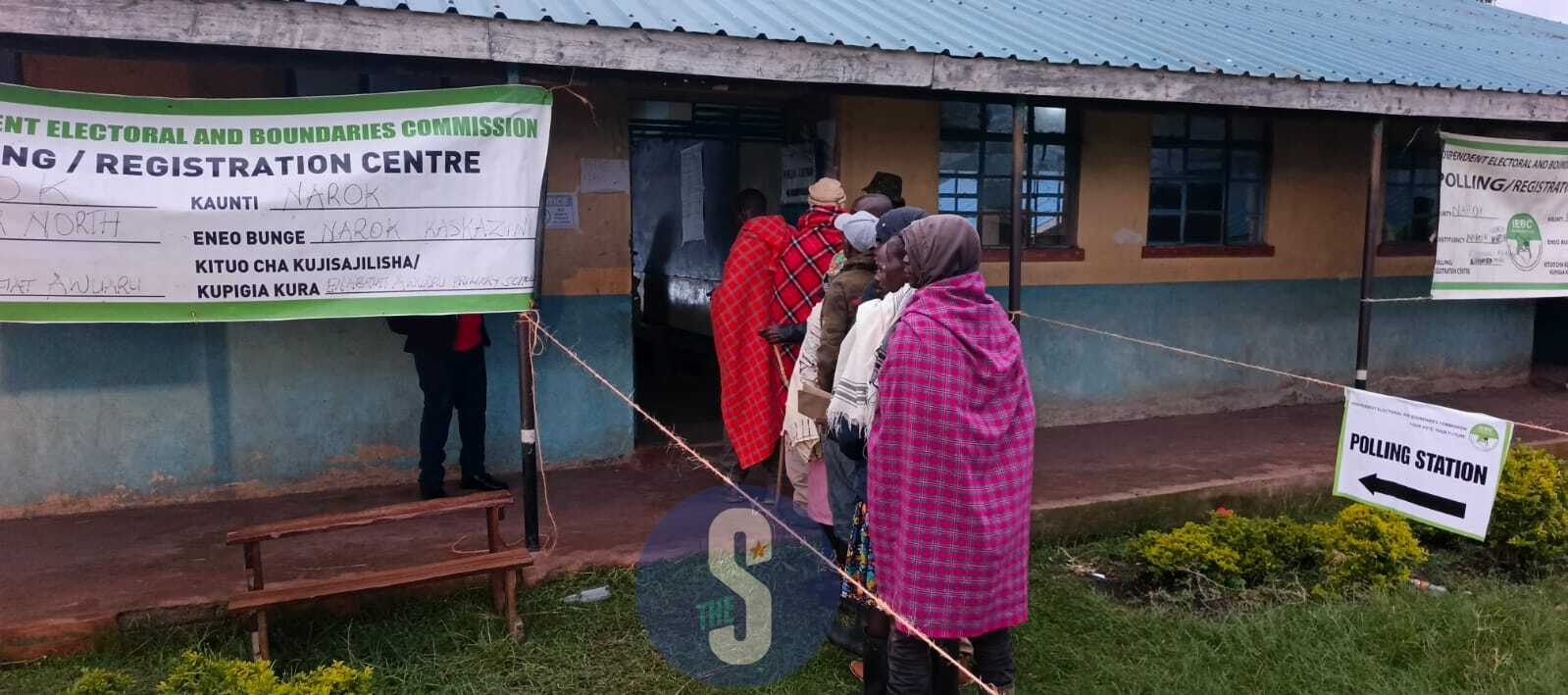
 Residents of Emurua Dikirr vote today, May 14./FILE
A new study has found that most Kenyan youth intend to vote in the 2027 General Elections, even as trust in the country's key political and electoral institutions hits alarming lows.
The report, Predictors of Youth Engagement in Electoral Processes in Kenya, was released by the Policy Action Initiative and authored by Executive Director Brian Kithinji. It surveyed 1,100 young people across seven counties — Nairobi, Nakuru, Kisumu, Mandera, Meru, Kilifi, and West Pokot — and interviewed more than 50 local chiefs, religious leaders, and civil society activists.
The headline figure is striking. While 83% of youth said they plan to vote in 2027, only 9% expressed full confidence in the Independent Electoral and Boundaries Commission (IEBC), political parties, and the National Police Service. Trust in the Judiciary was only marginally better, at 17%.
The study describes a generation navigating a sharp contradiction: committed to the ballot, but deeply sceptical of the systems behind it.
Not all youth are equally enthusiastic. Among those who voted in the 2022 General Election — largely millennials — 87.7% said they intend to vote again. But among likely first-time voters, predominantly Gen-Z, that figure drops to 75.1%. The gap points to a generational divide in political confidence that could shape the outcome of the next election.
The study also found a sharp urban-rural divide in voting intention. West Pokot recorded the highest intention at 93%, followed by Mandera at 90%. In contrast, Nairobi and Kisumu both recorded 75%. Motivations differ by geography too. In rural counties such as West Pokot, Meru, Mandera, and Kilifi, youth cited cash incentives as a key motivator. In urban centres, respondents preferred "accountability, candidate credibility, and manifesto content".
One of the report's most urgent findings concerns access to national identity cards. About 47% of respondents said they had experienced delays in obtaining their ID cards — a barrier the study says is "directly undermining the ongoing voter registration process". Without an ID card, young Kenyans cannot register to vote, meaning bureaucratic bottlenecks are quietly excluding a significant portion of the youth electorate.
The 2024 Finance Bill protests appear to have reshaped youth political engagement in a significant way. Nearly 49.1% of respondents said they became more politically active following the demonstrations. The report describes this as "a shift toward issue-based activism and digital political engagement". Many young Kenyans, the study notes, are now redefining participation through "digital activism, protests, online mobilisation, and issue-based solidarity", moving away from political parties and ethnic politics.
The report raises serious concern about the dangers youth face when they engage politically. More than 48.2% of respondents reported experiencing physical assault during campaigns or protests. A further 51% reported online abuse, and 32.4% said they had faced sexual violence. These figures reframe the conversation around youth disengagement – for many, stepping back from politics is not apathy. It is a response to real and documented danger.
Perhaps the most striking finding involves education. Despite 72% of respondents holding tertiary or postgraduate qualifications, education level had no significant influence on voting intentions compared to those with only primary or secondary schooling. What mattered more was psychology. The strongest predictor of participation was "whether youth believed their vote could make a difference." Some 64% said understanding the voting process strengthened that belief, while 32% linked belief in the power of their vote directly to turnout intentions.
The report also found that 45% of youth have never received any civic education, despite what it describes as "massive investments in such programmes by development partners and donors. " Youth in formal employment recorded the highest exposure to civic education at 60.9%, while unemployed youth recorded the lowest at 49.7%—suggesting that existing programmes are reaching those who need them least.
The report concludes that youth turnout in 2027 will ultimately hinge on four factors: socio-economic status, civic literacy, institutional trust, and "psychological efficacy — belief that one's vote matters.