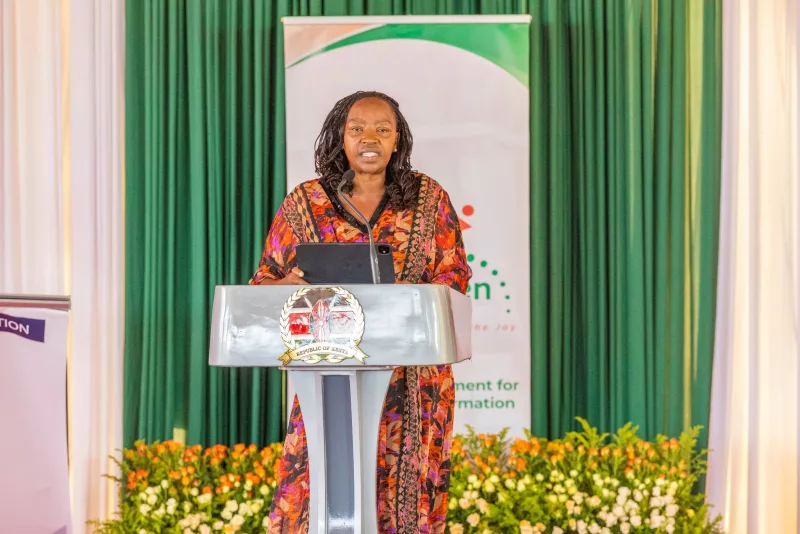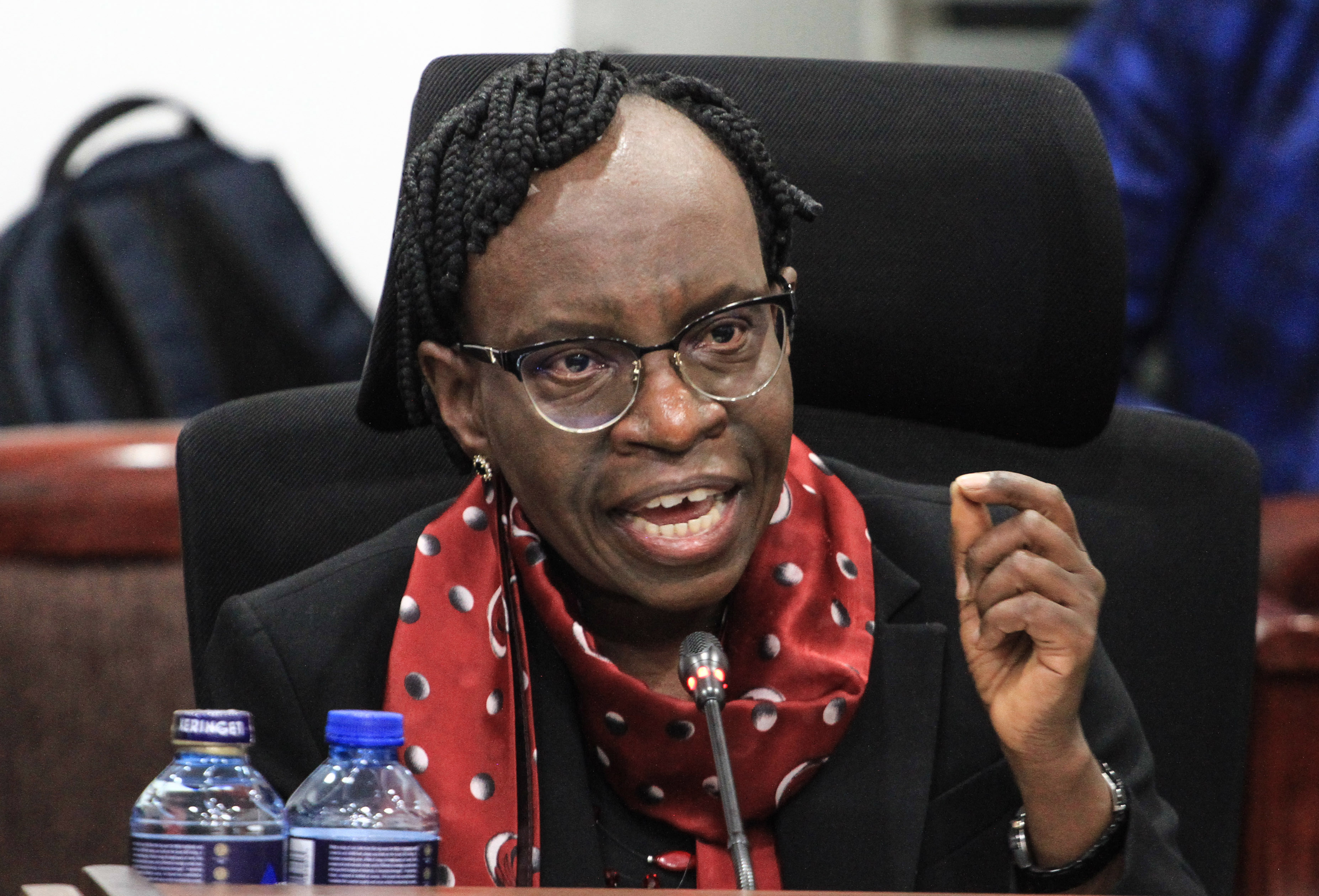
She highlighted this in a new report documenting fresh governance and financial lapses at the cash-strapped institution.
The June 30, 2025 report, tabled in Parliament, has flagged the legality of payments amounting to Sh1.33 million made to the officer attached to the Vice Chancellor.
The Auditor General said the university failed to provide evidence showing that the VC’s contract entitled him to a bodyguard or that the University Council had approved the engagement.
“The armed bodyguard from the Kenya Police has been earning on a monthly basis. During the year under audit, a total of Sh1,326,900 was paid to the bodyguard,” Gathungu states in the report.
“No evidence was provided to confirm whether the terms of service and the contract signed by the Vice Chancellor had a provision for a bodyguard.”
The report has also painted the picture of a university grappling with severe financial distress, huge debts, unremitted statutory deductions and weak internal controls.
Gathungu warned of ‘material uncertainties’ about MMU’s ability to continue operating as a going concern.
According to the report, the university’s current liabilities stood at Sh2.06 billion against current assets of Sh741.6 million, leaving it with a negative working capital position of Sh1.32 billion.
Although the university posted a net surplus of Sh324.3 million during the period under review, its books still carried an accumulated deficit of Sh1.62 billion.
“The continued accumulation of deficits and the severe liquidity gap raises material uncertainties on the university’s ability to continue operating as a going concern,” the report says.
The audit also uncovered massive failures in the remittance of taxes and employee deductions.
MMU failed to remit Sh502 million in statutory taxes to the Kenya Revenue Authority, including Sh448.4 million in Pay As You Earn deductions, Sh40 million in withholding VAT and Sh13.6 million in withholding tax.
Gathungu noted that KRA had already issued a demand notice over PAYE arrears amounting to Sh195.4 million, inclusive of penalties and interest.
Despite agreeing on a payment plan requiring monthly remittances of Sh3.5 million, the university reportedly failed to honour some of the payments.
The institution was further put on the spot over failure to remit Sh738.6 million deducted from employees' salaries for pension contributions.
Another Sh14.6 million in third-party deductions and Sh1.1 million in housing levy and NHIF deductions also remained unremitted.
Failure to remit pension contributions jeopardises employees’ retirement benefits and exposes the university to additional penalties and legal risks.
The report also flagged questionable expenditure on legal services, with payments worth Sh9 million flagged.
Gathungu says the university failed to provide documentation on how the firms were identified or contracted.
“No documentation was provided on how these firms were identified, including any service agreement signed with the university, certificate of appointment in respect of every case or transaction and the Attorney General’s approval,” she noted.
The audit further flagged weak controls in fuel management, amid findings that there was no fuel tracking system to monitor mileage, usage or quantities consumed by vehicles.
“Fuel is often acquired on an ad-hoc basis, with limited documentation or verification procedures in place,” the report says, warning of risks of fuel diversion, fictitious deliveries and inflated invoices.
The university was also cited for irregularities in staff management. Two officers held acting positions for periods beyond six months, contrary to the Public Service Commission Act.
At the same time, casual workers were reportedly retained on continuously renewed contracts beyond the legally permitted duration.
The institution spent Sh17.5 million on casual employees, some of whom were engaged for periods exceeding one year.
Gathungu said the university was operating without an approved human resource policy.
The report additionally found that some employees received net salaries below one-third of their basic pay.
Management attributed the situation to deductions arising from the housing levy and revised NSSF rates.
Council allowances also rose sharply by 69 per cent from Sh9.2 million to Sh15.6 million, exceeding the approved budget.
The audit also highlighted gaps in disability and gender mainstreaming, noting that the existing gender policy had not been reviewed since 2015.
Auditors further found that the administration block lacked wheelchair-accessible ramps, locking out persons living with disabilities.
The report also found that some university-owned commercial spaces, including a shop and canteen, were being occupied by third parties without formal lease agreements, exposing the institution to potential revenue loss and legal disputes.
The latest findings add to growing scrutiny of financial management and governance standards in public universities as institutions battle revenue cuts, rising wage bills and burgeoning debt obligations.