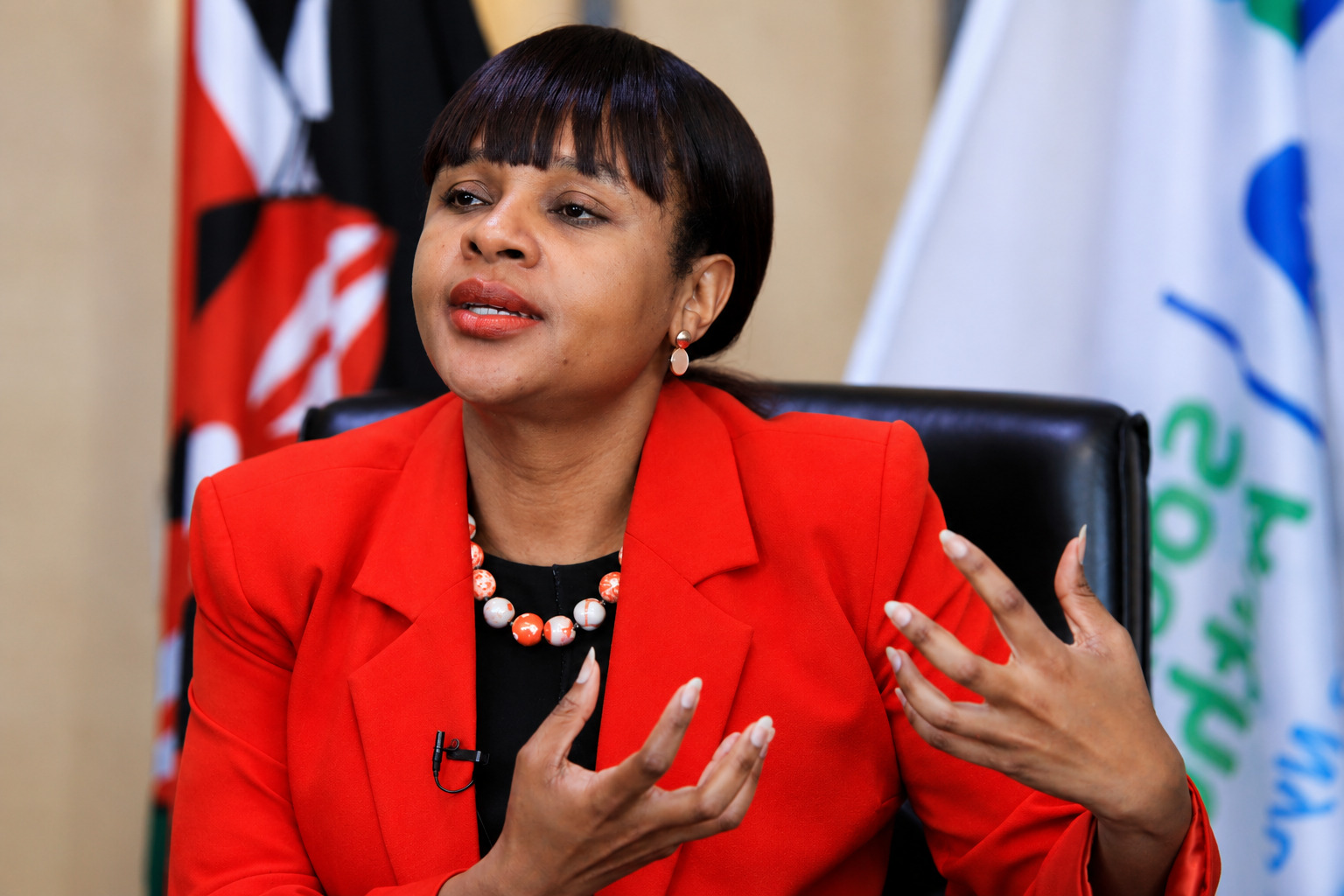
 Dr. Mercy Mwangangi, CEO of SHA, while addressing the media at the Social Health Authority headquarters in Nairobi.
Health financing is rarely the subject of public fascination. It is often buried in policy jargon, actuarial formulas and bureaucratic language that feels distant from the ordinary citizen. Yet behind those technical terms lie decisions that determine who receives treatment, who falls through the cracks and who is pushed into poverty because illness arrived unannounced.
That reality struck me recently at a town hall forum in Mombasa, where officials from Kenya’s Social Health Authority (SHA) set out to unpack the funds underpinning the country’s new health financing model.
For a communicator steeped in newsrooms rather than medical wards, the discussion felt less like a policy briefing and more like a revelation. Beyond the acronyms and tariff schedules was an architecture attempting to answer one of the oldest questions in public policy: who should bear the cost of illness?
Listening to the presentations, one thought lingered. How many of the nearly 30 million Kenyans already onboarded into SHA truly understand the architecture carrying their expectations? How many know what these funds are, what they cover, and how they interact? More fundamentally, how many appreciate that what may look like administrative restructuring could, if implemented as designed, mark a radical shift in how healthcare is financed in Kenya?
Because beneath the politics, litigation and transition anxieties surrounding SHA lies a deeper story, one about the construction of a financing system built not merely to pay hospital bills, but to organise health security itself.
By design, SHA is pursuing something more ambitious than replacing the defunct NHIF. It is attempting to create a layered financing ecosystem where prevention, treatment, emergencies and catastrophic illnesses are not isolated obligations but interconnected guarantees.
That ambition rests on three funds: the Primary Healthcare Fund, the Social Health Insurance Fund and the Emergency, Chronic and Critical Illness Fund.
Taken together, they underscore the need for health financing to go beyond treatment of illness and support the full continuum of care, from prevention and early intervention to treatment, rehabilitation, and long-term support.
Financing Prevention Before Disease
If there is a quiet revolution inside SHA, it may be in the Primary Healthcare Fund.
For decades, Kenya’s health system has tilted toward treating illness after it escalates. Hospitals have often become the first point of care rather than the last line of defence. The Primary Healthcare Fund attempts to invert that model.
Its significance goes beyond financing outpatient consultations, screenings and optical services. It seeks to make prevention itself a funded entitlement.
That matters.
Because in public health, prevention has long been celebrated rhetorically while underfunded in practice.
Routine screening for hypertension, diabetes and cancers is no longer framed as an optional wellness behaviour but as an insured intervention. Community and primary facilities are elevated from peripheral actors to the foundation of the system.
That shift is not cosmetic.It is structural.
Every disease detected early potentially averts costly interventions later. Every chronic condition managed at the primary level eases pressure on referral hospitals. Every outpatient encounter that resolves illness before complications emerge is both a health gain and a financial safeguard.
This is where SHA’s sustainability argument begins to take shape.
Prevention is often framed as a humane policy. It is also fiscal discipline.And in a reform frequently scrutinised for long-term viability, that distinction matters.
The Engine of Financial Protection
If the Primary Healthcare Fund is the foundation, the Social Health Insurance Fund is the engine room.
This is where the broad promise of risk protection moves from policy aspiration into tangible entitlement.
Its benefit package spans outpatient and inpatient care, maternal services, surgeries, dialysis, oncology, renal replacement therapy, mental health care, imaging and specialised referrals.
This is not a minimalist package built around episodic illness.It is a social protection instrument.And perhaps that is where SHA departs most significantly from traditional insurance thinking.
Conventional insurance often revolves around individual episodes of treatment. Social insurance, by contrast, pools risk across populations so that illness does not become a personal financial catastrophe.
That is the logic embedded here.
The inclusion of cancer and renal care is especially consequential.
For many Kenyan households, these illnesses have often meant fundraising appeals, asset liquidation and financial ruin.
Embedding them within mainstream coverage attempts to move catastrophic treatment from private burden into collective responsibility.
That is no small policy statement.
Equally striking is the recognition of mental wellness services.
For years, mental health has occupied the margins of financing debates, acknowledged rhetorically but rarely integrated meaningfully into coverage design.
Its inclusion signals something overdue: that universal health coverage cannot claim universality while excluding invisible illness.
Even the provision for overseas treatment, often politically sensitive, reflects a broader proposition: that specialised care, under defined conditions, should not be framed solely as privilege but as part of an entitlement continuum.
A Safety Net for Catastrophe
But perhaps the boldest innovation sits in the Emergency, Chronic and Critical Illness Fund.
In many systems, emergencies and critical illnesses overwhelm ordinary insurance schemes.
SHA isolates that risk.That alone is a conceptual shift.
The fund covers emergency response, ambulance evacuation, trauma care, chronic and critical illness interventions, palliative services and assistive devices.
Its role is straightforward.Protect households from catastrophe.Health economists have long warned that one severe emergency can erase years of income.This fund is designed to interrupt precisely that cycle.
Its significance is sharpened by Kenya’s changing disease burden.
As non-communicable diseases rise, health systems built around short-term acute treatment become increasingly inadequate.
This Fund acknowledges that chronic and complex illnesses are no longer peripheral threats.
They are part of the future health landscape, and financing must evolve accordingly.Its inclusion of palliative care is especially telling.Few reforms devote serious attention to dignity at the end of life.
This one does.
And in doing so, it broadens healthcare beyond cure into humane care.
The Necessary Politics of Limits
No financing system can promise everything.
SHA’s exclusionsfrom cosmetic procedures and certain non-priority interventions to services outside essential medicines lists have generated criticism.
Predictably so.But exclusions are not simply denials.They are actuarial boundaries.
Every universal coverage system, whether in Europe, Asia or Africa, is sustained as much by what it covers as by what it cannot.That is the arithmetic of solidarity.Without boundaries, no Fund survives.And in that sense, exclusions are not necessarily evidence of weakness.They are often evidence of design.
A New Social Contract?
Beyond its architecture, SHA exhibits a shift from fragmented financing to shared social protection, from paying for illness to securing health. It asks a fundamental question: when sickness strikes, who bears the burden? For too long, households have carried it alone. SHA offers a different answer, shared risk, publicly guaranteed care, and healthcare as a collective responsibility. If realised, it could be more than reform; it could mark a new social contract in health.
The writer is a health communication specialist at the Social Health Authority.