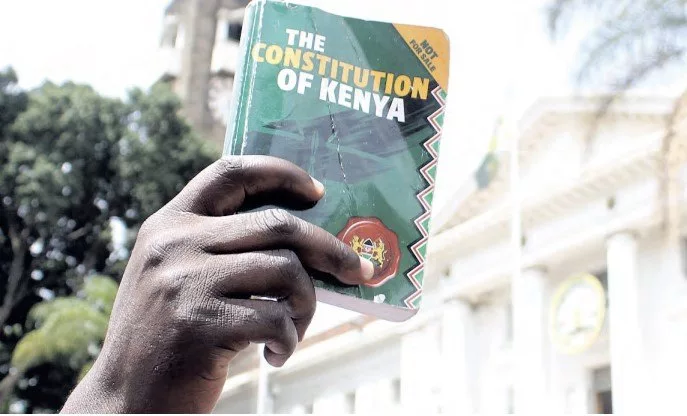
 A man holds a Kenya constitution booklet outside City Hall, Nairobi on January 12, 2022 /FILE
The test of Kenya’s laws is what changes in citizens’ lives.
When I previously argued for the validation of the Social Protection Bill, 2024, my central concern was that Kenyans needed a stronger legal framework to translate the constitutional promise of social protection into tangible benefits.
That argument has now moved from legislation to implementation.The Bill has become law.
The question before us is no longer whether Kenya needs the framework, but whether we will give it life.
The same question now confronts Kenya on equality, non-discrimination and the rights of persons with disabilities.
Our Constitution places public participation, equality, inclusiveness, social justice and protection of marginalised groups at the centre of governance. These principles cannot remain words in legal documents.
They must be reflected in public institutions, budgets, policies and, most importantly, in the everyday experiences of citizens.
The National Gender and Equality Commission is engaging stakeholders on the operationalisation of the Persons with Disabilities Act, 2025, as well as the proposed Equality and Non-Discrimination General Regulations, 2026.
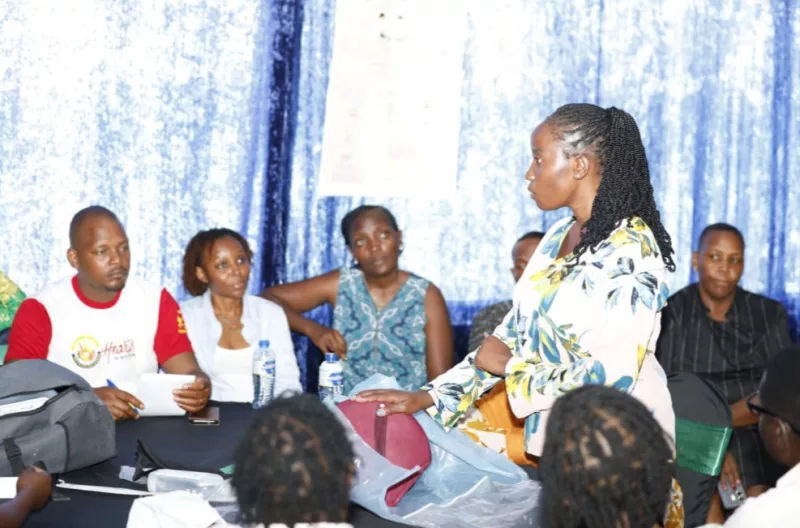
The Commission has emphasised the importance of meaningful participation by persons with disabilities and their representative organisations. This is an important opportunity for Kenyans to shape the implementation of laws that directly affect their lives.
Public participation, however, must not become a ceremonial exercise in which citizens are invited to a meeting, make submissions and return home without knowing what happened to their views.
Participation is one of the most important avenues through which citizens can influence public policy and hold institutions accountable. Kenyans should therefore attend public forums, submit views, engage elected representatives, question public institutions and demand explanations for decisions affecting their communities.
The proposed equality regulations provide an opportunity to strengthen the framework for addressing discrimination and promoting inclusion.
But the real test will not be how impressive the regulations look on paper.
It will be whether a person with a disability can access a public service without unnecessary barriers; whether a young person can participate meaningfully in governance; whether women and other marginalised groups can participate equally in public life; and whether vulnerable citizens can enjoy the rights guaranteed by law.
This brings us to the 2027 General Election. The rights of persons with disabilities cannot be separated from their political and democratic rights.
An inclusive democracy must enable persons with disabilities to register as voters, access voter education, reach polling stations, understand voting procedures and cast their ballots with dignity and, as far as possible, independently.
The Independent Electoral and Boundaries Commission therefore has a critical responsibility. IEBC must begin early to identify and remove barriers that could prevent persons with disabilities from participating fully in the electoral process.
Accessibility should be considered at every stage — from voter registration and voter education to polling-station arrangements, communication, election materials, training of officials and mechanisms for handling complaints.
Most importantly, persons with disabilities and their representative organisations should be involved in designing these interventions.
Measures intended to promote inclusion are more likely to succeed when those affected by them help shape them. Political parties have an equally important responsibility. Inclusion should not begin and end with nominations.
Persons with disabilities, women, youth and other groups that have historically experienced exclusion should have meaningful opportunities to participate in party leadership, policy development, campaigns and decision-making.
An inclusive political system cannot treat citizens from marginalised groups merely as voters. They must also be recognised as leaders, policy-makers, candidates and participants in shaping the future of the country.
The broader lesson from the Social Protection Act is equally important. Legislation can establish rights and create institutions, but implementation requires resources, coordination, public awareness and sustained citizen oversight.
Kenya has made considerable progress in developing laws and policies aimed at protecting vulnerable citizens. The next challenge is to ensure that these instruments work beyond government offices and boardrooms.
Citizens must therefore move from being passive recipients of government programmes to active participants in governance. We should not wait until a law fails us before asking questions.
We should participate when regulations are being developed, speak when policies are formulated, scrutinise budgets when resources are allocated and engage institutions before problems become crises.
For persons with disabilities and their organisations, this is the moment to articulate the barriers they face and demand practical solutions. For IEBC, the message should be equally clear: the 2027 election must not only be free and fair. It must also be accessible and inclusive.
For NGEC and other public institutions, the responsibility is to ensure that public participation produces measurable outcomes and that citizens’ views are reflected in implementation.
And for citizens, the responsibility is to participate, remain vigilant and demand accountability. Kenya has built much of the legal architecture needed to advance social protection, equality and inclusion.
The next chapter must be about implementation. The law provides the framework. Institutions must provide action.
But citizens must provide the voice, vigilance and participation necessary to give those laws life. Ultimately, the true measure of legislation is not what is written in the law, but what changes in the life of the citizen.
Dennis Wendo is an Integrated Development Network (IDN Kenya) Governance and Social Policy Commentator