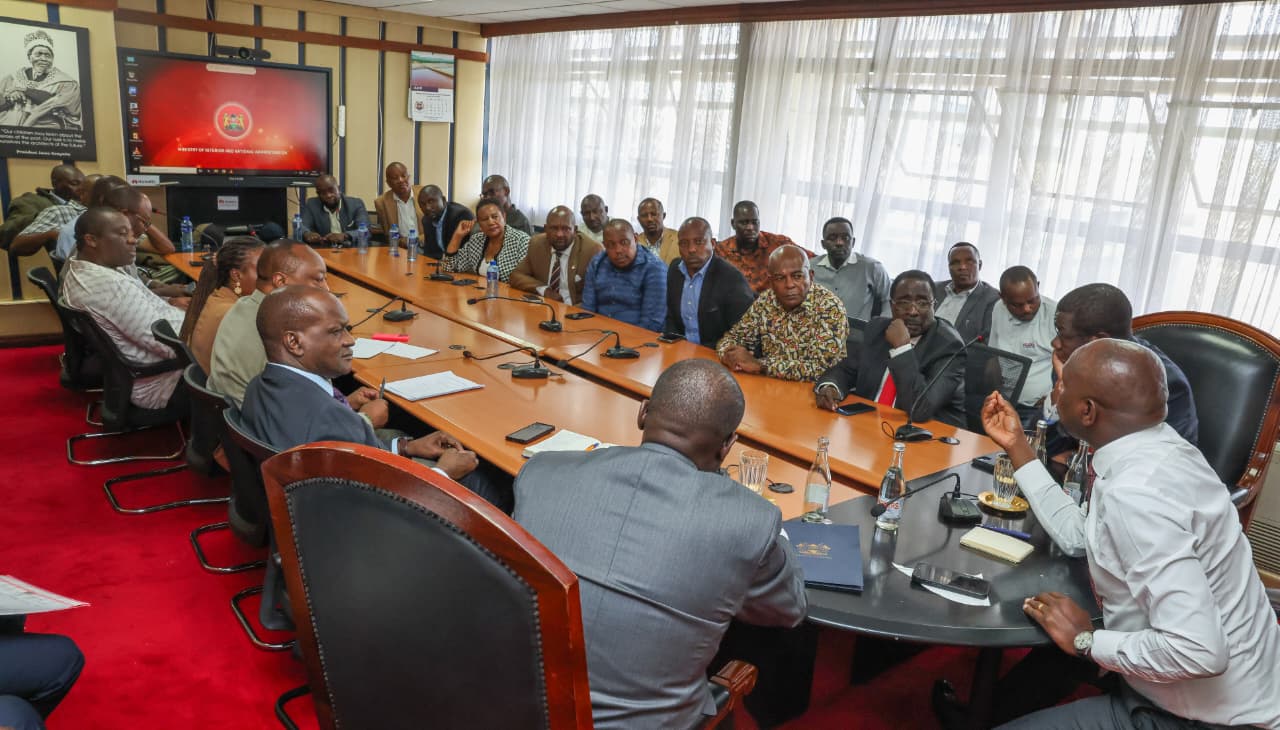
 Public transport sector stakeholders during a meeting with government over the fuel price strike at Hrambee House on May 19, 2026./MINA
A fresh storm is brewing in Kenya’s transport sector after a section of stakeholders accused industry leaders of sidelining them during negotiations with the government that led to the suspension of a nationwide strike over rising fuel prices.
The two-day strike, held on Monday and Tuesday, had paralysed transport services across the country before it was suspended for one week to allow talks with the State. But even as commuters began to breathe a sigh of relief, divisions have now emerged within the sector over how the negotiations were handled.
Motorists Association chairman Peter Murima on Wednesday led the criticism, accusing some stakeholders of secretly engaging the government and making decisions without the knowledge or consent of all parties involved.
Murima described the conduct as dishonest, saying key agreements on how talks would be conducted were allegedly ignored during the negotiations.
He claimed transport sector representatives had initially agreed that any engagement with government would only take place on neutral ground and after full consultations.
“We have been sitting together but things changed all over a sudden when the strike was on. The agreement was if the government wants to meet us as transport stakeholders it should happen at our place and not at their place,” Murima said.
He further alleged that communication breakdowns and last-minute invitations locked out some stakeholders from crucial meetings.
“And then when an invite was done it was done very late and some of us saw it on social media when already the meeting had happened,” he added.
Murima said some stakeholders deliberately declined to attend the first meeting held at the ministry offices, insisting it went against earlier agreements on neutrality.
“Since we had agreed that we would not go to the Minister’s office because if we go there it would be at their terms, most of the stakeholders declined to go there,” he said.
The tensions deepened further, Murima claimed, when a second round of discussions was held without informing all stakeholders.
“During the second meeting we were not informed at all. Most of the stakeholders saw it on the media. We were ambushed,” he said.
He also accused unnamed individuals within the sector of undermining unity and weakening collective decision-making structures that had guided previous engagements.
“The condition was that anything that was to be brought on the table, the stakeholders would first of all sit and agree. So when we talk about being sidelined, it is because there were no consultations; phones were not being answered; there were no telephone calls like it used to be. It was infiltrated,” Murima added.
The strike that triggered the dispute had been called to protest recent fuel price hikes, which transport operators say have significantly increased the cost of doing business while pushing up fares and transport costs for ordinary Kenyans.
With talks between the government and transport stakeholders ongoing, the emerging internal rifts now threaten to complicate efforts to reach a lasting agreement and restore stability in the sector.