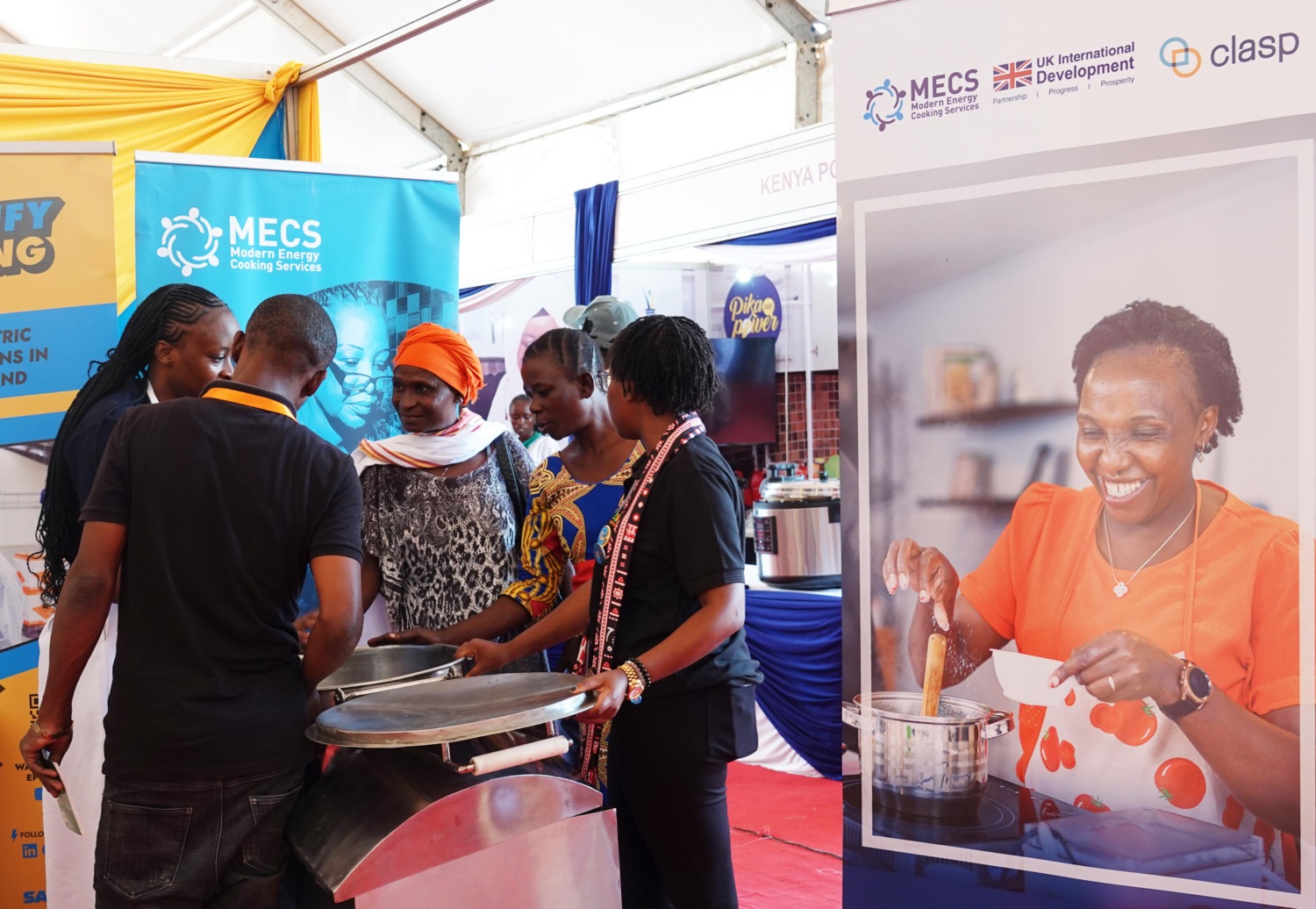
 The move comes as more than 600 million people in sub-Saharan Africa continue to rely on firewood, charcoal, and other polluting fuels for cooking /HANDOUT
At a time when governments and investors are intensifying efforts to tackle climate change, energy poverty, and public health challenges, three African clean cooking ventures have secured fresh backing from UK aid to scale electric cooking technologies across the continent.
The investment, facilitated through the Modern Energy Cooking Services (MECS) programme funded by the UK Foreign, Commonwealth and Development Office (FCDO), will support Ecobora, PowerUp, and Sun-Power Box as they expand affordable clean cooking solutions aimed at reducing Africa’s heavy dependence on biomass fuels.
The move comes as more than 600 million people in sub-Saharan Africa continue to rely on firewood, charcoal and other polluting fuels for cooking, a situation that contributes to deforestation, respiratory illnesses, and rising household energy costs.
The investment programme seeks to address one of the sector’s biggest barriers: limited financing for early-stage clean energy innovators attempting to scale commercially viable technologies.
According to the programme partners, many clean cooking ventures struggle to attract sufficient capital between initial market entry and large-scale commercial growth, slowing adoption despite increasing demand for cleaner and more efficient energy alternatives.
The new funding will support research, product testing, validation, and market development for the three companies, while also helping them strengthen business models capable of attracting larger private-sector investments.
Industry players say the intervention reflects a growing shift in development financing strategies, with donors and climate financiers increasingly focused on de-risking innovations early enough to unlock larger pools of capital.
The funding also builds on wider momentum within the clean cooking ecosystem in Kenya and across Africa.
Recently, the government of Makueni partnered with CLASP to accelerate the transition of institutions toward clean cooking technologies, highlighting rising public-sector interest in electric cooking solutions.
Nyamolo Abagi, director of Clean Energy Access at CLASP and a member of the MECS Investment Committee, said the selected ventures demonstrated strong potential to scale operations and accelerate the adoption of modern cooking technologies across Africa.
“The MECS Investment Committee is pleased to support these three trail-blazing ventures. All three companies demonstrated potential to scale up their businesses and make significant strides in accelerating the adoption of clean cooking technologies across Africa,” said Abagi.
Over the next year, the companies will receive venture-building support focused on research and development, product validation, market access, financial modelling, and policy research.
Sector stakeholders believe the data and evidence generated through the initiative will play a critical role in convincing commercial investors that clean cooking represents a viable long-term investment opportunity.
Professor Rachel Kyte, the UK Special Representative for Climate, said clean cooking technologies are increasingly becoming central to global development and climate agendas.
“Clean cooking technologies transform lives and protect the planet by improving health, generating jobs, and avoiding deforestation,” she said.
She added that innovative UK-African partnerships are becoming increasingly important amid rising global energy price volatility and disruptions affecting liquefied petroleum gas (LPG) and other fossil fuels.
Analysts say Africa’s clean cooking market is entering a decisive phase as governments seek practical solutions that can simultaneously address climate commitments, healthcare costs, and energy access challenges.
Electric cooking technologies are increasingly attracting attention because of their potential to reduce emissions while lowering long-term fuel costs for households and institutions such as schools and hospitals.
However, experts caution that significantly larger investments, blended finance structures, and stronger public-private partnerships will still be needed to unlock the sector’s full potential.
The MECS programme has now called on impact investors, development finance institutions, and technology partners to deepen engagement with clean cooking ventures and accelerate capital flows into the sector.
Modern Energy Cooking Services (MECS) is an 11-year UK aid-funded programme working with governments, private-sector players, researchers, and communities across 16 countries to accelerate the transition from biomass-based cooking to modern clean cooking solutions.
Meanwhile, CLASP has positioned itself as a global advocate for energy-efficient appliances and sustainable technologies aimed at reducing emissions and improving livelihoods worldwide.