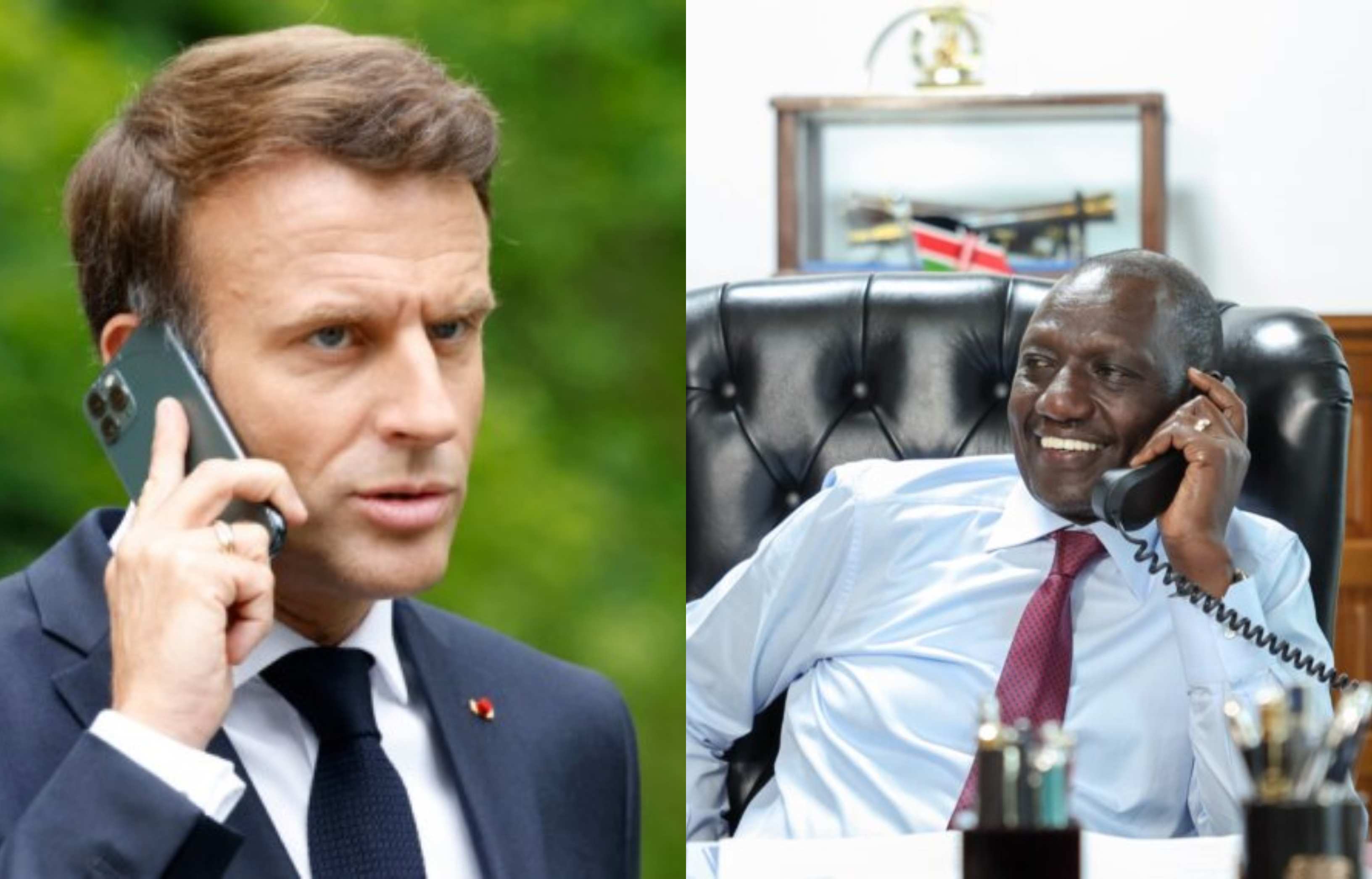
The recently concluded Africa Forward Summit in Nairobi revealed far more than a diplomatic effort to strengthen ties between Europe and Africa. Beneath the formal speeches and investment announcements, the summit exposed a shifting global order in which Africa is steadily redefining its place in international politics.
No longer willing to remain on the margins of global decision-making, African countries are increasingly embracing a more assertive geopolitical identity rooted in the rise of the Global South, the push for multilateralism and the search for development partnerships that prioritise sovereignty and mutual benefit.
Hosting the summit in Nairobi carried symbolic and strategic significance. Kenya today represents a confident, outward-looking African state that seeks engagement with all major global actors without being trapped in old ideological loyalties.
Unlike the postcolonial politics that long shaped France’s engagement with parts of West and Central Africa, East Africa is emerging with a more pragmatic diplomatic culture focused on trade, infrastructure, technology and economic transformation. Nairobi therefore became an ideal stage for France’s attempt to redefine its African policy at a time when European influence across the continent is increasingly under pressure.
For many years, Africa’s relationship with Western powers followed a familiar pattern. Europe and the United States often approached the continent through the language of aid, security cooperation and governance reforms, while maintaining disproportionate influence over financial systems, political institutions and trade structures.
While such partnerships produced certain gains, they also created frustration among many Africans who felt the continent remained trapped within unequal global arrangements designed elsewhere.
That frustration partly explains why the idea of the Global South has gained political momentum across Africa. The term no longer refers simply to geography or economic status; it reflects a growing collective demand by developing countries for a more balanced international order.
African states increasingly view themselves as part of a broader coalition seeking fairer representation in global governance, more equitable financial systems and greater policy independence.
This geopolitical awakening has also transformed the way Africa approaches foreign partnerships. Today, African governments have more choices than at any point since independence.
China, India, Türkiye, the Gulf states and other emerging powers have expanded economic and diplomatic engagement across the continent, reducing Africa’s historical dependence on Western capitals. The result is a new era of strategic competition in which African states possess greater bargaining power.
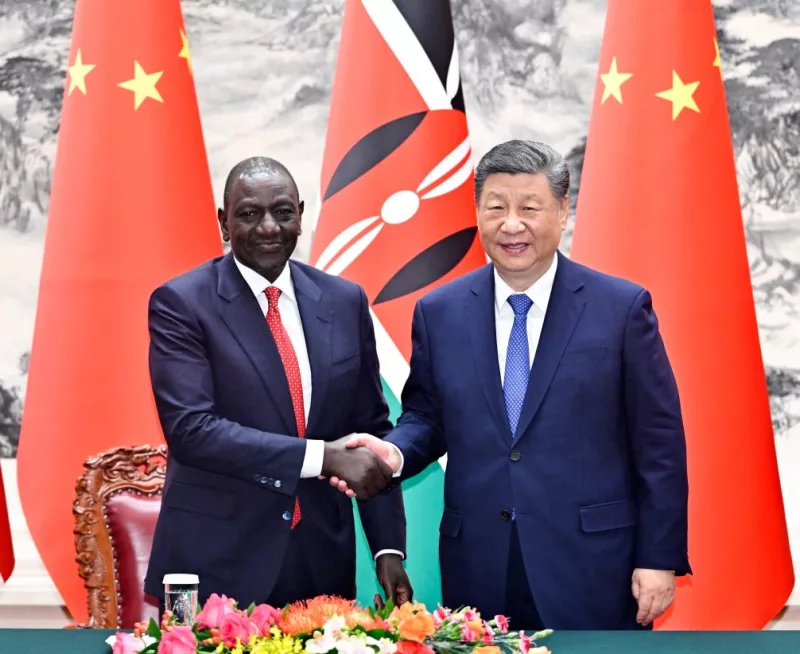
China’s rise as a development partner has been particularly influential in this transition. Through the Forum on China-Africa Cooperation, Beijing institutionalised a long-term framework for engagement based on trade, infrastructure development, industrialisation and political respect.
Unlike traditional donor-recipient relationships, FOCAC emphasised partnership and shared development goals, giving African leaders greater room to pursue national priorities.
The Belt and Road Initiative further deepened this relationship by financing major infrastructure projects across Africa. Railways, highways, ports, industrial parks and energy projects built under BRI have become visible symbols of a development model centred on connectivity and economic modernisation.
In Kenya, the Standard Gauge Railway stands as one of the clearest examples of how infrastructure investment can reshape regional trade and integration.
Critics in the West often portray China’s growing role in Africa through the language of debt dependency or geopolitical rivalry. Yet many African policymakers see the situation differently.
For decades, the continent struggled with massive infrastructure deficits while Western institutions hesitated to finance large-scale projects considered too risky or unprofitable. China entered that gap at a time when many African economies urgently needed roads, railways, power generation and digital infrastructure to support industrial growth.
This changing reality hung over the Nairobi summit. France’s renewed interest in Africa cannot be separated from the broader recognition that Europe now faces serious competition for influence on the continent.
The language of “equal partnership” increasingly reflects geopolitical necessity rather than moral awakening. African leaders understand this shift clearly, and many are using it to negotiate more favourable terms from all external partners.
At the centre of these discussions is the growing demand for multilateralism. African countries are increasingly resisting a world dominated by a small number of powerful states and institutions.
Calls for reform of the United Nations Security Council, the International Monetary Fund, and the World Bank reflect a wider belief that the post-1945 international system no longer reflects current global realities. Developing countries want institutions that recognise their demographic, economic and political importance rather than treating them as peripheral actors.
In this context, Africa’s alignment with emerging Global South platforms carries strategic importance. Whether through BRICs expansion, South-South cooperation frameworks, or partnerships under FOCAC and the BRI, many African governments see opportunities to diversify economic relations and reduce dependence on historically unequal systems.
This does not mean Africa seeks confrontation with the West. Rather, it reflects a desire for balance, autonomy and policy flexibility in an increasingly multipolar world.
The Nairobi summit therefore highlighted an uncomfortable truth for Europe: Africa is changing faster than many Western policymakers anticipated. Younger African populations are more politically conscious, digitally connected and skeptical of traditional power hierarchies.
They want investment rather than lectures, industrialisation rather than dependency and respect rather than paternalism.
For Kenya and the broader East African region, the summit reinforced Nairobi’s growing status as a diplomatic and economic hub capable of engaging multiple global actors simultaneously.
Kenya’s foreign policy increasingly reflects strategic non-alignment — maintaining productive relations with China, Europe, the United States and emerging powers without becoming overly dependent on any single bloc.
Ultimately, the most important lesson from the France-Africa Summit is that Africa is no longer waiting to be invited into global decision-making.
The continent is actively shaping a new geopolitical landscape in which the Global South plays a larger role, multilateralism gains renewed relevance and development partnerships are judged by practical outcomes rather than historical ties.
The future of Africa’s international relations will not belong to powers seeking dominance through old hierarchies. It will belong to those willing to engage the continent as an equal partner in a rapidly changing world.
The writer is a journalist and communication consultant