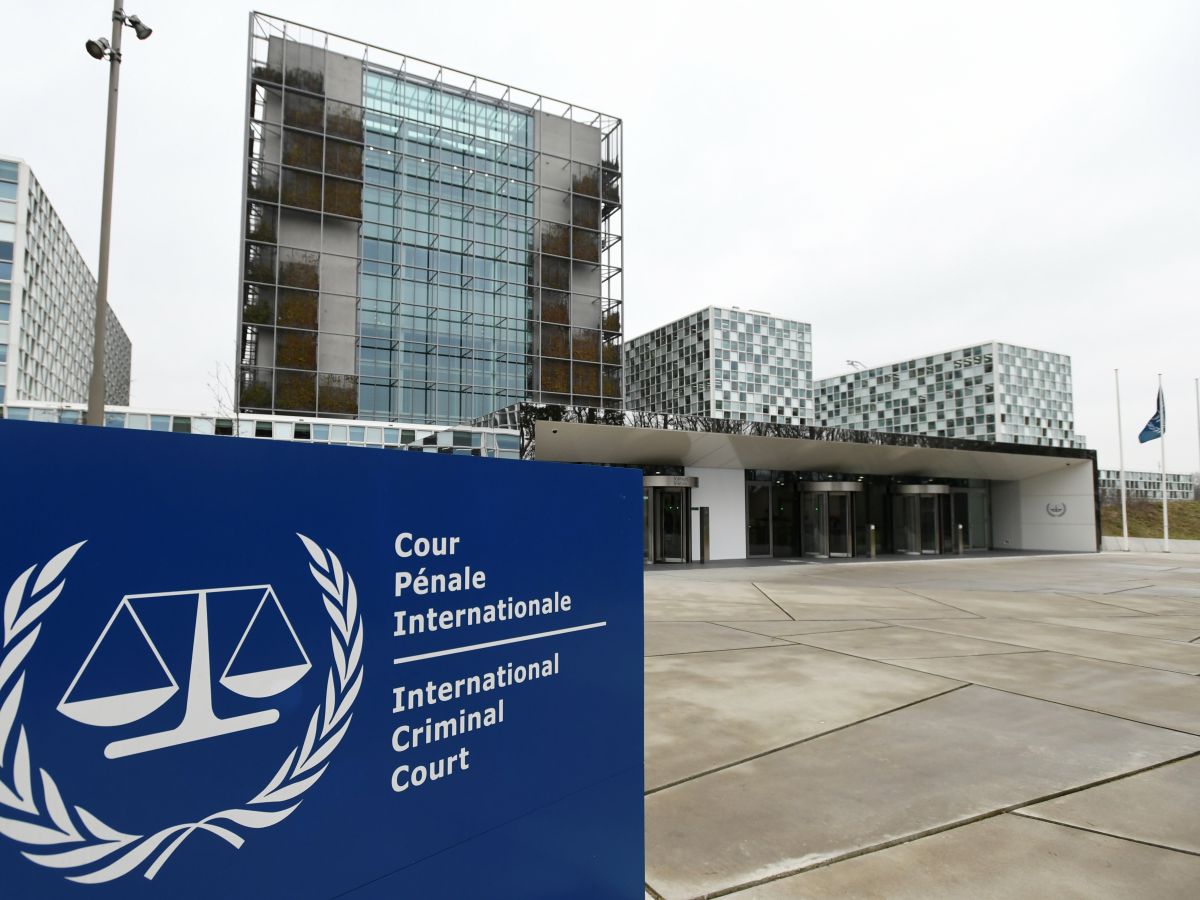
The International Criminal Court (ICC) is the world’s permanent court for prosecuting individuals accused of genocide, war crimes, crimes against humanity and the crime of aggression.
The court is based in The Hague and operates under the Rome Statute, the treaty that established the institution in 2002.
As Kenya campaigns for the election of Justice Njoki Ndung’u to the court, here is what you need to know about ICC judges and the election process.
How many ICC judges are there?
The ICC has 18 judges drawn from member states that are party to the Rome Statute. The judges serve at the court’s headquarters in The Hague.
The judges are divided among three divisions of the pre-trial division, trial division and appeals division.
Their work includes authorising investigations, presiding over trials, hearing appeals and ensuring fair trial procedures.
How long do ICC judges serve?
ICC judges serve a single non-renewable term of nine years.
Once elected, they cannot seek re-election.
The long single term is designed to protect judicial independence and shield judges from political pressure linked to re-election campaigns.
Who can become an ICC judge?
Candidates must be nationals of countries that are members of the Rome Statute.
They must also possess high moral character, impartiality and integrity and qualifications required in their home country for appointment to the highest judicial offices.
Candidates are expected to have expertise in either criminal law and criminal procedure, or international law, including international humanitarian law and human rights law.
What are List A and B candidates?
ICC judicial candidates are categorised into two groups:
List A
These are candidates with established competence in criminal law and criminal procedure, including experience as judges, prosecutors or advocates in criminal cases.
List B
These candidates specialise in international law, including international humanitarian law and human rights.
Countries voting in the election must ensure a balance between the two categories.
How are candidates nominated?
An individual cannot simply present themselves for election.
Under ICC rules, a candidate must first be nominated and officially sponsored by their country.
In Kenya’s case, the government formally endorsed Justice Ndung’u after a competitive national selection process involving several jurists.
President William Ruto said Kenya settled on Ndung’u because of her judicial experience, constitutional reform record and contribution to gender justice.
Who elects ICC judges?
ICC judges are elected by the Assembly of States Parties (ASP), which is made up of all countries that are members of the Rome Statute.
Each member state has one vote.
The elections are usually held at the United Nations headquarters in New York City during meetings of the Assembly of States Parties.
How does the voting happen?
Judges are elected through secret ballot voting.
To win, a candidate must secure a two-thirds majority of states parties present and voting.
Voting can go through several rounds if no candidate reaches the required threshold in the first round.
Are there regional balance rules?
Yes.
The Rome Statute requires fair geographical representation among judges to ensure no region dominates the court.
There must also be gender balance, a balance between major legal systems of the world and a balance between list A and list B expertise.
A total of 14 candidates, comprising six males and eight females, have already been nominated by their respective countries to fill the vacant positions at the court.
Out of the 14, eight are from the African continent.
Africa is one of the recognised regional blocs considered during elections.
List A has eight candidates while List B has six.
Apart from Kenya, other countries that have nominated individuals for the seat are DR Congo, Ghana, Malawi, Tanzania, Uganda, Senegal, Gambia, Denmark, Ukraine, Switzerland, Colombia, Spain and Japan.
There are a total of six vacancies for judges at the court.
The Assembly of States Parties will elect six judges of the International Criminal Court at its twenty-fifth session, from December 7-17, 2026.
The six whose terms end in 2027 are Tomoko Akane from Japan, who doubles up as the current president, Rosario Salvatore (Italy), Reine Alapini-Gansou (Benin), Luz del Carmen Ibanez (Peru), Solomy Balungi (Uganda) and Kimberly Prost (Canada).
They were all elected in 2017/18.
Why does African representation matter?
African countries form one of the largest blocs within the ICC membership.
Most ICC investigations and cases over the years have also involved African countries, including situations in Sudan, Kenya, Uganda, DR Congo, Libya, Mali and the Central African Republic.
This has triggered long-running debates about whether Africa is overrepresented in ICC prosecutions while other global regions receive less scrutiny.
Ruto recently argued that because many ICC cases involve African victims and communities, Africans should also have a stronger role in shaping international justice.
“The majority of cases before the ICC have involved African situations, African communities and African victims seeking justice,” he said.
“It is therefore both appropriate and necessary that Africa has strong, principled and highly qualified representation on that bench.”
What role would Njoki Ndung’u play if elected?
If elected, Justice Ndung’u would join the ICC bench as one of the 18 judges responsible for handling some of the world’s gravest international crimes.
Her work could involve authorising investigations, hearing evidence, presiding over trials, deciding appeals and interpreting international criminal law.
Ndung’u currently serves at Kenya’s Supreme Court and is widely known for her contribution to constitutional reform and women’s rights legislation in Kenya.