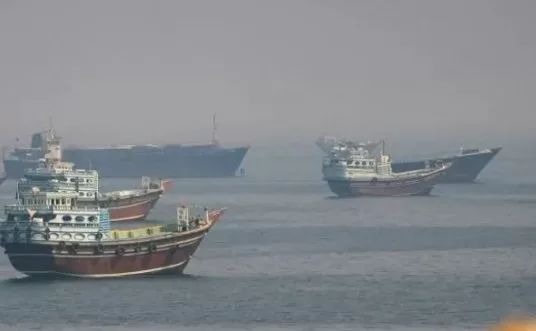
 Vessels were visible across the Strait of Hormuz from Oman this week
Tehran has launched missile and drone attacks at US targets in Jordan, Kuwait, Iraq and Bahrain after American forces resumed strikes against Iran on Tuesday.
The Iranian Red Crescent reported five people, including a child, were killed and more than 50 injured when shrapnel from a US missile attack hit a home where a wedding celebration was taking place in Sirik in southern Iran.
The US military said it was aware of the reports but that it never targeted civilians.
US Central Command (Centcom) said US strikes on Iran followed "recent attempted attacks" by the Islamic Revolutionary Guard Corps (IRGC) against commercial shipping in the Strait of Hormuz and American forces in the region.
The IRGC said the US would "regret" the strikes. By early Wednesday, it had launched a barrage of ballistic missiles at a US Marine base in Jordan's Aqaba in retaliation for the Sirik attack, according to Iran's semi-official Tasnim news agency.
The Jordanian Armed Forces said it had intercepted 13 ballistic missiles, 10 of which were destroyed, while three fell in remote areas. There were no deaths or injuries as a result of the attack from Iran.
The network also said that the country's national security centre had warned residents of the Aqaba and Mafraq governorates of falling debris, adding that the warning had since ended.
Separately, the Kuwait army said its air defences were responding to Iranian missile attacks early Wednesday.
Several explosions were also reported in Bahrain following attacks by Iran, according to Iranian state media.
In Iraq's autonomous Kurdistan region, Iran's Revolutionary Guards said on Wednesday they had struck US bases with missiles and drones, destroying a maintenance centre, warehouses and equipment, state-run IRNA reported.
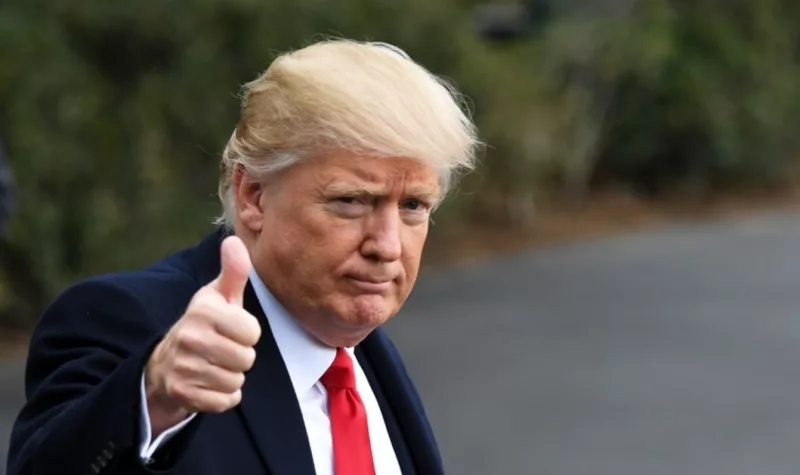
Donald Trump, when the US strikes were announced on Tuesday afternoon, warned that Iran would be hit again at "a much harder and higher level" if it retaliated.
The attack follows the first known US strikes on Iran since late July earlier this week, when forces attacked two rocket launchers on Larak Island in the strait. Tehran retaliated by firing missiles at air bases in Jordan and a drone at the UAE.
Centcom said US forces had begun striking IRGC targets at 12:00 ET (16:00 GMT), and had completed the strikes by early Wednesday.
Iranian state media reported projectiles had hit the areas of Chabahar and Konarak and an airport in Jiroft, and that explosions were heard in Qeshm island and Bandar Abbas.
Iranian state media and the Iranian Red Crescent reported that civilian sites on Iran's southern coast had been bombed, with a child among those killed at a wedding ceremony in Sirik county, which lies on the Strait of Hormuz.
US Navy Captain Tim Hawkins, speaking on behalf of Centcom, told the BBC it was aware of reports from Iranian state media of the attack in Sirik.
He added: "The US military never targets civilians, unlike the IRGC."
The US and Israel launched wide-ranging strikes on Iran on 28 February, with Iran responding by attacking Israel, US bases and allied states in the Gulf, and effectively closing the Strait of Hormuz to marine traffic.
A US-Iran agreement, known as the Memorandum of Understanding, to extend a ceasefire between the two countries was signed in June.
However that agreement has expired, leading to a resumption of hostilities. Both the US and Iran have also fired on shipping, with Tehran targeting vessels it says have sought to cross the strait without its permission and the US enforcing a naval blockade of Iranian ports.
Washington also announced a fresh sanctions campaign on 24 August aimed at further isolating Tehran and expanding secondary sanctions against its allies.
Speaking at a G20 finance ministers meeting, the US Treasury Secretary Scott Bessent said many US allies "came forward and said they will do whatever is necessary" concerning the sanctions against Iran.
Iranian officials and state media have largely dismissed the campaign as a continuation of previous US economic measures, which they argue followed Washington's military failure in the recent conflict.
However, on Tuesday Iranian President Masoud Pezeshkian was quoted by state media as saying if the US returned to committing to the agreement, Iran would reciprocate.