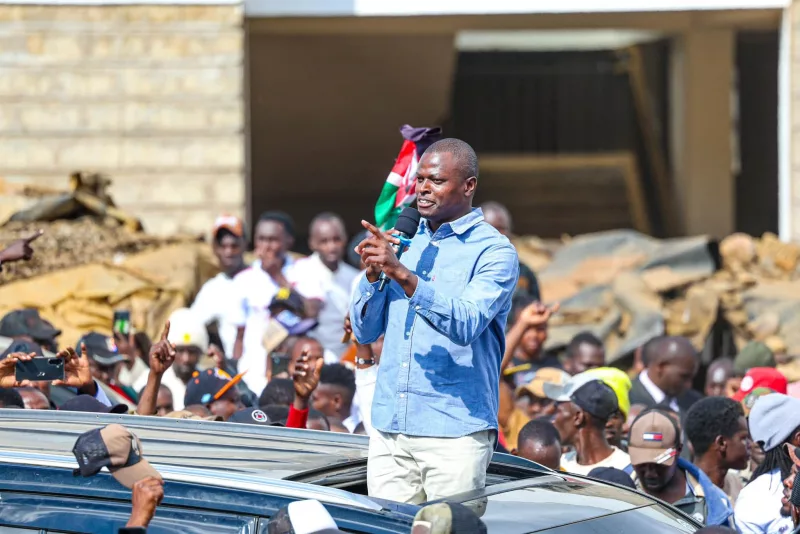
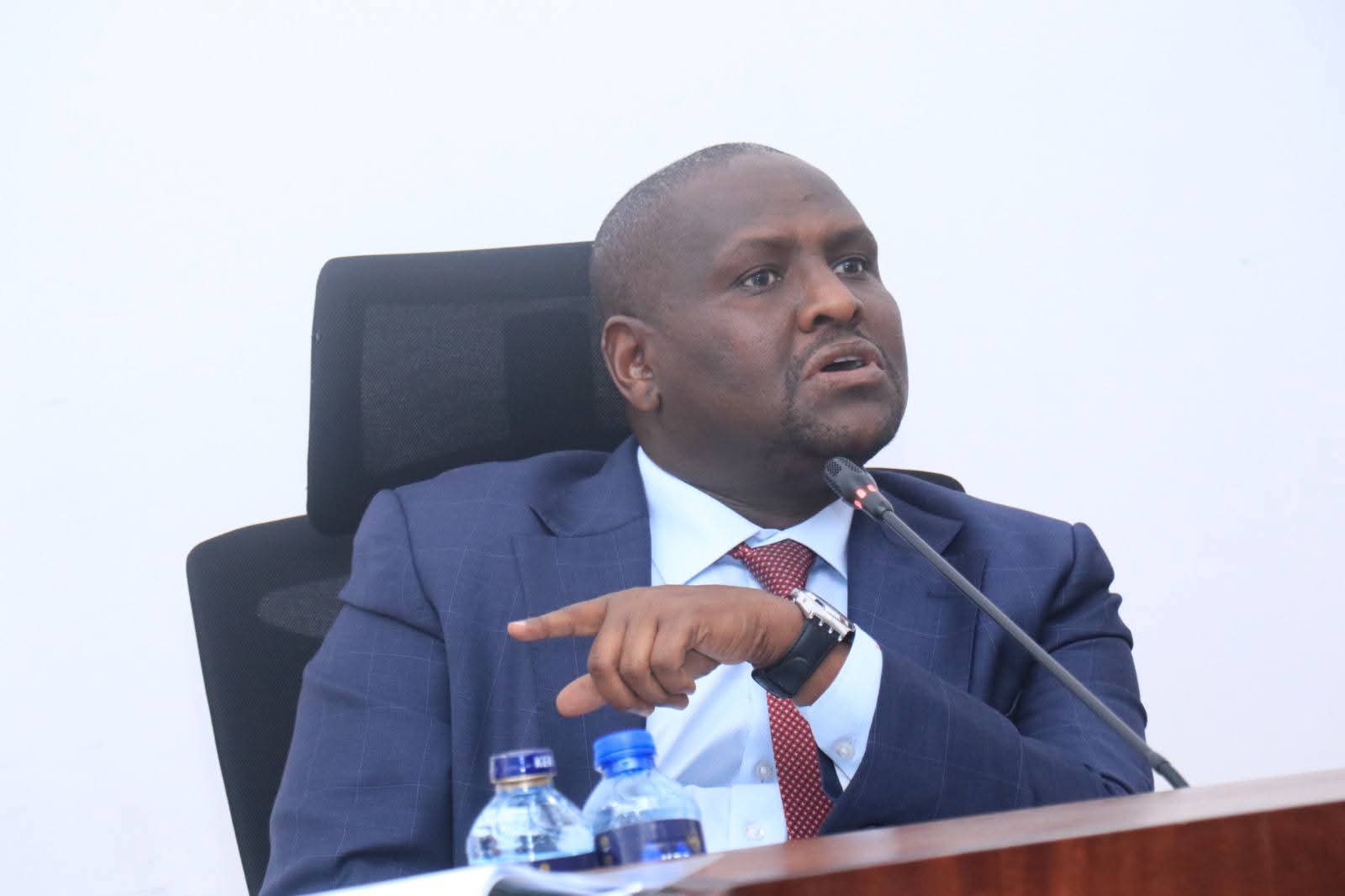
 National Assembly Departmental Committee on Administration and Security chair Gabriel Tongoyo gesturing during a session with officials from State Department of Cabinet Affairs held at Bunge Towers on Monday afternoon/Parliament
The State Department of Cabinet Affairs under the Office of the President has blamed the Electronic Government Procurement (e-GP) system for its low budget absorption.
This follows concerns raised by a parliamentary committee over the department’s persistent underutilisation of funds, with warnings that continued low absorption could lead to further budget cuts and disrupt operations.
The National Assembly Departmental Committee on National Administration and Internal Security questioned officials from the department over what legislators described as a worrying trend of poor expenditure since its establishment in the 2023/2024 financial year.
Committee members noted that despite receiving allocations from the Exchequer, the department has consistently failed to fully utilise its budget, leading to a steady decline in annual allocations.
In the 2023/2024 financial year, the department received Sh900 million. This dropped to Sh300 million in 2024/2025, then further to Sh235 million in 2025/2026. Under the proposed 2026/2027 budget estimates, the allocation stands at Sh269 million.
Appearing before the committee to defend the budget estimates for the 2026/2027 financial year, Principal Secretary for Cabinet Affairs in the Office of the Deputy President, Dr Idris Salim Dokota, attributed the low absorption to challenges with the e-GP system.
The e-GP platform is the government’s online procurement system designed to facilitate tendering and enhance transparency in public procurement.
Committee chair and Narok West MP Gabriel Tongoyo questioned why the department continued to record low absorption rates while other agencies under the committee’s oversight were efficiently utilising their budgets.
“Can you explain to this committee why the State Department has consistently recorded low absorption of the budget allocated to it, which has in turn led to your budget being reduced significantly? What exactly is the problem?” Tongoyo asked.
“Remember, we oversee 12 departments and agencies, but your department remains the least in terms of budget absorption,” he added.
In response, Dr Dokota said the department had uploaded its procurement plans and budget lines to the National Treasury, but delays in the operationalisation of the e-GP system had affected payments to suppliers and stalled expenditure.
“The reason we have not spent the money is because most of the items are procurement-related, and we are unable to process them fully through the e-GP platform,” said the PS.
“We have done our part and submitted the required budget lines, but the component of awarding vendors through the system has become problematic. We have written to the National Treasury seeking permission to use IFMIS, but approval has not been granted,” he added.
Dr Dokota further told the committee that suppliers had already been identified and listed, but the inability to capture commitments in the system had delayed payments.
“If we are granted authority, all the suppliers are ready. It is now just a matter of capturing them in the system and effecting payment,” he said.
Tongoyo dismissed the explanation, noting that other government agencies using the same procurement platform had recorded high absorption rates.
He cited the National Police Service Commission (NPSC), which had earlier appeared before the committee and reported an absorption rate of between 80 and 90 per cent despite a budget exceeding Sh1 billion.
“Even before e-GP, your department had absorption challenges. That is why your budget has been declining from the initial Sh900 million allocation,” Tongoyo said.
The PS, however, defended the department, saying the low absorption was mainly experienced during its formative stages when administrative and operational structures were still being established.
He maintained that performance had improved significantly in the last financial year, with absorption reportedly reaching nearly 90 per cent.
“When the department was established, there were no proper structures in place to support expenditure. I joined towards the end of the second quarter and absorption improved thereafter,” Dr Dokota explained.
He added that the department had cleared all pending bills and was not carrying forward any outstanding obligations into the current financial year.
Saku MP Dido Raso, who is also the committee’s vice-chairperson, questioned why the department continued to face difficulties with the e-GP system while other agencies appeared unaffected.
“What is unique about your department that e-GP becomes a challenge only for you? We are not hearing the same complaints from the other 11 agencies under this committee,” Raso said.
He further advised the department to invest in benchmarking and capacity-building programmes by studying how advanced governments manage Cabinet affairs and policy coordination.
“When you visit countries such as the United Kingdom or the United States, you should not travel alone as PS. You need a team of officers to understand how those governments coordinate decision-making and run Cabinet affairs,” he said.
Raso also warned that unless the department resolves its procurement challenges with the National Treasury, it risks further funding cuts in future allocations.
“Unless you solve the e-GP issue with the National Treasury, you will continue losing money and eventually struggle even with basic operational expenses,” he cautioned.