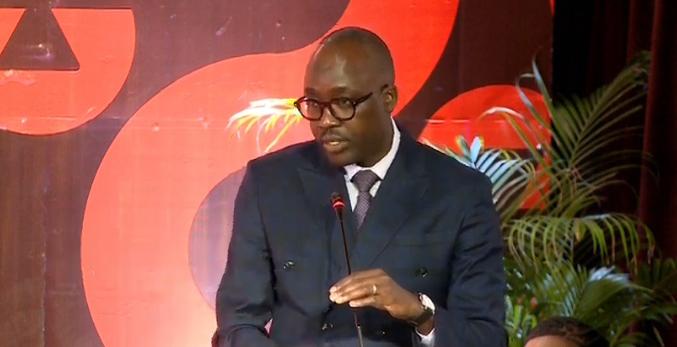
 Foreign Affairs Principal Secretary Korir Sing’Oei addresses delegates during the Social Innovation Pavilion at Strathmore University, Nairobi, on May 10, 2026. /CHRISTABEL ADHIAMBO
Africa’s top thinkers, diplomats and civil society leaders gathered in Nairobi on Sunday to push for sweeping governance reforms, stronger democratic institutions and fair management of the continent’s vast natural resources ahead of the Africa Forward Summit.
The high-level discussions at Strathmore University during the Social Innovation Pavilion brought together policymakers, scholars and development partners under the theme Bringing society back in: A Pavilion to Explore the Challenges and Possibilities of Building a Shared World.
The event, organised by the Innovation Foundation for Democracy in partnership with the Paris Peace Forum and International Commission of Jurists Kenya, focused on Africa’s future through discussions on democratic reform, mineral governance, digital transformation, gender justice, international solidarity and social innovation.
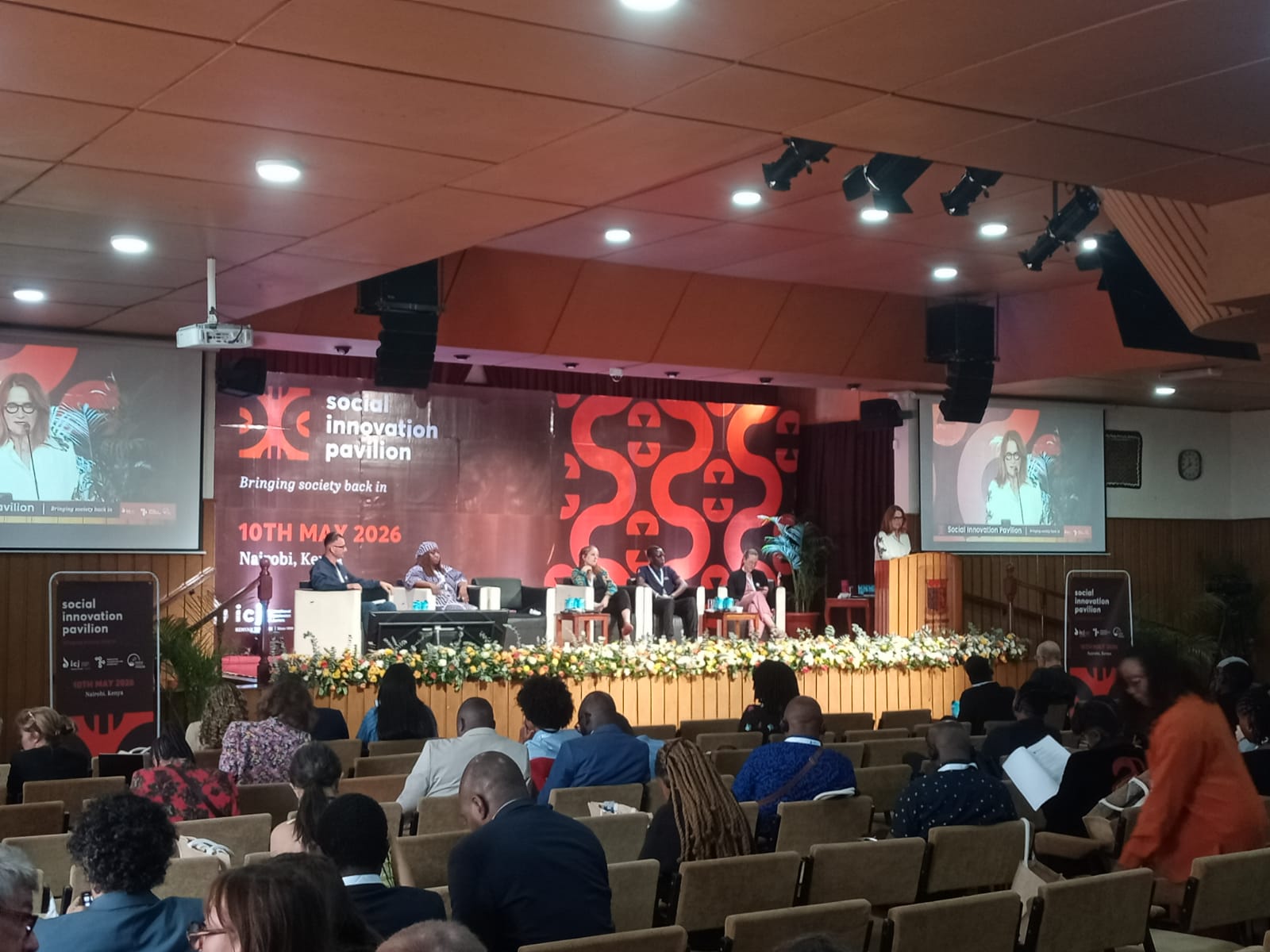 Panelists engage in a roundtable discussion during the Social Innovation Pavilion at Strathmore University, Nairobi, on May 10, 2026. /CHRISTABEL ADHIAMBO
Foreign Affairs Principal Secretary Korir Sing’Oei said the gathering had come at a defining moment when the world was facing mounting economic uncertainty, geopolitical tensions, climate pressures and rapid technological disruption.
“Your meeting today is timely and urgent,” Sing’Oei said.
“Around the world, societies are confronting deep anxieties: economic uncertainty, geopolitical tensions, climate pressures, technological disruptions and widening inequalities.”
He said Africa remained uniquely positioned because of its youthful population and abundant natural resources, but warned that meaningful progress would only be achieved through structural reforms in both domestic and global systems.
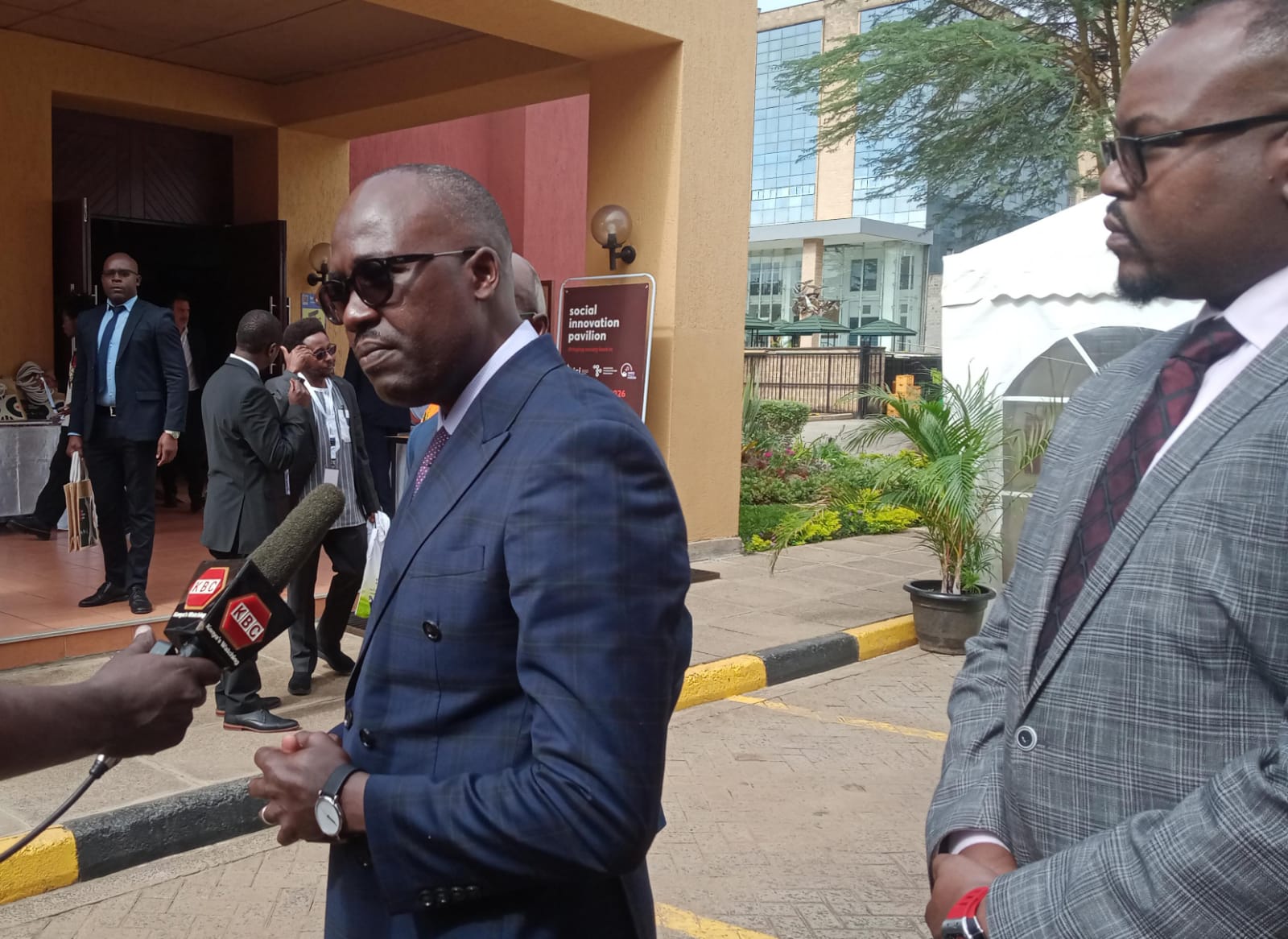 Foreign Affairs Principal Secretary Korir Sing’Oei addressing media during the Social Innovation Pavilion at Strathmore University, Nairobi, on May 10, 2026. /CHRISTABEL ADHIAMBO
“What makes this pavilion especially important is that it creates civic space not from the margins, but as a central forum,” he said.
The discussions also placed heavy focus on the future of democracy across Africa, with speakers warning against rising nationalism, inequality and exclusionary politics.
Professor Souleymane Bachir Diagne, chairperson of the board of the Innovation Foundation for Democracy, urged African countries to resist narrow nationalist ideologies and instead build democratic systems rooted in African intellectual traditions and shared humanity.
“We live in a time when international relations are being reduced to a game in which nationalist self-interest dominates,” Diagne said.
“Africa has a crucial role to play in the struggle for a different world and for the invention of cosmopolitanism.”
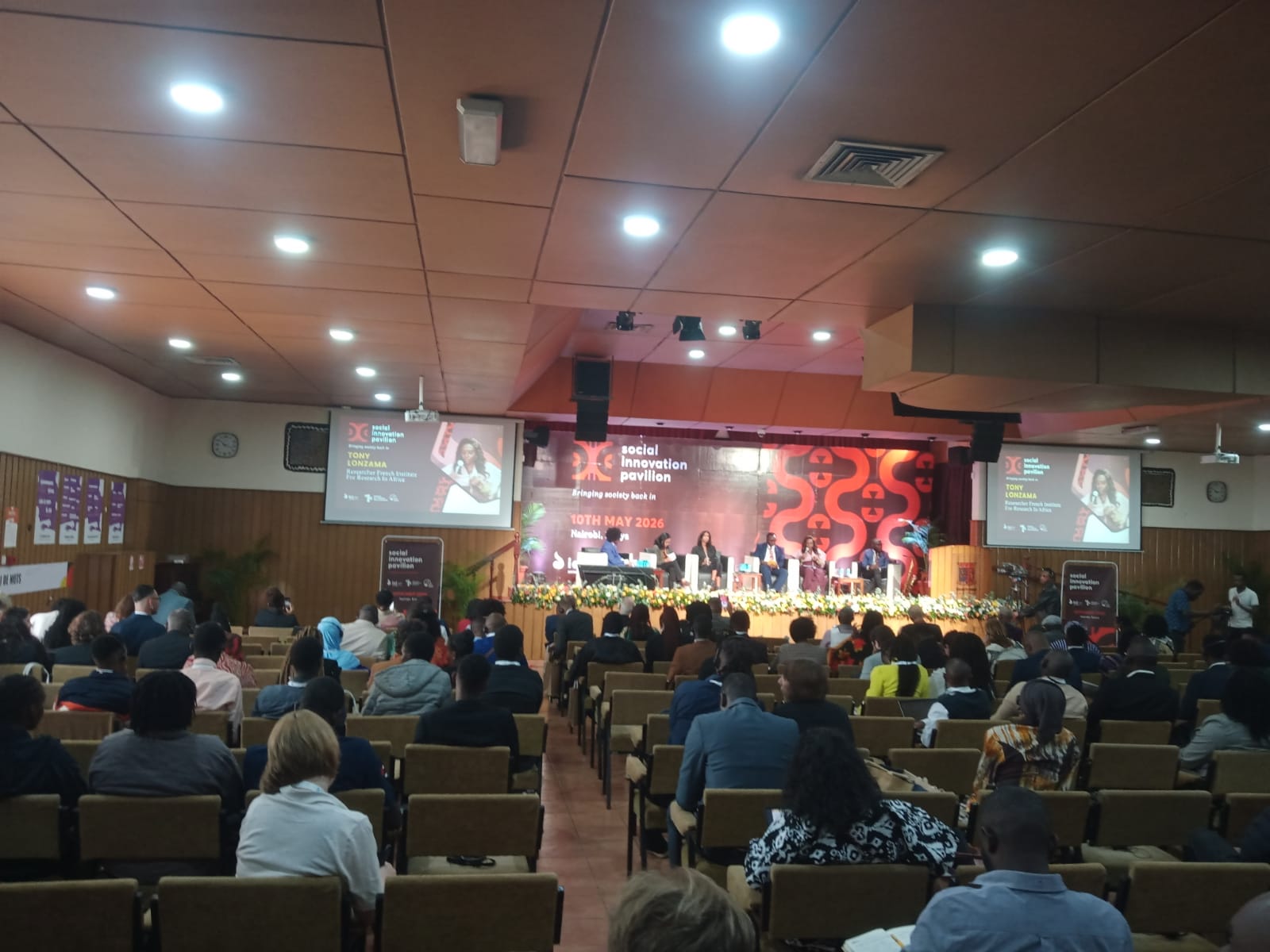 Panelists engage in a roundtable discussion during the Social Innovation Pavilion at Strathmore University, Nairobi, on May 10, 2026. /CHRISTABEL ADHIAMBO
“It has its natural resources to put on the table if they are used to promote its internal, autonomous development and self-reliance,” he said.
He also highlighted a White Paper developed by the foundation containing 60 recommendations expected to be presented to African heads of state during the Africa Forward Summit.
According to Diagne, democratic transformation was already unfolding across the continent through civic action and grassroots innovation largely driven by women and young people.
“Deep within the fabric of Africa’s future, an ongoing process of democratisation is at work,” he said.
He further called for stronger continental integration, saying Africa needed a united political and economic vision to compete globally and secure its future.
“The United States of Africa, stretching from Cape Town to Cairo, is the only true framework for developing an African agenda,” Diagne said.
Director General of the Innovation Foundation for Democracy, Professor Achille Mbembe, said the pavilion formed part of a broader effort to rethink governance, democracy and social transformation from an African perspective.
Mbembe said Africa needed fresh institutional thinking capable of responding to global instability while strengthening justice, governance and development systems within the continent.
His remarks reinforced the foundation’s emphasis on social innovation and Africa-centred institutional reform as key drivers of long-term transformation.
Meanwhile, Christine Alai underscored the importance of constitutionalism, human rights and justice in shaping Africa’s democratic future.
Speaking through remarks delivered in absentia, Alai warned that Africa’s mineral wealth risked deepening inequality and exploitation if governance systems failed to protect communities.
“One-third of Africa’s wealth lies beneath us, but that wealth must serve justice or it becomes exploitation,” she said.
Alai pointed to ICJ Kenya’s ongoing work around judicial independence, electoral justice, police reforms and digital rights, saying governance systems across the continent required urgent strengthening.
“Our guiding principle remains clear: justice for all,” she said.
She also called for stronger Africa-to-Africa solidarity and legal reforms aimed at protecting dignity, freedoms and human rights.
“Africa must build horizontal solidarity through an Africa-to-Africa community approach,” Alai said.
Director General of the Paris Peace Forum Justin Vaïsse emphasised the need for broader models of global cooperation beyond traditional state-to-state diplomacy.
Vaïsse promoted the concept of “polylateralism”, a governance approach bringing together governments, civil society organisations and private sector actors in shaping solutions to global challenges.
The forum also featured a series of roundtable discussions examining African minerals, democratic governance, digital technologies, gender equality and international solidarity.
Participants called for resource governance models that prioritise local communities, environmental protection and intergenerational justice.
Debates on institutional reform further highlighted emerging democratic practices led by women and youth at the community level, which speakers said were reshaping political participation and civic engagement across Africa.
Recommendations from the Social Innovation Pavilion are expected to feed directly into discussions at the Africa Forward Summit, where African leaders will review proposals contained in the White Paper as part of wider continental policy conversations on governance, democracy and development.