
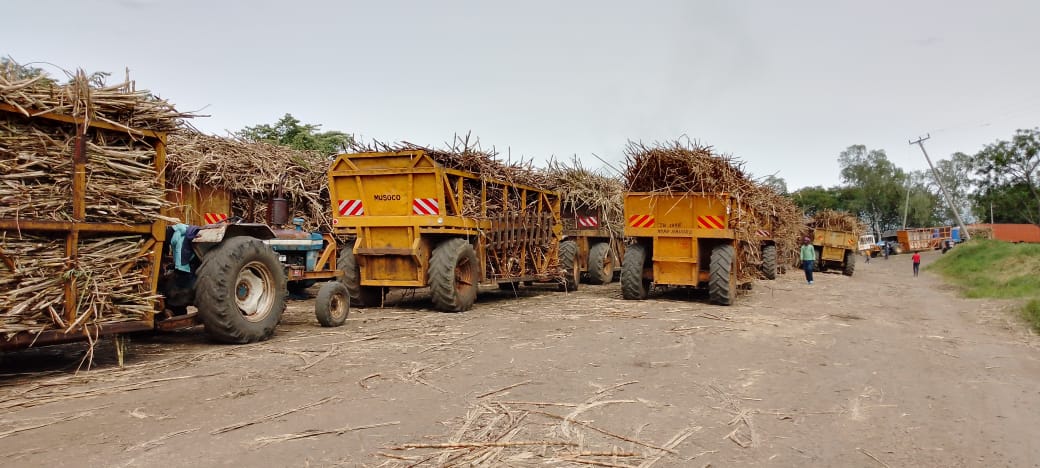
President William Ruto’s sugar reforms are yet to deliver, with falling production, shuttered mills and rising imports exposing a sector still in crisis.
While President Ruto’s promise to revive Kenya’s ailing sugar sector was billed as a cornerstone of his economic agenda, new data now suggests the reforms have yet to deliver much outcome, with production declining.
The situation, particularly affecting Western Kenya, exposes challenges that could carry political costs ahead of the 2027 General Election.
According to the Economic Survey 2026, sugarcane production fell sharply in 2025, with output dropping by nearly 25 per cent, while sugar production itself declined at a similar rate.
Sugarcane production fell by 24.7 per cent to about 7.05 million tonnes, while sugar output itself dropped by 24.8 per cent to 613,200 tonnes.
The downturn has been attributed largely to a shortage of mature cane, a signal of deeper dysfunction in planting cycles, harvesting coordination, and farm-level support systems.
Harvested area shrank significantly, forcing some mills to suspend operations due to cane shortages.
In manufacturing, sugar processing contracted, dragging down broader food production and raising concerns about job losses in a region already grappling with economic vulnerability.
Yet even as production declines, prices for cane have risen modestly, an indication of supply shortages rather than sectoral health.
At the same time, Kenya’s sugar import bill has surged, underlining the country’s growing dependence on external supply to meet domestic demand.
Ruto’s administration inherited a sector long plagued by inefficiencies, including aging mills, mismanagement, delayed farmer payments, and cyclical bailouts.
However, he promised reforms in the sector targeting structural reforms, including the leasing of state-owned sugar factories to private operators, alongside promises of prompt payments to farmers and better sector coordination.
But the latest data suggests these interventions have not yet translated into tangible gains on the ground.
The shortage of mature cane points to a breakdown in production, without which, even well-run mills cannot sustain operations.
For farmers, persistent delays in payments and uncertainty over pricing continue to undermine incentives to invest in cane.
The rise in sugar imports has further complicated the picture.
While imports are often necessary to stabilise domestic supply, their sharp increase risks undermining local producers, especially when domestic output is already under pressure.
Efforts to liberalise supply on one hand, while attempting to revive local production on the other, are leading to policy contradiction.
Beyond economics, the sugar sector’s decline carries political implications for President Ruto’s reelection bid.
Western Kenya remains among the country’s most competitive political arenas, increasingly open to shifting alliances.
Ruto made notable gains in the region in 2022, positioning himself as a reformer capable of unlocking long-stalled economic potential for the region.
However, the failure of the sugar revival to materialise risks eroding that support.
The sector is an economic mainstay in the region, touching on income, employment, and community stability.
In April, sugarcane farmers protested the reduction of cane prices, warning that the move would slash their earnings and worsen hardships.






Comments 0
Sign in to join the conversation
Sign In Create AccountNo comments yet. Be the first to share your thoughts!